Part of the Revenue Operations: How to Stop Revenue Leaks Between Teams in 90 Days series
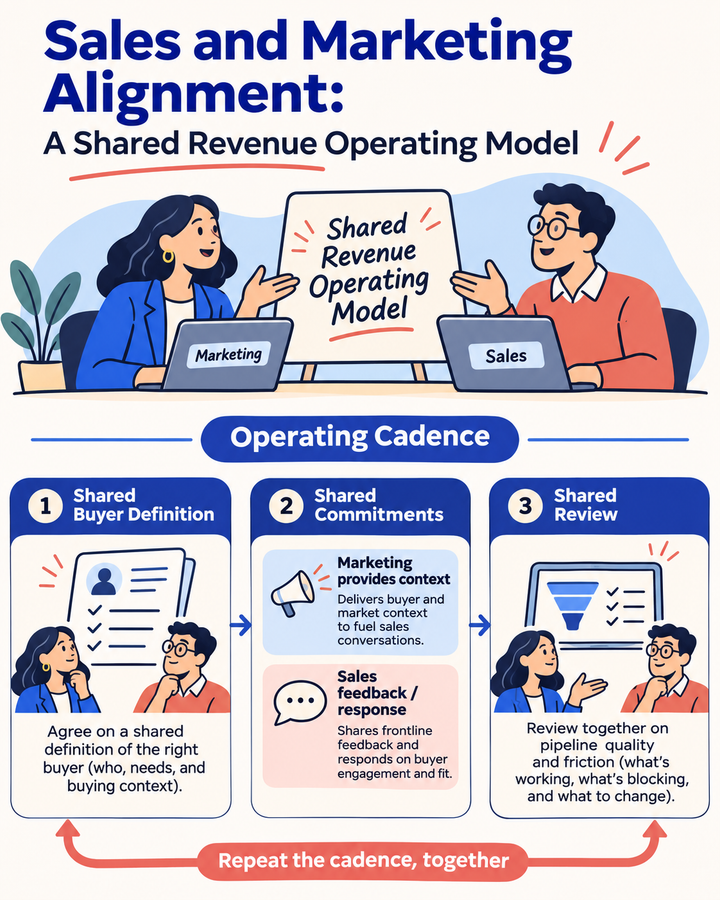
Sales and marketing alignment means one buyer definition, one handoff agreement, one scorecard and a fixed review rhythm. Build the basics in 30 days: find where handoffs break, agree the buyer and rules, fix routing and the scorecard, then run a review that ends in a decision.
Key Takeaways
- Write the buyer definition and disqualifiers together, and test them on real won and lost deals.
- Put every handoff commitment in one agreement with an owner, a target and a fallback.
- Read one scorecard from one source; treat attribution as one input, not the verdict.
- End every shared meeting with a recorded decision, an owner and a date.
In this articleShowHide
Playbooks
Frameworks you can put to work
Growth marketing, LinkedIn presence, and more — delivered as PDFs.
Browse the playbooksSales and marketing alignment means both teams work from one definition of a good buyer, one handoff agreement and one scorecard, and review them together on a fixed rhythm. It does not mean identical goals or a joint meeting about everything. It means the work connects at the points where a buyer moves from one team to the other.
This guide gives you four working parts to copy: a misalignment check, a handoff agreement, a shared scorecard and a meeting cadence, followed by a 30-day plan to put them in place. It is part of the revenue operations series and builds on the three leak points in revenue leakage.
5 signs sales and marketing are out of sync
| Sign | What it usually means | Check first |
|---|---|---|
| Sales says the leads are bad; marketing says sales doesn't follow up | No written definition of a sales-ready lead | Rejection reasons on the last 30 handed-off leads |
| Response times range from minutes to days | No owner or clock for inbound requests | Time from form fill to first human contact |
| Marketing reports leads, sales reports pipeline, and the numbers never match | Different definitions and data sources | Where each report pulls "lead" and "opportunity" from |
| Lost deals never change campaigns or content | No route from sales calls back to marketing | Whether lost reasons are recorded and read |
| Every shared meeting turns into an argument about credit | The scorecard rewards attribution, not buyer progress | What the last three meetings actually decided |
If two or more sound familiar, start with the handoff agreement in part 2. It fixes the problem buyers feel most: they asked for help and waited.
Part 1: One definition of a good buyer
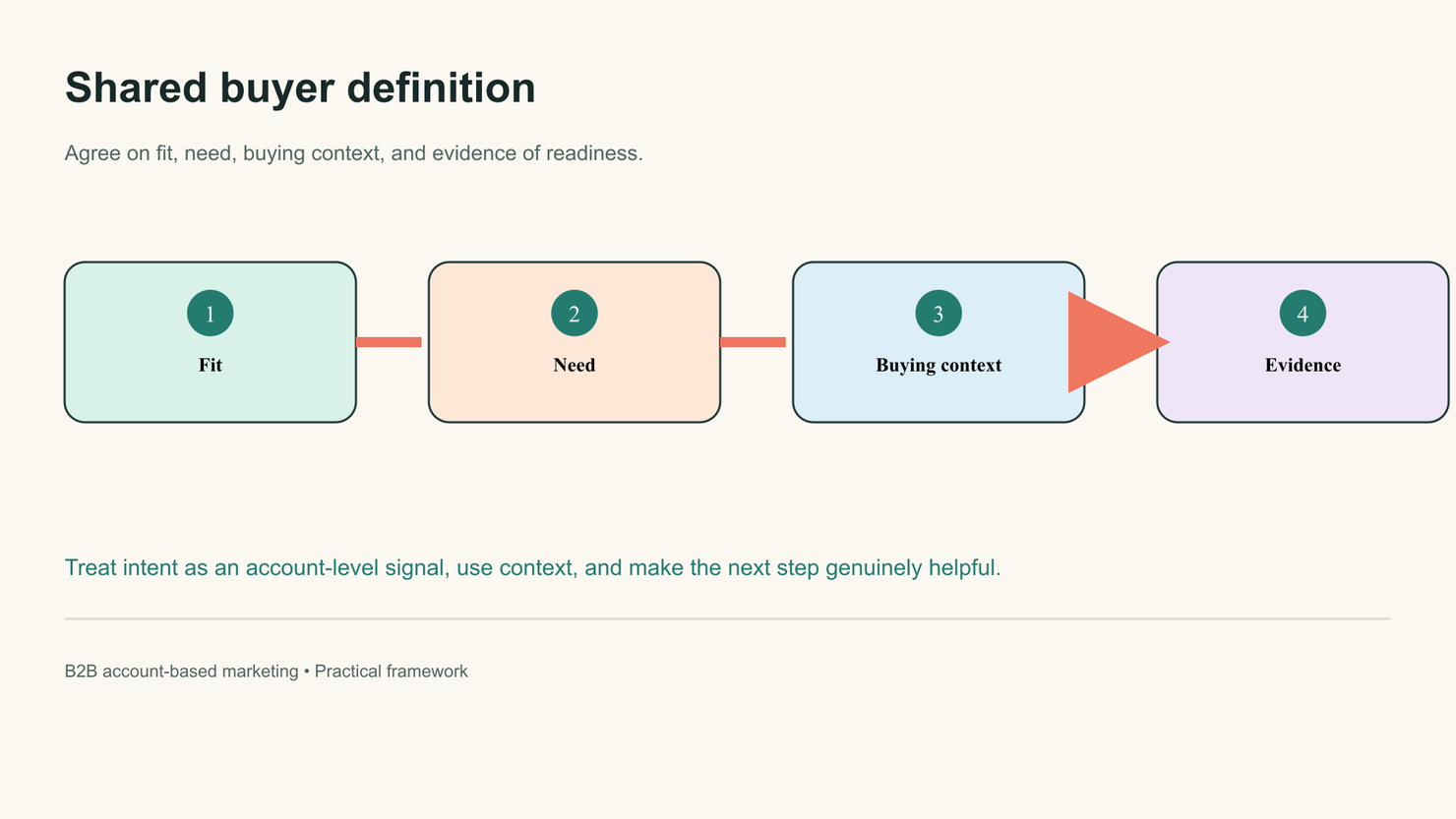
Write one page both teams agree describes the buyer you want: company fit (size, industry, situation), the roles involved in the decision, the problem that makes them act now, and who to disqualify. Then list the evidence that should trigger a sales response, such as a demo request, a pricing-page visit from a target account or a reply to outbound. A label like MQL only helps once both teams agree what sits behind it.
Test the page on real records. Pull 20 recent won deals and 20 recent rejected or lost leads and check each one against it. If won deals fail your definition, the definition is wrong, not the deals. For the full method, see how to define your ideal customer profile, and map the people who sign off using the B2B buying committee guide.
Pro tip: write the disqualifiers first. Teams usually agree faster on who they don't want than on who they do, and a short exclusion list settles much of the "bad leads" argument.
Part 2: A handoff agreement both teams sign
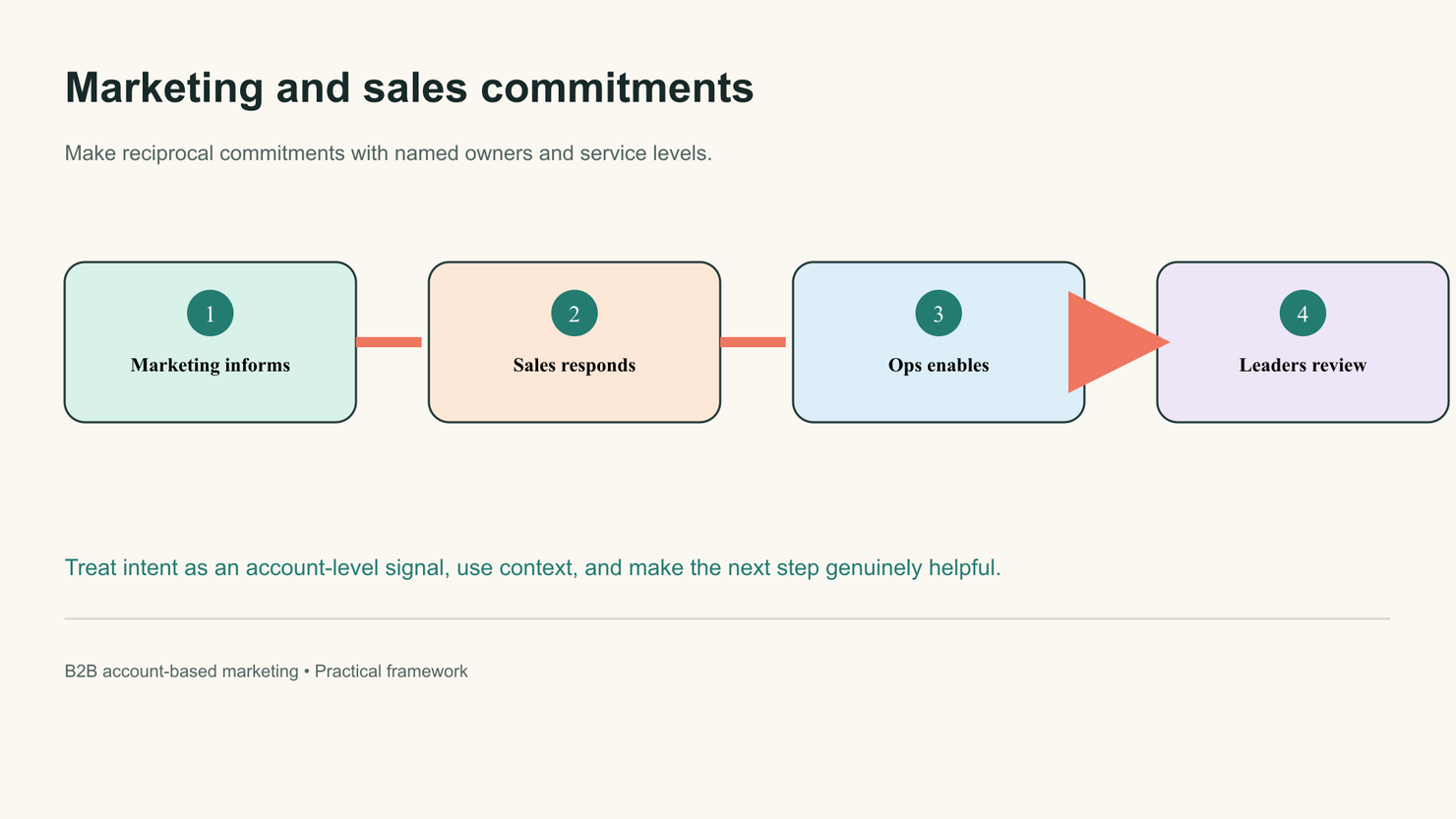
The handoff agreement, often called a sales and marketing SLA, says what each team owes the other, by when, and what happens when it slips. Keep it to one page. Here is a template to copy and adapt:
| Commitment | Owner | Target (example) | If it's missed |
|---|---|---|---|
| Route agreed requests to a named rep, with the buyer's context | Marketing ops | Within 5 minutes of the request | A fallback owner gets it automatically |
| First human contact on a demo or pricing request | Assigned sales rep | Same business day | Manager reassigns; reviewed in the weekly check |
| Accept or reject every handed-off lead, with a reason | Sales | Within 2 business days | Lead returns to nurture marked "no decision" |
| Share recurring objections and buyer questions | Sales | Before each monthly review | Marketing asks for five recent call notes |
| Turn that feedback into content or targeting changes | Marketing | Before the next monthly review | Item stays on the agenda until done |
| Keep fields, routing and reports working | RevOps or operations | Routing errors fixed within 1 business day | Escalate to the revenue leader |
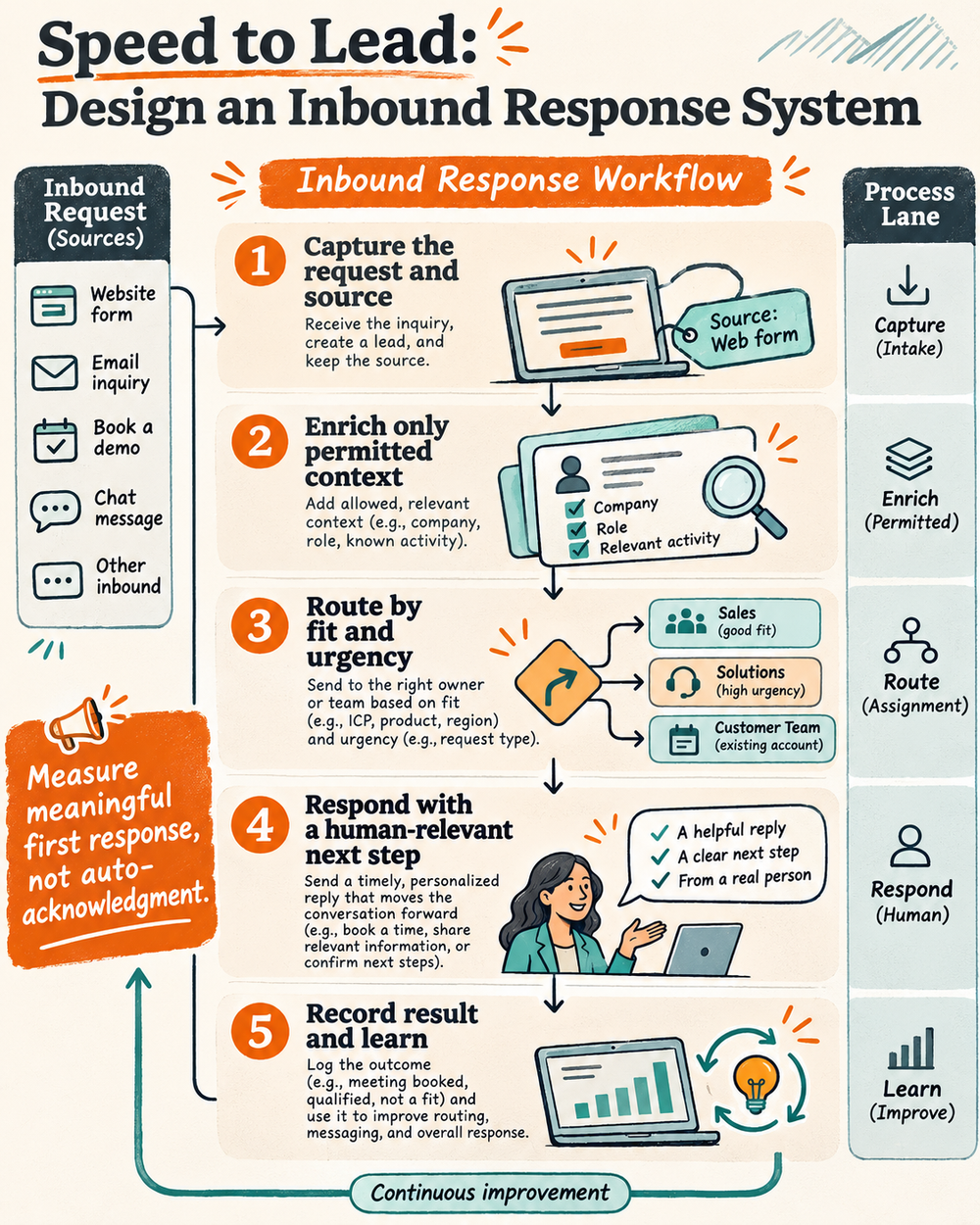
The targets are examples, not benchmarks. Set them by what the buyer asked for: someone requesting a demo expects a person, while someone downloading a guide may not want a call at all. Define when the clock starts, what counts as a real response (an automated email is not one) and where attempts are recorded. To make the first response fast, see speed to lead; for the wider operating model, see B2B sales operations.
Part 3: A shared scorecard
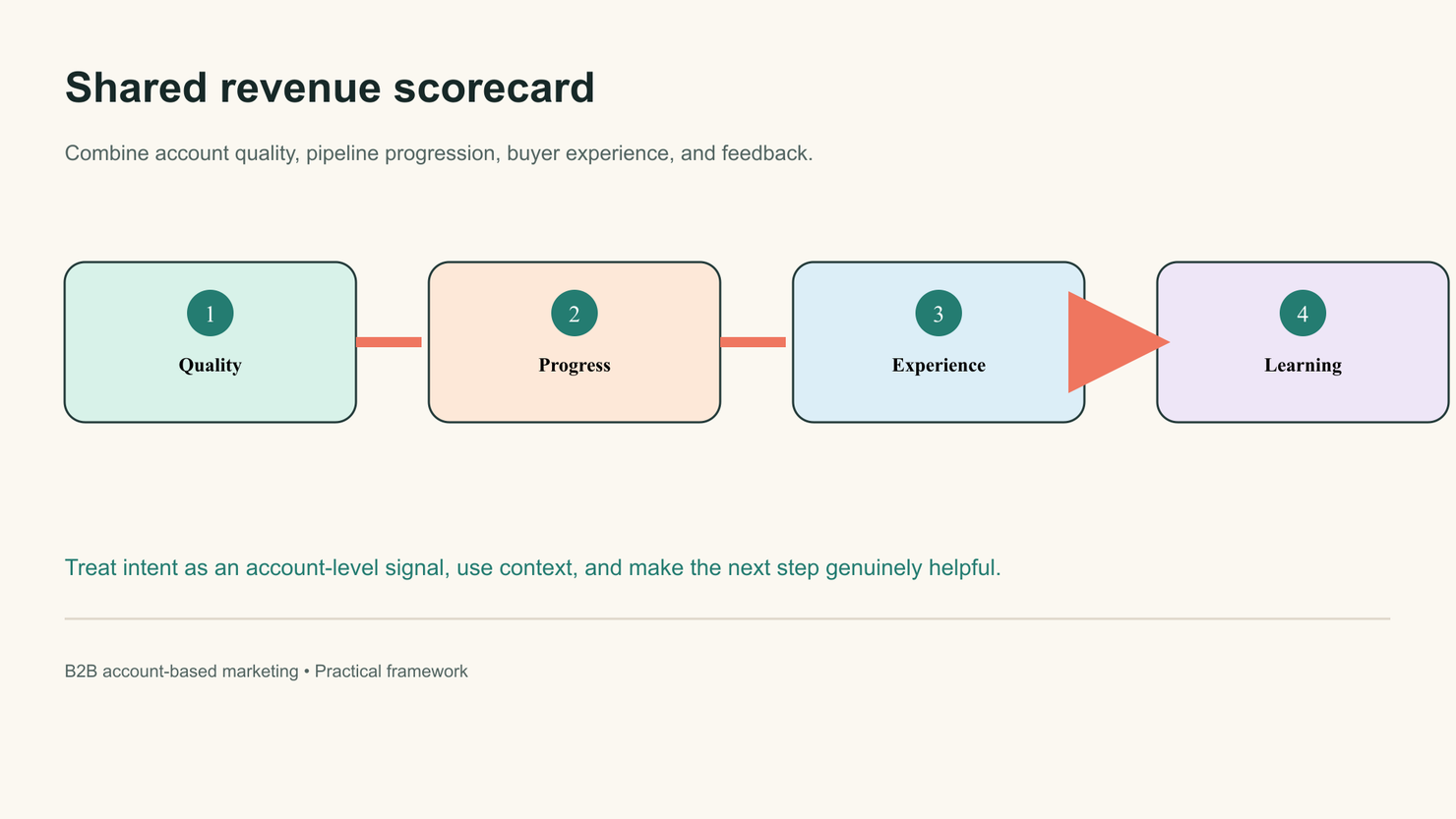
Use one scorecard that both teams read from the same source, usually the CRM. Five or six measures are enough:
| Measure | Question it answers | Owner |
|---|---|---|
| Accepted-lead rate and top rejection reasons | Are we sending sales the buyers we agreed on? | Marketing and sales |
| Time to first human contact | Are buyers waiting? | Sales |
| Opportunities created from accepted leads | Do accepted leads become real deals? | Sales |
| Pipeline from target accounts | Is the work aimed at the right companies? | Marketing |
| Win rate and cycle length by source | Which sources produce revenue, not just volume? | RevOps |
| Lost reasons, read monthly | What should change in message, offer or targeting? | Both |
Give each measure one definition, one source and one owner. If a number jumps, check whether the definition or the data changed before you celebrate or blame anyone. Treat attribution as one input, not the verdict: buying groups talk privately and offline, so no model sees the whole journey. MQL to pipeline explains which measures to retire and what to replace them with.
Use the free Sales Pipeline Calculator to turn the revenue target into one number both teams plan from. Enter your new revenue target, average deal size, sales cycle in days, the share of leads that qualify and your win rate. It returns the pipeline you need to build and the leads and opportunities needed each week.
Pro tip: use AI to read rejection reasons faster. Export the last 50 rejected leads with sales' notes, remove names and email addresses, and paste them in with this prompt:
You are a revenue operations analyst. Below are rejected leads with the sales team's rejection notes.

1. Group the reasons into no more than 6 themes.
2. For each theme give: the count, two example notes, and whether the cause is targeting (wrong company or role), timing (right buyer, not ready) or process (slow or missing follow-up).
3. Suggest one change marketing or sales could test next month for each theme.

Use only what is in the notes. If a note is unclear, put it under "Unclear" rather than guessing.

[paste rows here]
Part 4: A meeting cadence that makes decisions
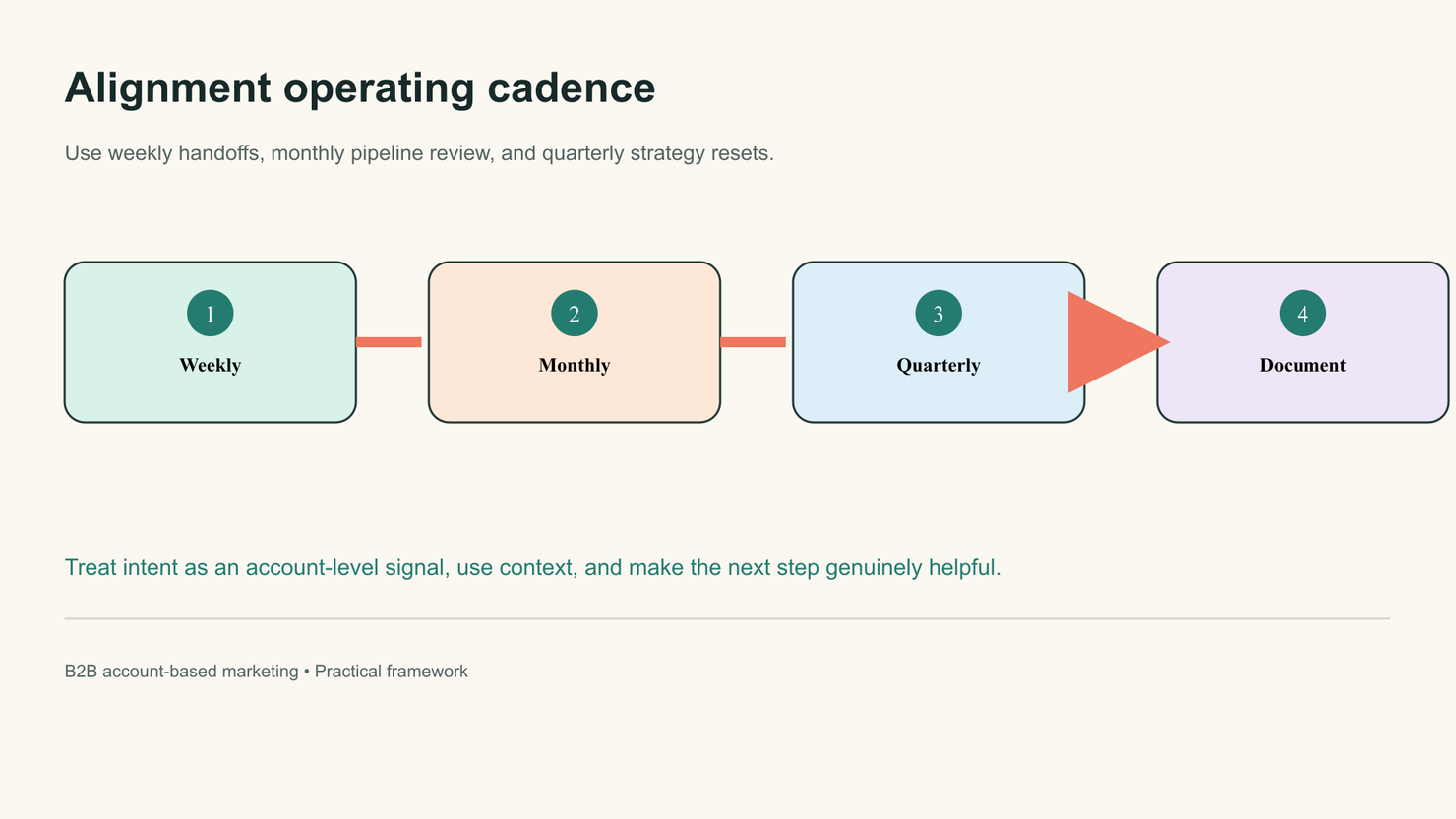
| Meeting | Length | Who | What it decides |
|---|---|---|---|
| Weekly handoff check | 15–20 minutes | Marketing lead, sales manager, RevOps | Stuck or missed handoffs and routing errors |
| Monthly pipeline and learning review | 60 minutes | Both team leads and RevOps | One change to the definition, content or process, with an owner |
| Quarterly reset | Half a day | Revenue leader and team heads | Target segments, budget and definitions for next quarter |
A small team can merge the weekly and monthly meetings. What matters is that every meeting ends with a recorded decision, an owner and a date. Bring three real examples and the data, not a slide of opinions. Lost reasons often point to gaps in what buyers get after a first call; sales enablement content covers what to give them.
Put this into practice
The GTM Funnel Playbook
How B2B teams find, win and keep customers, with a 90-day action plan. Seven funnel stages, one owner each, from the revenue number to the clients you keep.
The 30-day sales and marketing alignment plan
To keep it concrete, each week below follows one hypothetical company: a $6M-revenue software business with a three-person marketing team and six sales reps, where sales rejects about half of inbound leads and nobody can say why.
Week 1: Find where handoffs break
- Owner: the revenue leader or RevOps.
- Do: interview two reps, the marketing lead and whoever owns the CRM. Trace the last 30 handed-off leads from form fill to outcome.
- Output: the top three friction points, each with a real example.
- In the example: 12 of the 30 leads have no recorded outcome, and 8 were rejected as "too small".
Week 2: Agree the buyer and the handoff rules
- Owner: the marketing and sales leads, together.
- Do: write the buyer definition and disqualifiers (part 1), test them on 20 won and 20 lost deals, and draft the handoff agreement (part 2).
- Output: a one-page buyer definition and a draft agreement both leads have signed.
- In the example: most "too small" rejections were under 20 employees and no won deal was, so the team adds a 20-employee minimum.
Week 3: Fix the plumbing and publish the scorecard
- Owner: RevOps.
- Do: add a required accept/reject field with a reason, set routing with a fallback owner, build the scorecard (part 3) from the CRM, and send a test lead through the whole path.
- Output: a live scorecard and routing tested end to end.
- In the example: the test lead shows demo requests after 6pm land in a shared inbox nobody watches. See CRM strategy for fixing data and adoption.
Week 4: Run the first shared review
- Owner: the revenue leader chairs.
- Do: review the scorecard, three real examples and the rejection themes from the AI prompt, then agree one change.
- Output: the first entry in a decision log, with an owner and a date to check the result.
- In the example: the team pauses the content-download campaign behind most rejections, moves the budget to demo-intent pages, and will check the accepted-lead rate at the next review.
After day 30, keep the cadence and change one thing at a time. Alignment shows up as faster responses, fewer rejected leads and decisions both teams can explain, not as a workshop or a new org chart. If you want this built as part of a wider go-to-market system, see the 90-Day GTM Build.
Frequently Asked Questions
Frequently Asked Questions
What does sales and marketing alignment mean?
What is a sales and marketing SLA?
How often should sales and marketing meet?
What metrics measure sales and marketing alignment?
Who should own sales and marketing alignment?
How long does it take to align sales and marketing?
Put this into practice
The GTM Funnel Playbook
How B2B teams find, win and keep customers, with a 90-day action plan. Seven funnel stages, one owner each, from the revenue number to the clients you keep.

Swapan Kumar Manna is a go-to-market and AI search strategist and Founder & CEO of Oneskai. He has spent 14+ years helping companies get found, get chosen and grow.