Part of the Revenue Systems: Connecting Marketing, Sales and CRM So Growth Doesn't Leak series
B2B enablement content should help buyers complete real tasks: understand, compare, validate, justify, and align. Build a small, governed library of clear evidence and useful decision tools.
Key Takeaways
- Map assets to buyer questions and decision tasks.
- Show evidence, context, and assumptions in business cases.
- Make comparisons and validation details fair and specific.
- Assign owners and review dates to important content.
Playbooks
Frameworks you can put to work
Growth marketing, LinkedIn presence, and more — delivered as PDFs.
Browse the playbooksSales enablement content is useful when it helps a buyer answer a real question, complete an evaluation task, or explain a decision to colleagues. A large library is not the goal. The goal is to give buyers clear, current information they can trust while they compare, validate, and build a case for change.
This article is part of the Revenue Systems pillar and builds on B2B buying committee consensus and B2B conversion optimization.
Create content around buyer tasks
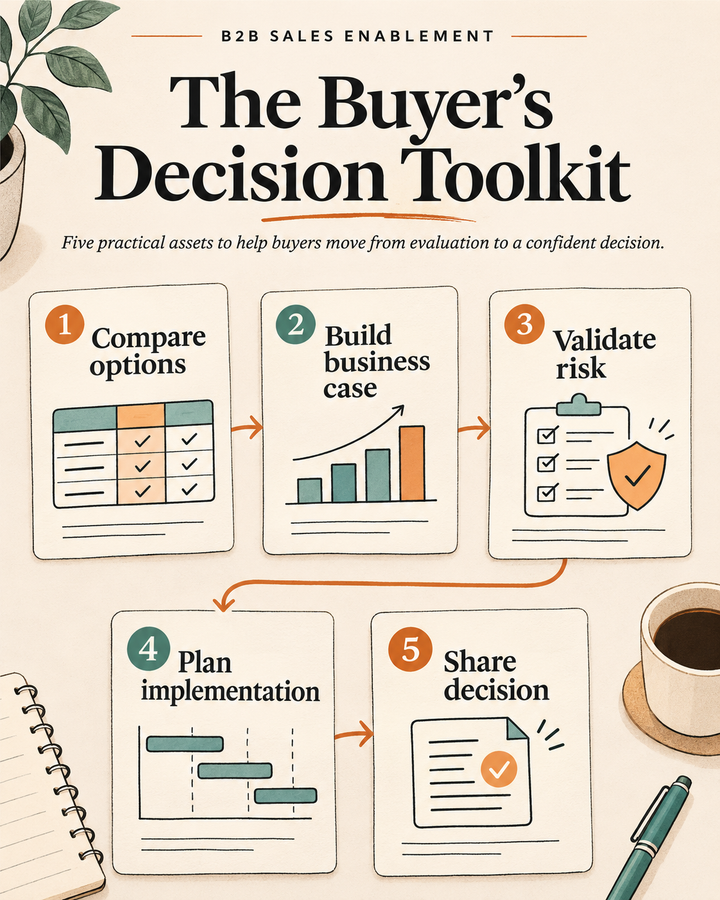
Buyers move between tasks rather than follow a neat funnel. They may need to understand a problem, compare options, validate risk, build an internal business case, or align people who will use and approve a solution. Ask sales, customer success, support, and prospects what questions appear at each point. Use those questions to shape content, rather than starting with formats or keyword lists alone.
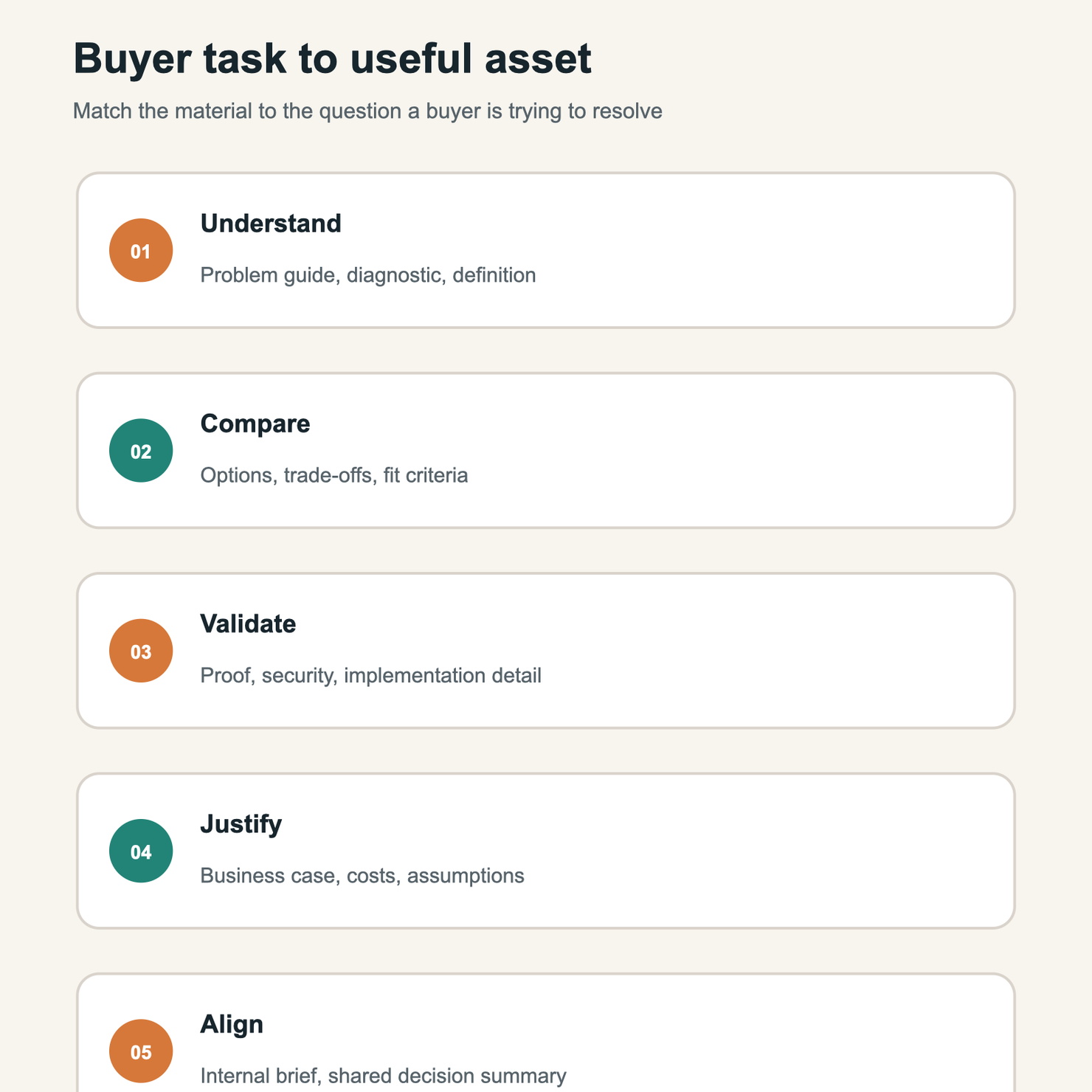
For discovery, explain the problem in plain language and show how to recognize it. For comparison, make criteria and trade-offs visible. For validation, provide implementation, security, integration, and support details. For internal alignment, create material that can be shared without a sales representative having to translate every claim.
Build a clear business case
A business case should show the current baseline, the outcome the buyer wants, the change required, the investment, and the assumptions linking the two. Make clear which numbers are customer-specific, which are illustrative, and what evidence supports them. If results depend on adoption, data quality, or process changes, say so. This is more useful than a calculator that returns a precise answer from uncertain inputs.
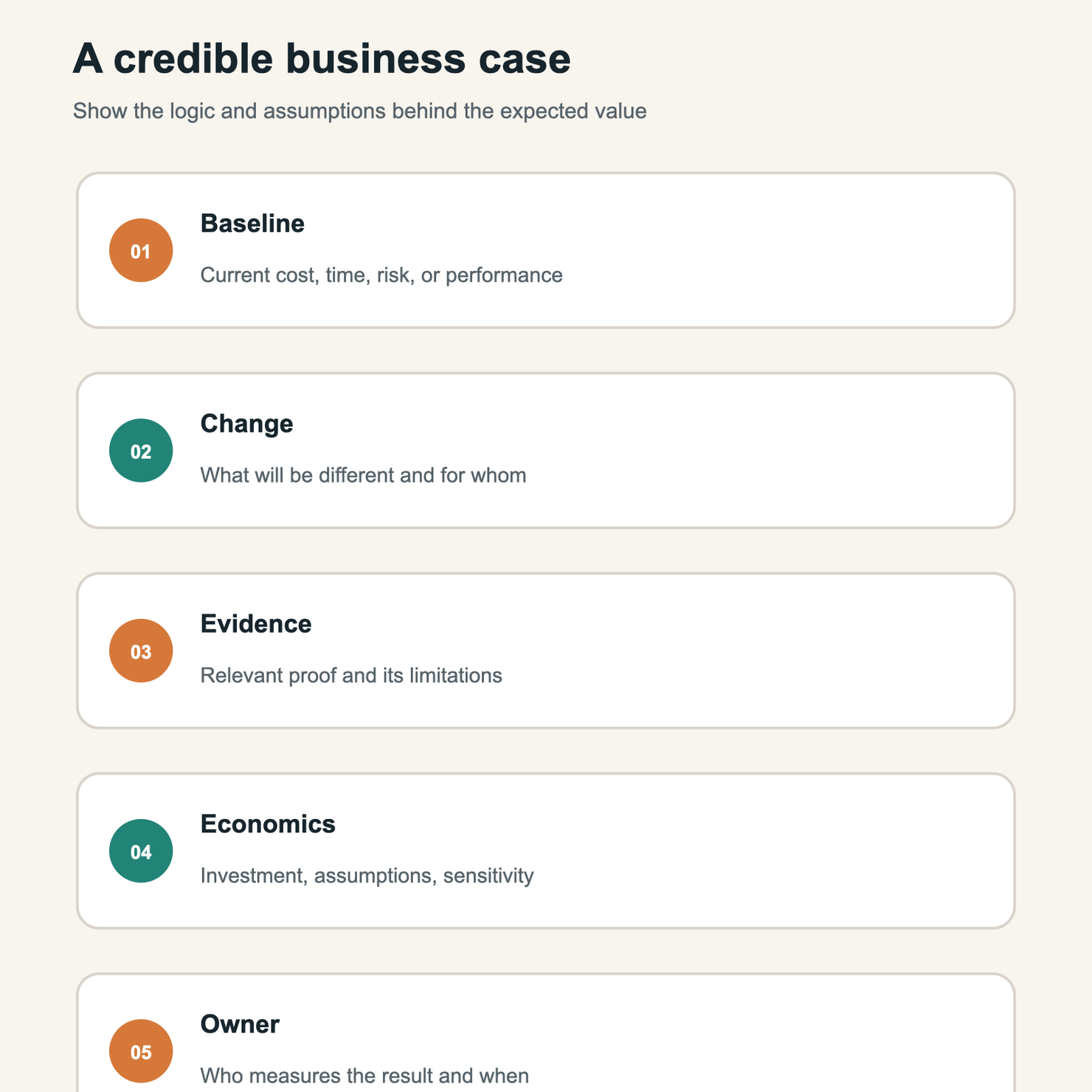
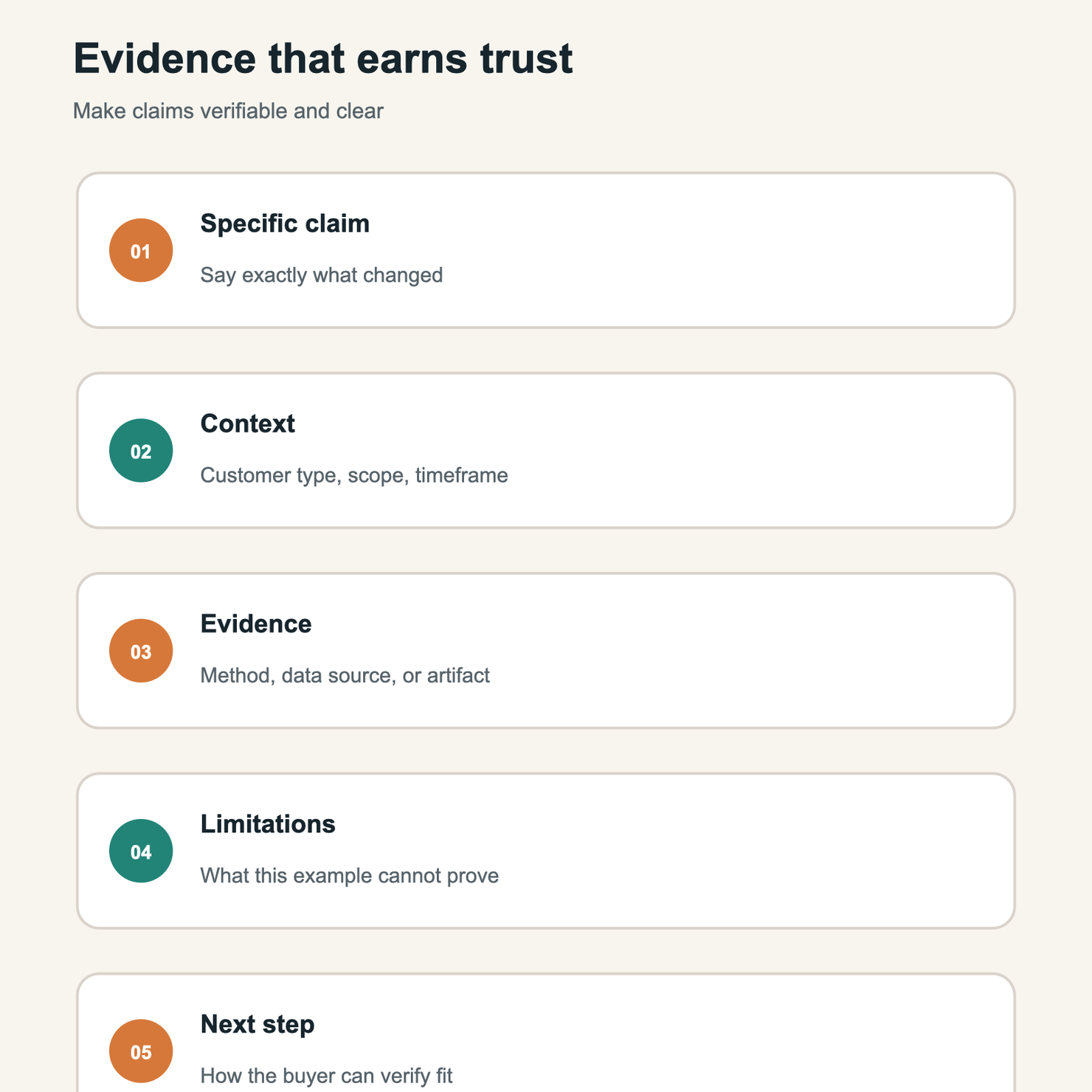
Use customer examples with context. Explain who the organization was, what problem it faced, what work was done, how the result was measured, and over what period. Distinguish a customer result from a typical result. Obtain permission for claims and keep the source material available for review.
Help buyers compare and validate
Comparison content should identify the criteria that matter and describe trade-offs fairly. State where an approach fits, where it does not, and what a buyer should check in their own environment. Avoid unsupported competitor claims or a feature checklist that hides implementation effort and ongoing costs.
Validation content should answer the operational questions that often surface after a shortlist: data handling, access controls, integration requirements, implementation steps, support, migration, and responsibilities. Keep technical details current and route security or legal questions to qualified owners. Do not imply a certification or guarantee the business does not hold.
Put this into practice
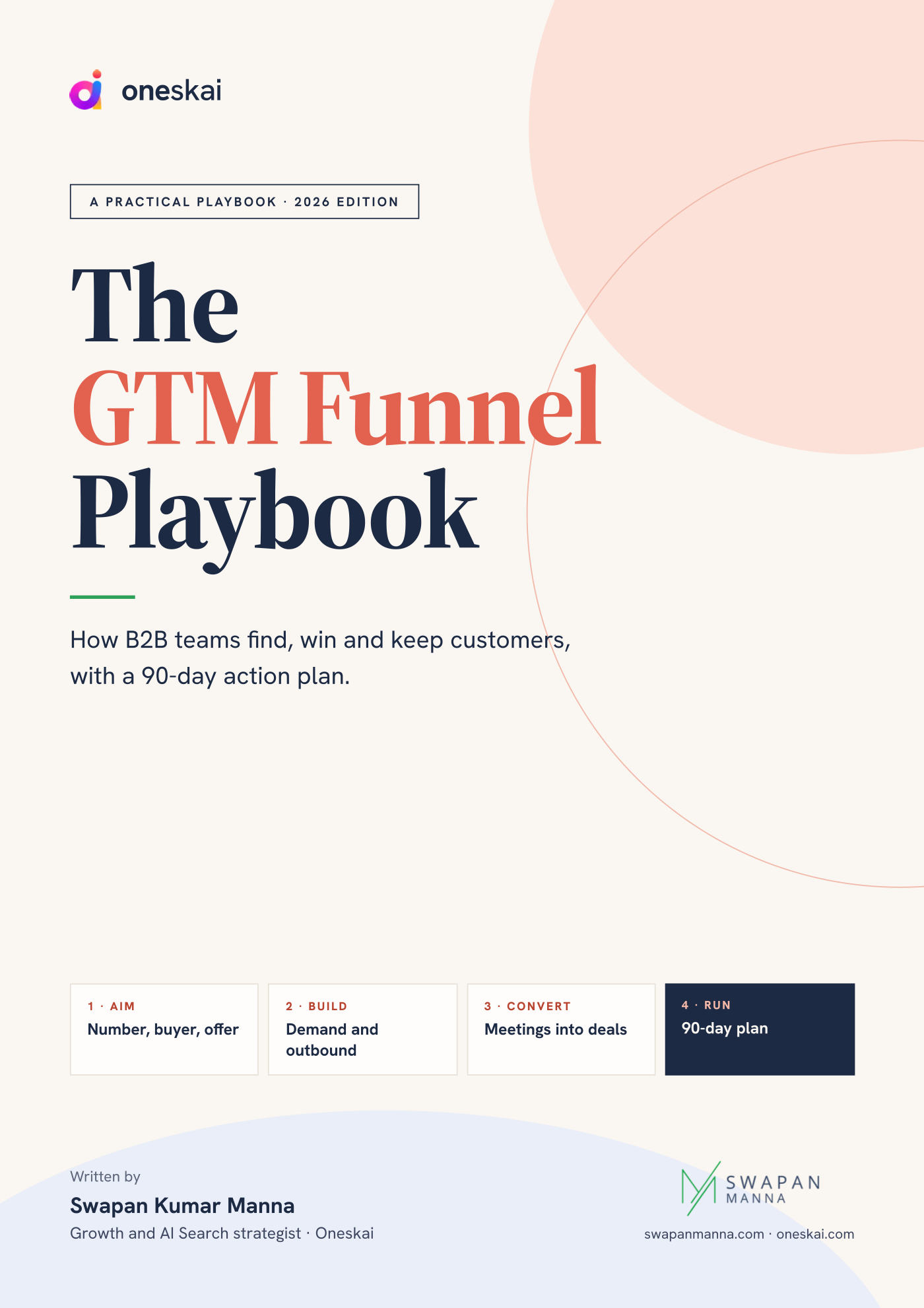
The GTM Funnel Playbook
How B2B teams find, win and keep customers, with a 90-day action plan. Seven funnel stages, one owner each, from the revenue number to the clients you keep.
Make content easy to use in AI-assisted research
Buyers may use search engines and AI tools to summarize vendors, compare options, or prepare questions. Clear page titles, descriptive headings, direct explanations, named sources, and visible evidence make information easier for both people and discovery systems to interpret. These practices can support comprehension and attribution, but they do not guarantee that a page will be cited in an AI response.
Google says its generative search features are designed to show links where they help people explore a topic. Its guidance on attribution and factuality reinforces the value of clear, supportable information and useful source links.
Govern the content library
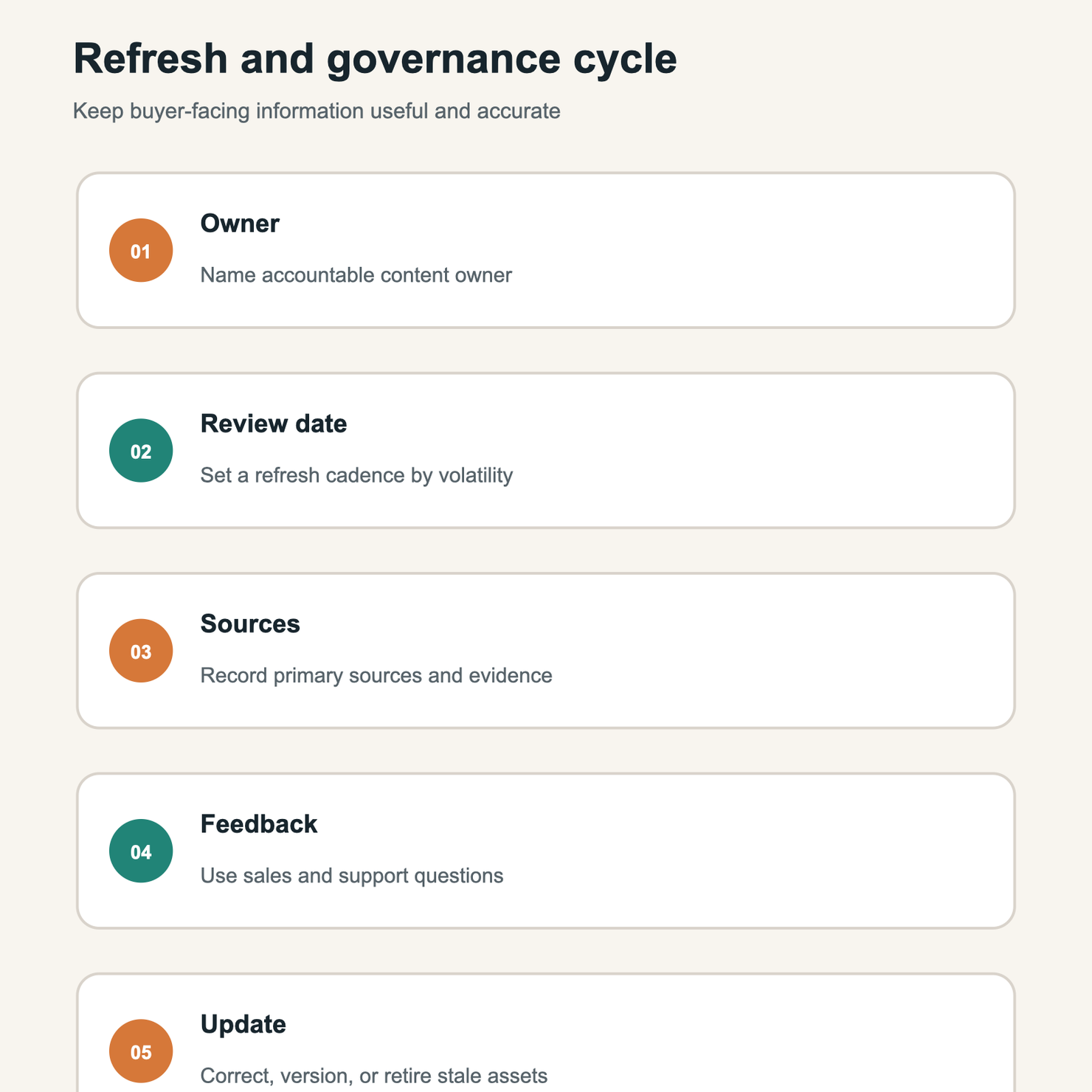
Give each important asset an owner, source list, review date, and audience. Refresh fast-changing material more often than stable explainers. Track whether content is being used in conversations, whether it answers recurring questions, and whether buyers or sales teams report gaps. Retire outdated assets so old claims do not keep circulating.
Start with a small set: one problem guide, one comparison or decision guide, one business case template, one implementation overview, and one set of trusted customer examples. Link the pieces so a buyer can move from a question to the next useful answer.
Frequently Asked Questions
Frequently Asked Questions
What is sales enablement content?
What content do B2B buyers need after creating a shortlist?
How do you create an effective B2B business case?
How often should sales enablement content be updated?
How can content support buyers using AI search?
How do you measure whether enablement content works?
Research and further reading
Gartner: Build digital B2B content to support buyer enablement provides a content planning toolkit.
Forrester: Create a balanced B2B engagement strategy covers buyer research and provider interactions.
Google Search: Attribution and factuality in generative AI features describes how generative search experiences use and link to sources.
Put this into practice
The GTM Funnel Playbook
How B2B teams find, win and keep customers, with a 90-day action plan. Seven funnel stages, one owner each, from the revenue number to the clients you keep.

Swapan Kumar Manna
Go-to-market & AI search strategist
Swapan Kumar Manna is a go-to-market and AI search strategist and Founder & CEO of Oneskai. He has spent 14+ years helping companies get found, get chosen and grow.