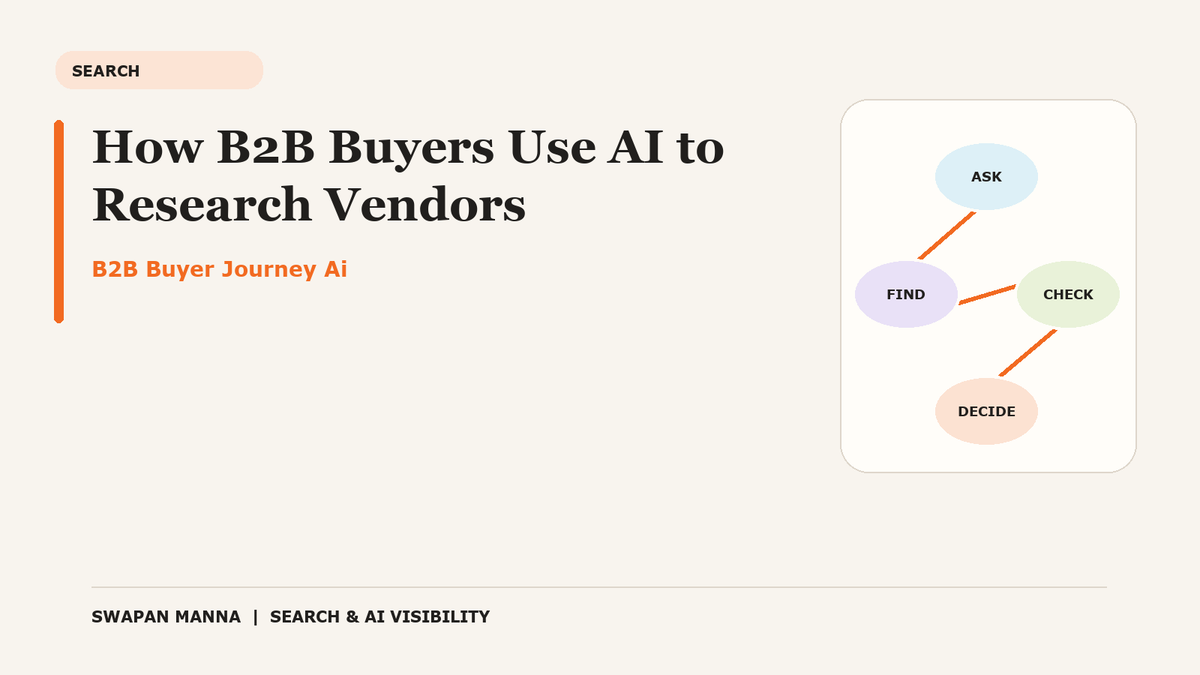
Part of the The Future of Search: How Discovery Works When Answers Replace Rankings (2026 Guide) series
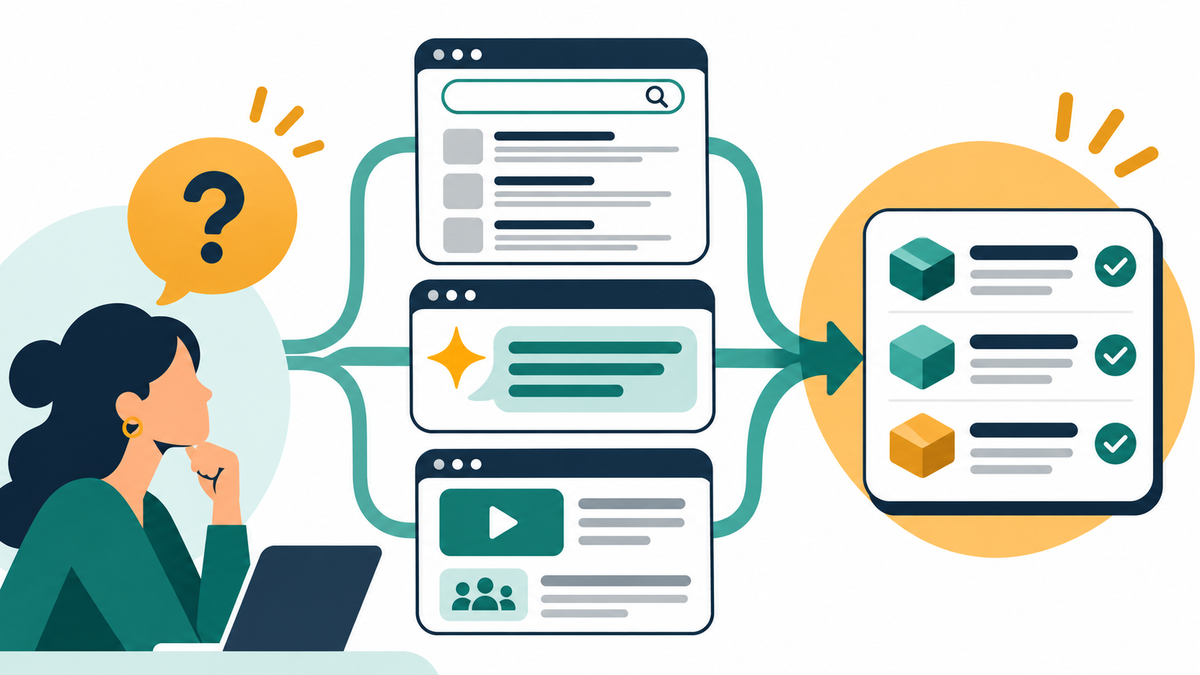
People can use search engines, AI assistants, videos and communities to answer different questions within one decision. Map the questions your buyers ask and the evidence they need, rather than assume every buyer follows the same route.
Key Takeaways
- Longer AI Mode questions can reveal a buyer's task and constraints.
- Chatbot adoption figures do not measure search market share.
- Map observed buyer behaviour separately from assumed channel use.
- Create evidence for specific decisions and connect visibility with enquiry quality.
Playbooks
Frameworks you can put to work
Growth marketing, LinkedIn presence, and more — delivered as PDFs.
Browse the playbooksPeople can search for the same decision in several places. They might use Google to find options, ask an AI assistant to compare them, watch a demonstration, and check what other users say. Each step answers a different concern. A visit to your website may come near the end rather than at the start.
That is the useful way to think about how people search in 2026: as a series of questions, with different tools helping at different points. It does not mean every buyer uses every platform, or that Google has been replaced. It means a ranking report can miss part of the research behind a decision.
In my 14+ years in go-to-market and growth, the buyer's question has remained the best starting point for strategy. This article focuses on search behaviour and a practical way to map it. For the broader business implications, see my guide to the future of search.
What the evidence tells us about search behaviour
Three changes deserve attention: people can give search tools more context, chatbot use extends beyond early adopters, and some questions are answered without a website visit. The evidence for each comes from different sources. We should keep those measures separate rather than combine them into one dramatic claim about the end of search.
Questions can carry more context
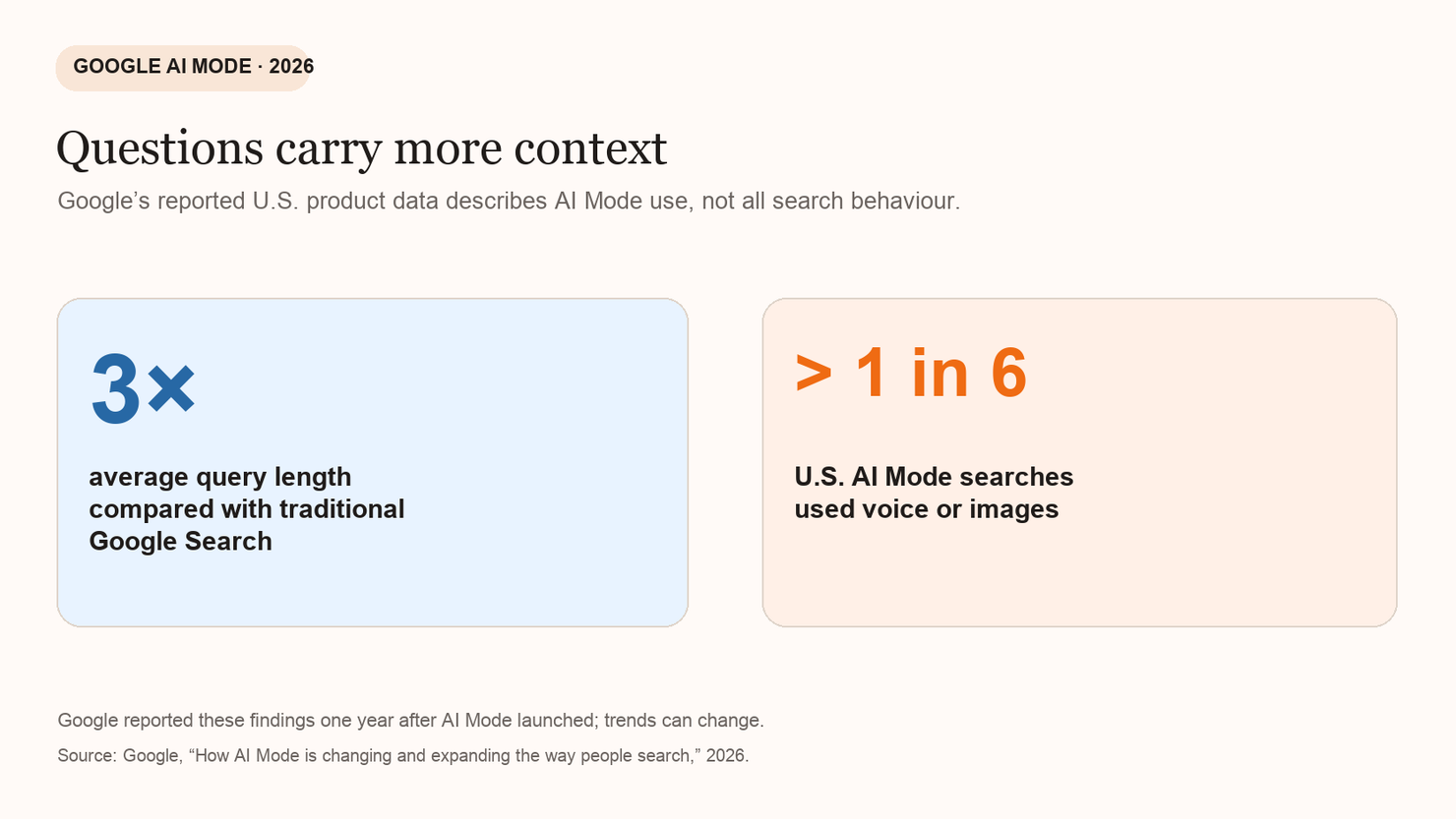
In Google's May 2026 report on US AI Mode use, the company said the average AI Mode search was three times the length of a traditional Search query. It also reported that more than one in six US AI Mode searches used voice or images.
These are Google's figures about its own product, not an independent measure of all search behaviour. Still, they point to a useful change: a person can explain the task and constraints rather than reduce the need to a few keywords.
Compare “CRM software” with “Which CRM suits a five-person sales team using Gmail, with no full-time admin?” The second question makes the choice clearer. Useful content would need to explain setup effort and fit for a small team, rather than simply list popular tools.
Chatbot use is not the same as search market share
A Pew Research Center survey conducted in February 2026 found that 44% of US adults said they ever use ChatGPT. The share was 61% among adults aged 18–29 and 55% among those aged 30–49.
That tells us about reported use, not how many searches happen there. People also use chatbots to write, learn, and complete tasks. Pew notes a change in the question wording for 2026, so comparisons with earlier years need care.
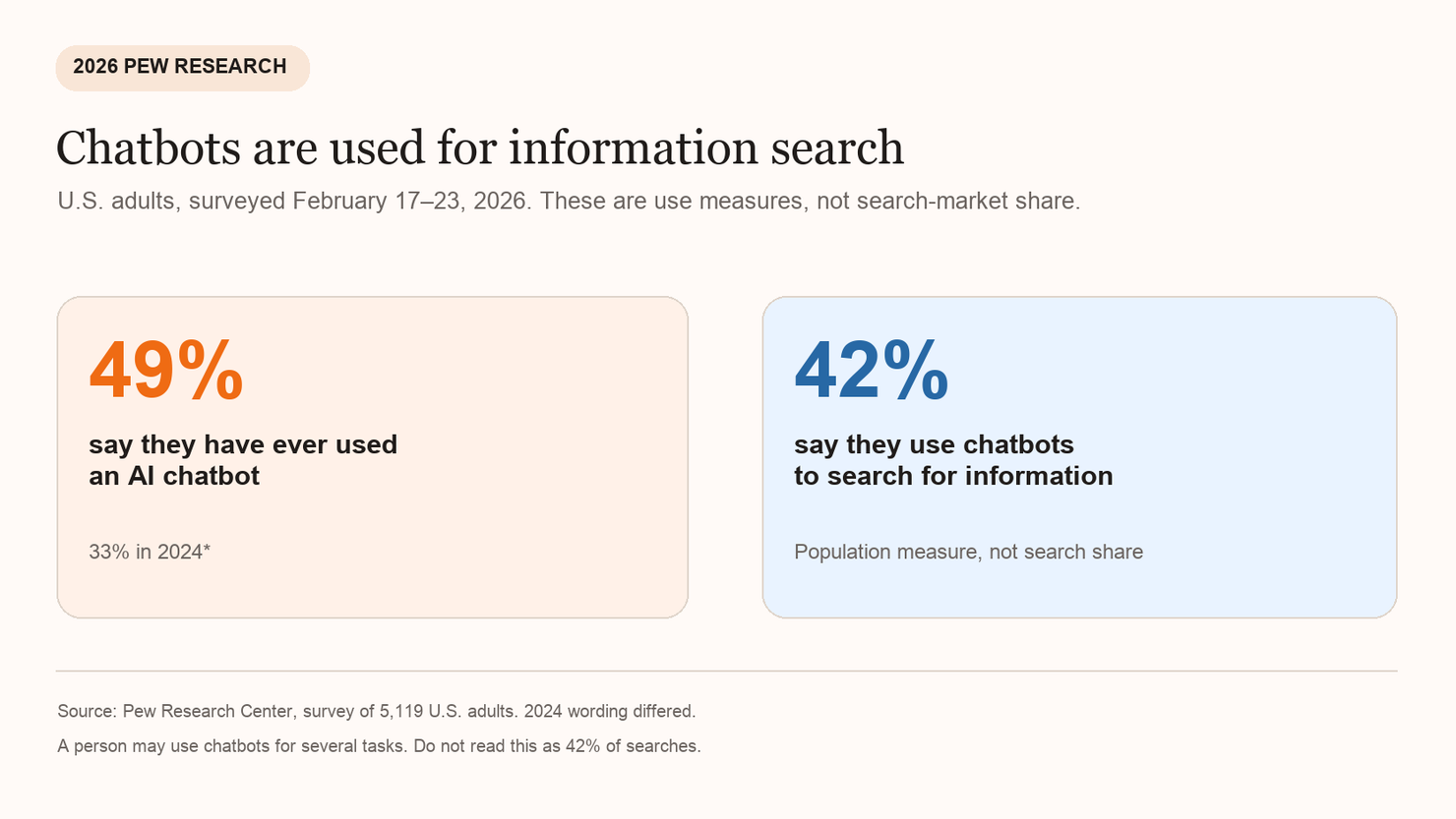
For a marketing team, the implication is to investigate its own audience. A consumer survey cannot establish how your customers select vendors, especially in another country or a narrow industry. Ask buyers where they sought advice before deciding which channels deserve more investment.
An answer can reduce the need to click
In Pew's July 2025 study of Google AI summaries, traditional result links received clicks in 8% of visits with a summary, versus 15% without one. Links inside summaries received clicks in 1% of visits with a summary.
The study used browsing data from 900 US adults in March 2025, with results collected in April. It is a historical, observational finding. It does not prove a universal traffic loss or show that every unanswered click was caused by AI.
The useful question for your business is which needs still require a visit. A brief definition may be enough on a results page. Checking current prices, seeing a workflow, or confirming contract terms may call for a closer look at the source.
One decision, five places to look
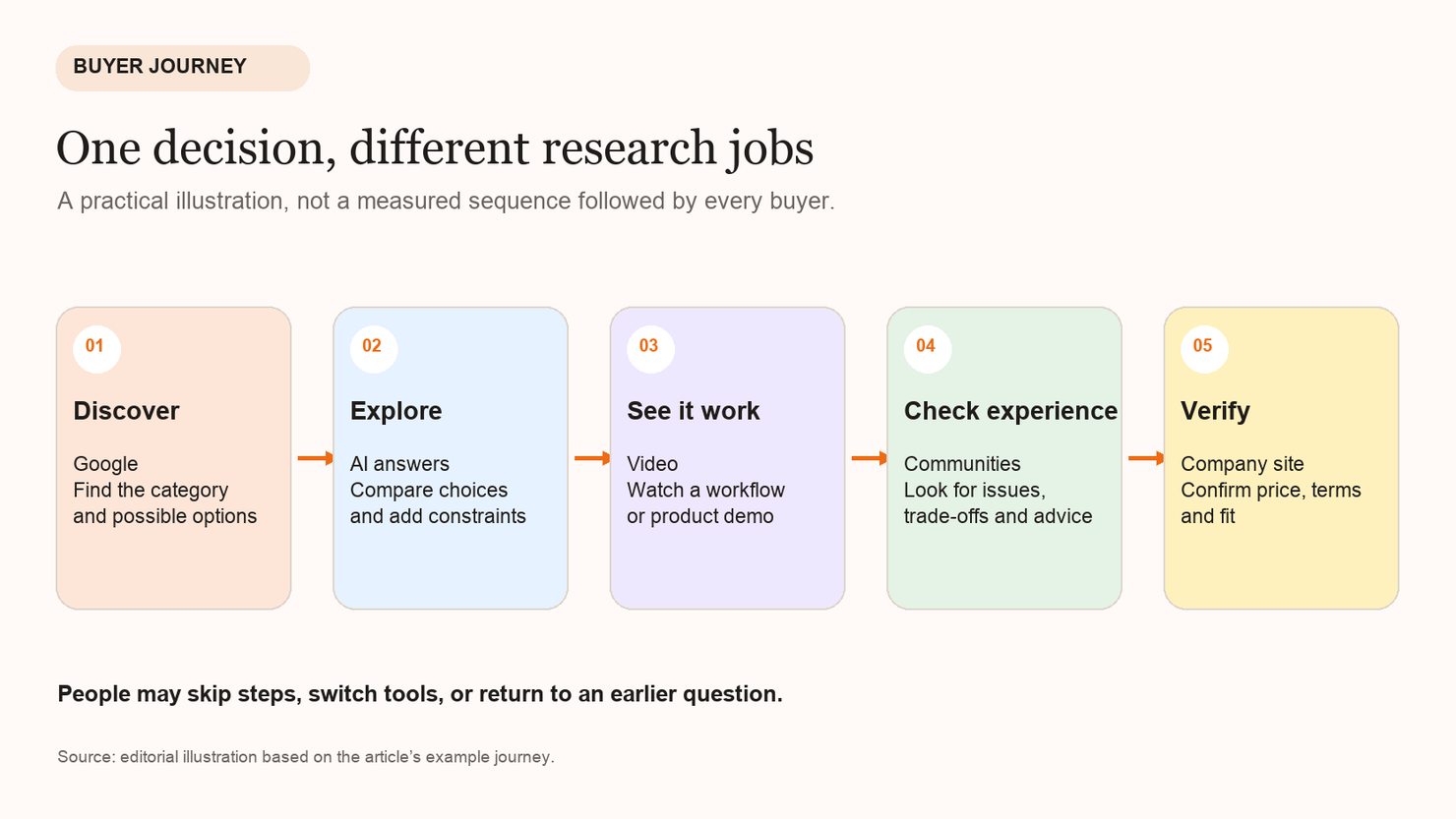
Consider a hypothetical operations manager choosing a tool for client approvals. This example shows how a journey could unfold. It is not a measured customer story or a claim about the typical buyer.
The manager starts on Google with “client approval software for small agencies.” Search results help them find the category and a few options. An AI Overview may provide background, while AI Mode offers a place to explore a more detailed comparison.
Next, they ask ChatGPT how to compare the options for a small team. OpenAI explains that ChatGPT can search the web and rewrite a question into targeted queries. The manager can add a budget or a required integration, but should inspect whether the response used search and whether its sources support the claims.
They then use Perplexity to look for evidence about setup and support. Perplexity describes a process of web search, summaries, and source citations. Those links give the manager pages to inspect; the summary itself is not a substitute for checking an important detail.
A YouTube demonstration helps them see the approval flow. A Reddit discussion offers user opinions about friction or missing features. Neither source has to settle the choice. A convincing video can omit a limitation, and a forum complaint can reflect a different use case.
Finally, the manager visits a vendor's website to confirm pricing, terms, and fit. If your report records only that visit, it may miss the sources that helped create the shortlist. The journey could also run in another order, skip tools, or loop back after a new question.
Put this into practice
The GTM Funnel Playbook
How B2B teams find, win and keep customers, with a 90-day action plan. Seven funnel stages, one owner each, from the revenue number to the clients you keep.
Build a Search Journey Map for your buyers
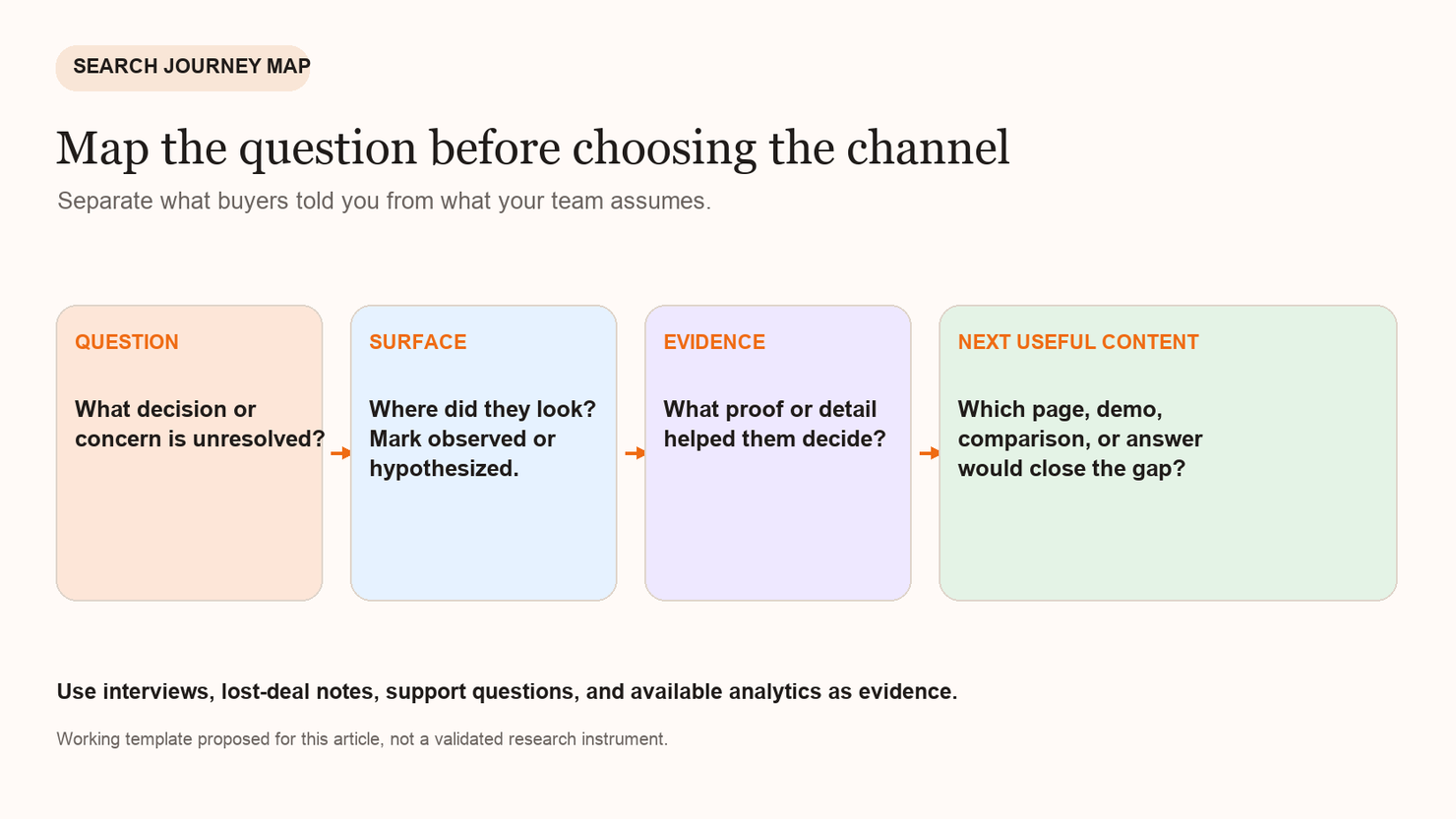
I suggest mapping the decision before choosing where to publish. The Search Journey Map is a planning worksheet for this article, not a proven model of how all buyers behave. Its purpose is to turn a broad channel discussion into a set of questions your team can check.
For each important question, record four things:
- The concern the buyer is trying to resolve.
- Where they looked, or where you suspect they might look.
- The evidence they needed to move forward.
- The content or product page that could provide it.
Keep observed behaviour separate from assumptions. If a customer tells you they watched a setup video, record that as an observation. If you think they might ask an assistant for a comparison, mark it as a hypothesis until you have evidence.
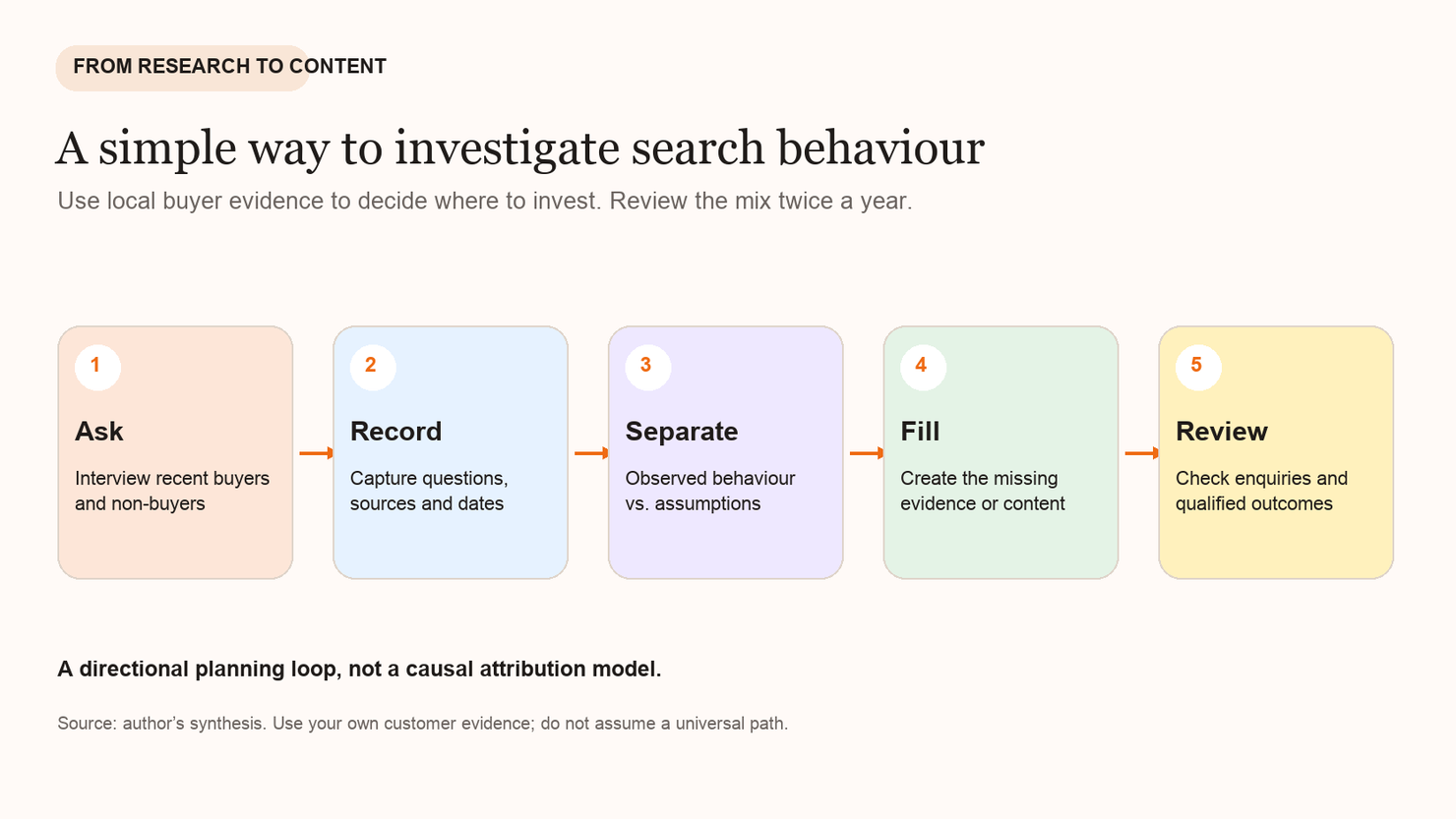
Start with a few recent customers and prospects. Ask what they searched, which sources they trusted, and what they still could not find. Include people who did not buy when possible; their questions may reveal gaps that a successful customer's account misses.
Then inspect your content against the map. If buyers need to understand setup effort, another broad trend article will not solve the gap. A clear setup guide or demonstration may. If they need to compare costs, make the relevant terms easy to find and explain any conditions.
The map also helps avoid wasted output. Several tools may lead someone to the same useful page. You do not need a separate article for every prompt variation or a full publishing programme on every channel.
What to change in your content plan
Keep keywords, but add the decision behind them. “Best software” is less useful as a brief than a clear account of who is choosing, which constraints matter, and what would disqualify an option. That context helps a writer answer the real question. For a practical planning method, see my guide to SEO content strategy for B2B SaaS.
Build connected coverage. A pillar explains the broad topic, while focused articles cover distinct needs such as comparisons, implementation, and common problems. Link to the next answer where it helps the reader, using live pages rather than planned URLs. For a fuller example of how to structure the coverage, see my guide to topic clusters and pillar content.
Give each format a reason to exist. A written guide can explain tradeoffs. A video can show the steps. A public discussion can clarify an issue without becoming a sales pitch. Choose based on the buyer's gap and your ability to contribute useful evidence.
Finally, review what the content achieved. Track relevant visits and enquiry quality, and ask sales what buyers already knew when they arrived. AI mentions and citations can add context, but they do not prove that an article produced revenue.
Follow the questions, then choose the channels
Search behaviour in 2026 is better understood by looking at tasks than by declaring one platform the winner. People have more ways to ask, compare, and check. Your audience may use only some of them, and the mix can change as the decision becomes clearer.
The practical next step is to map one important purchase decision. Find the unanswered question, create the evidence it needs, and check whether buyers find that evidence useful. That is a more grounded investment than chasing visibility everywhere at once.
Frequently Asked Questions
Can ChatGPT usage figures be used as search market share?
Does every buyer research across Google, ChatGPT and Perplexity?
How often should a Search Journey Map be updated?
For more practical thinking on AI, search, and growth, join The Agentic Pivot.
Put this into practice
The GTM Funnel Playbook
How B2B teams find, win and keep customers, with a 90-day action plan. Seven funnel stages, one owner each, from the revenue number to the clients you keep.
Frequently Asked Questions
Can ChatGPT usage figures be used as search market share?
Does every buyer research across Google, ChatGPT and Perplexity?
How often should a Search Journey Map be updated?

Swapan Kumar Manna
Go-to-market & AI search strategist
Swapan Kumar Manna is a go-to-market and AI search strategist and Founder & CEO of Oneskai. He has spent 14+ years helping companies get found, get chosen and grow.