Part of the Revenue Systems: Connecting Marketing, Sales and CRM So Growth Doesn't Leak series
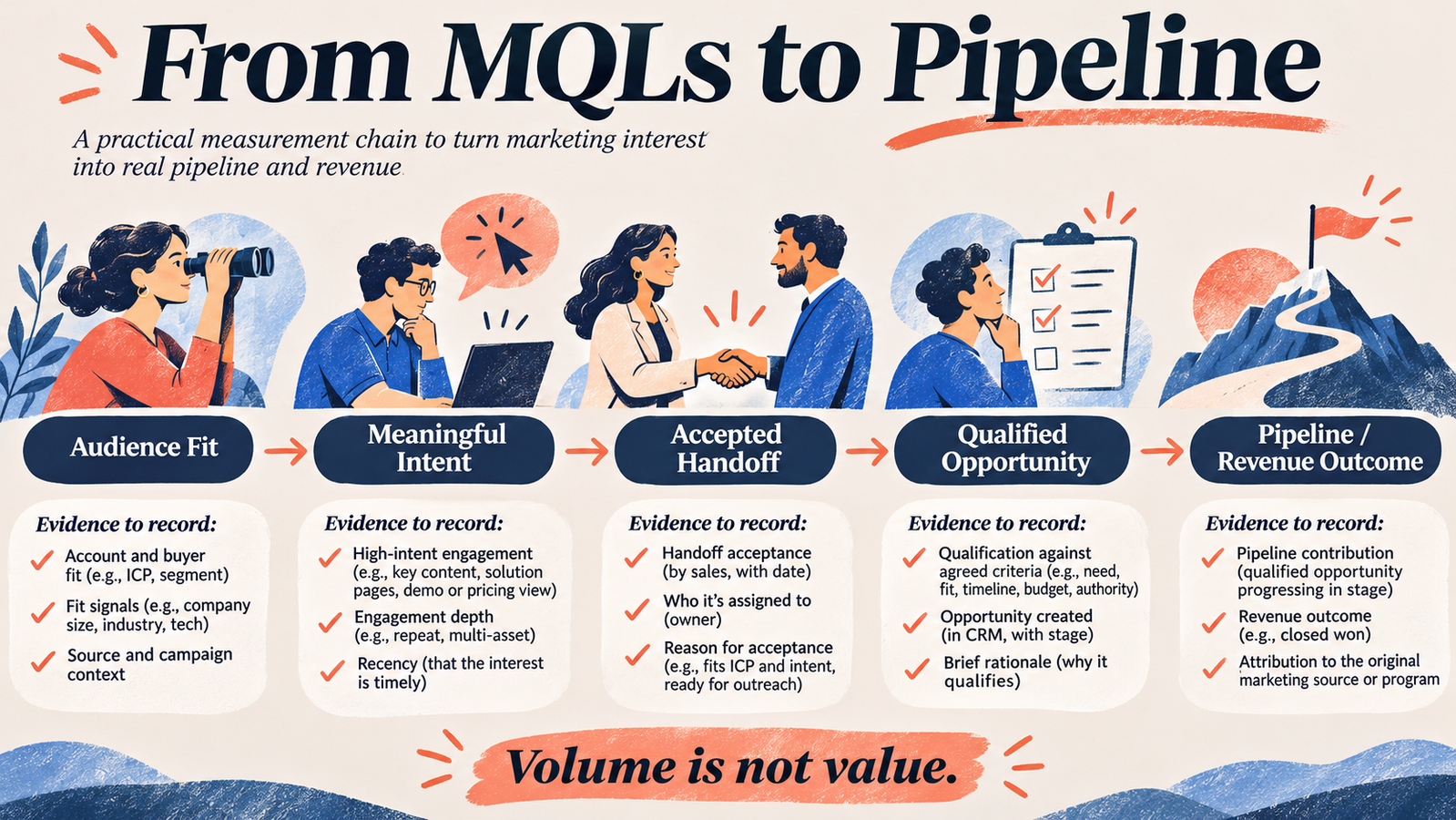
MQLs can help teams coordinate, but they do not equal pipeline. Define fit, intent, handoff, opportunity, and outcome evidence separately, then measure quality and progression with attribution limits in view.
Key Takeaways
- Define each stage with observable evidence.
- Separate account fit from buyer intent.
- Track handoffs, opportunities, and outcomes distinctly.
- Use attribution as a model, not proof of causality.
Playbooks
Frameworks you can put to work
Growth marketing, LinkedIn presence, and more — delivered as PDFs.
Browse the playbooksA pipeline-focused demand system connects marketing work to qualified commercial progress instead of treating lead volume as the end result. MQL and SQL labels can help teams coordinate, but only when both groups agree what they mean and what evidence supports them. The more useful question is whether a target buyer has a real need, fits the business, and is taking a meaningful next step.
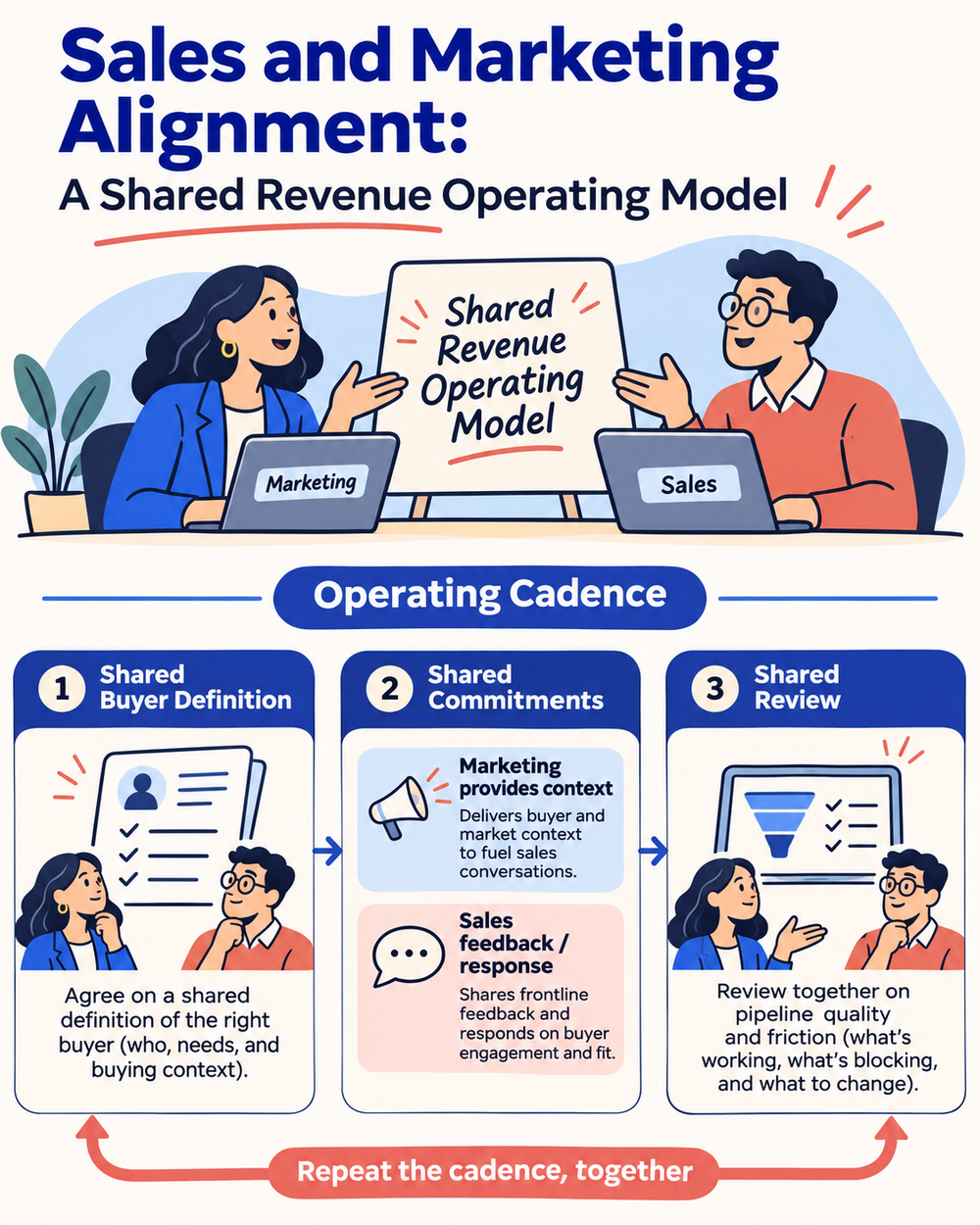
This guide shows how to design a measurement chain from audience fit to pipeline and revenue. It is part of the Revenue Systems pillar and extends the earlier guide to sales and marketing alignment.
Why MQL counts do not tell the whole story
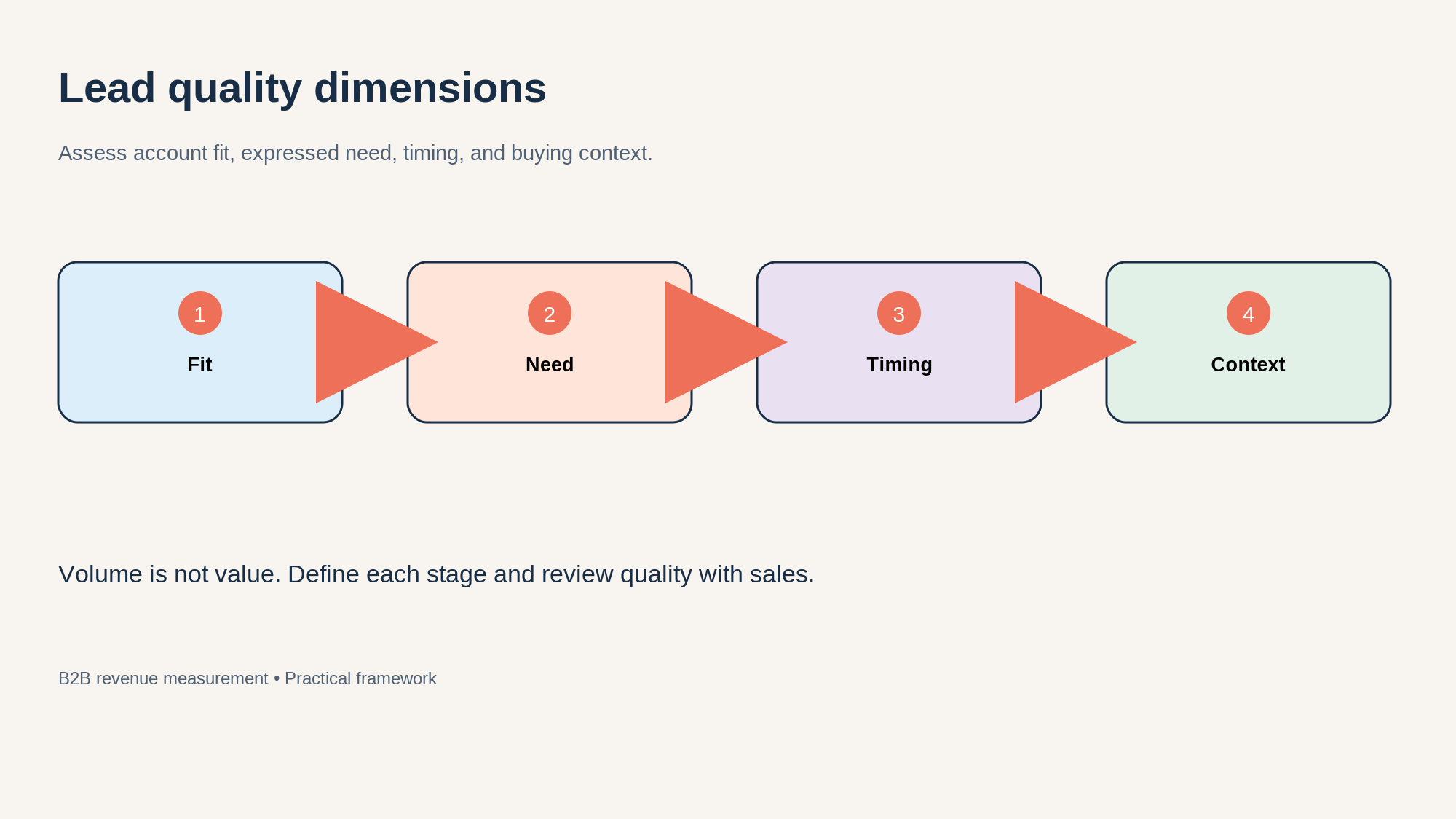
A marketing-qualified lead is a team-defined signal that a contact or account may merit further attention. It is not a universal industry standard or proof that someone is ready to buy. The same action, such as downloading a report, may reflect research, student interest, vendor evaluation, or casual curiosity. Volume without fit, intent, and follow-up context can make dashboards look active while pipeline quality remains unclear.
A pipeline measure should follow the buyer’s progress and the team’s decisions. Track who the program reached, why a record was routed, whether sales accepted it, what happened next, and whether an opportunity was created and progressed. Keep definitions visible so trends can be interpreted consistently over time.
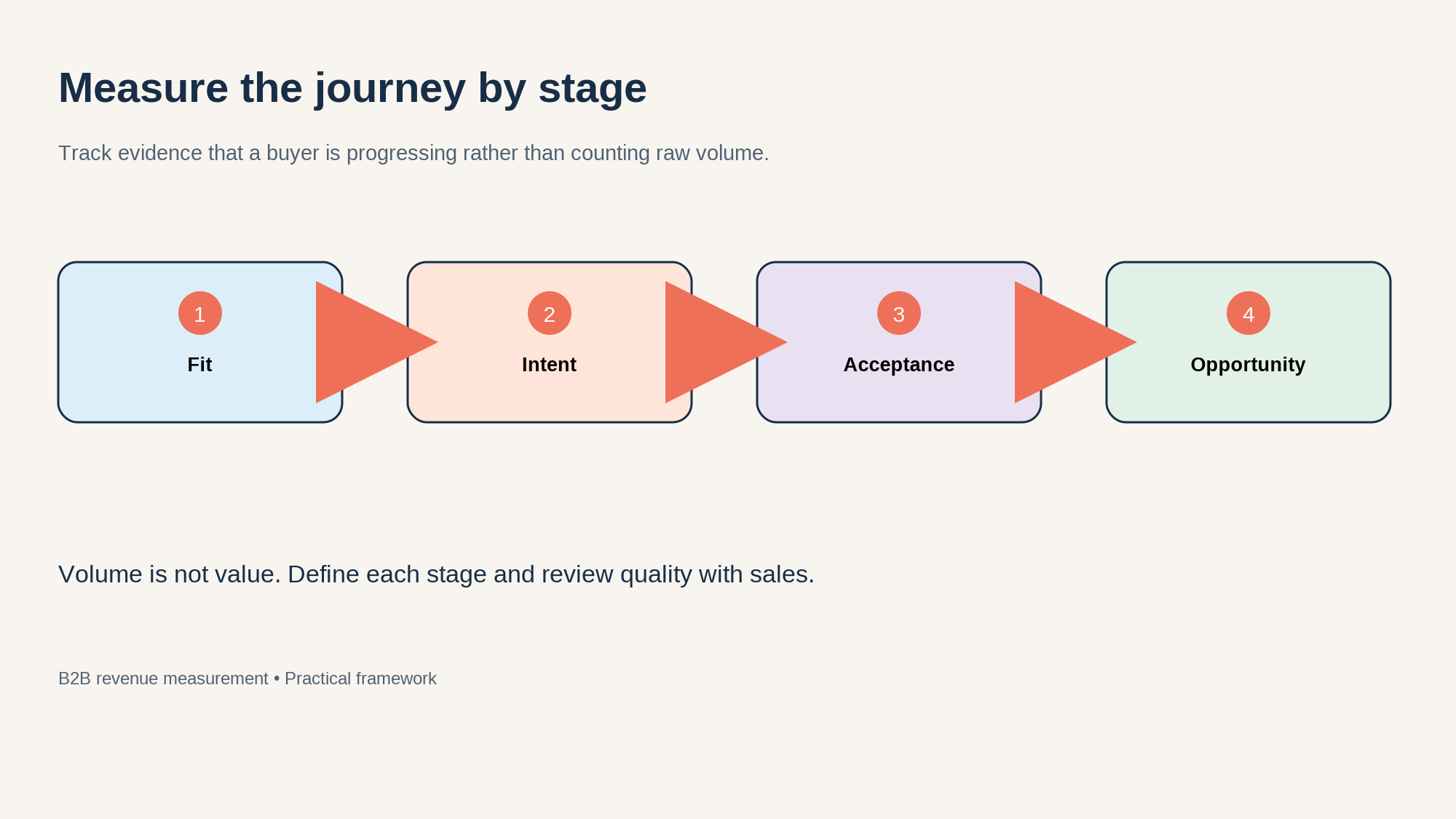
Define each stage with observable evidence
Start with audience fit: which company and buying roles can benefit from the offer? Record the criteria and disqualifiers. Then define meaningful intent using relevant behavior, expressed requests, or conversation context. A fit score and an intent score answer different questions; avoid blending them into a single opaque number unless the team understands the weighting and limitations.
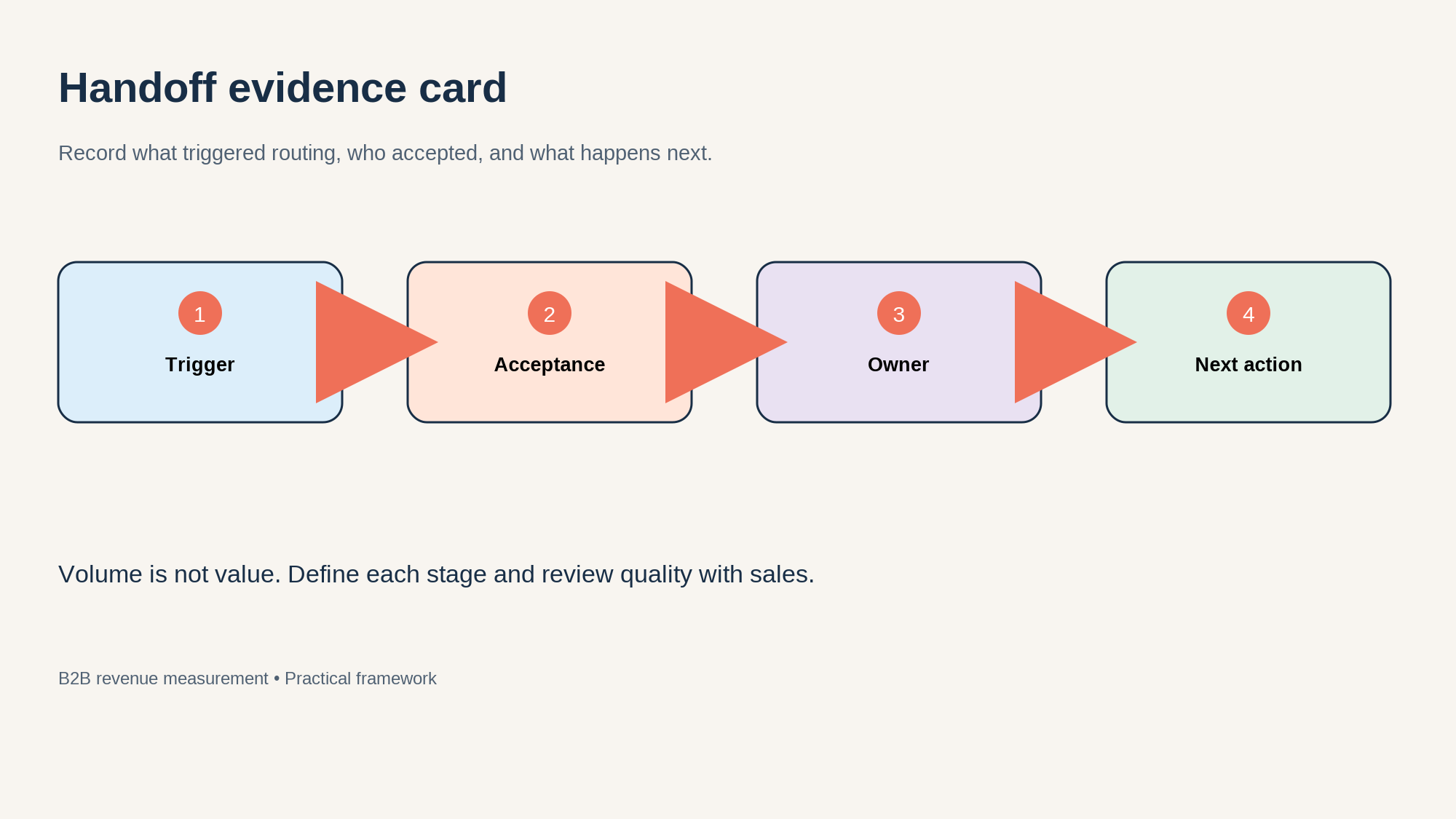
Define the handoff event, acceptance owner, response expectation, and the reason a record may be returned to nurture. Define what counts as a qualified opportunity, who verifies it, and what stage entry evidence is required. Keep terms such as MQL, SAL, SQL, and opportunity only if they help teams communicate. Rename or remove stages that do not trigger a distinct action.
Create a shared measurement chain
Build a basic record of the journey: source and campaign context; fit criteria; the meaningful action; the handoff date and owner; acceptance or return reason; opportunity creation and stage; and the outcome. Include the relevant account or buying group where appropriate. Keep fields concise enough that teams will maintain them. Document which system supplies each value and how missing or conflicting data is handled.
Use a scorecard that separates stages. Audience-fit coverage shows whether campaigns reached the right accounts. Handoff acceptance and return reasons show whether the qualification rule works. Response time and meeting completion reveal follow-through. Opportunity creation and stage progression help connect the work to pipeline. Closed revenue may be useful as a lagging outcome, but it should not be credited to a single touch by default.
Put this into practice
The GTM Funnel Playbook
How B2B teams find, win and keep customers, with a 90-day action plan. Seven funnel stages, one owner each, from the revenue number to the clients you keep.
Use attribution with honest limits
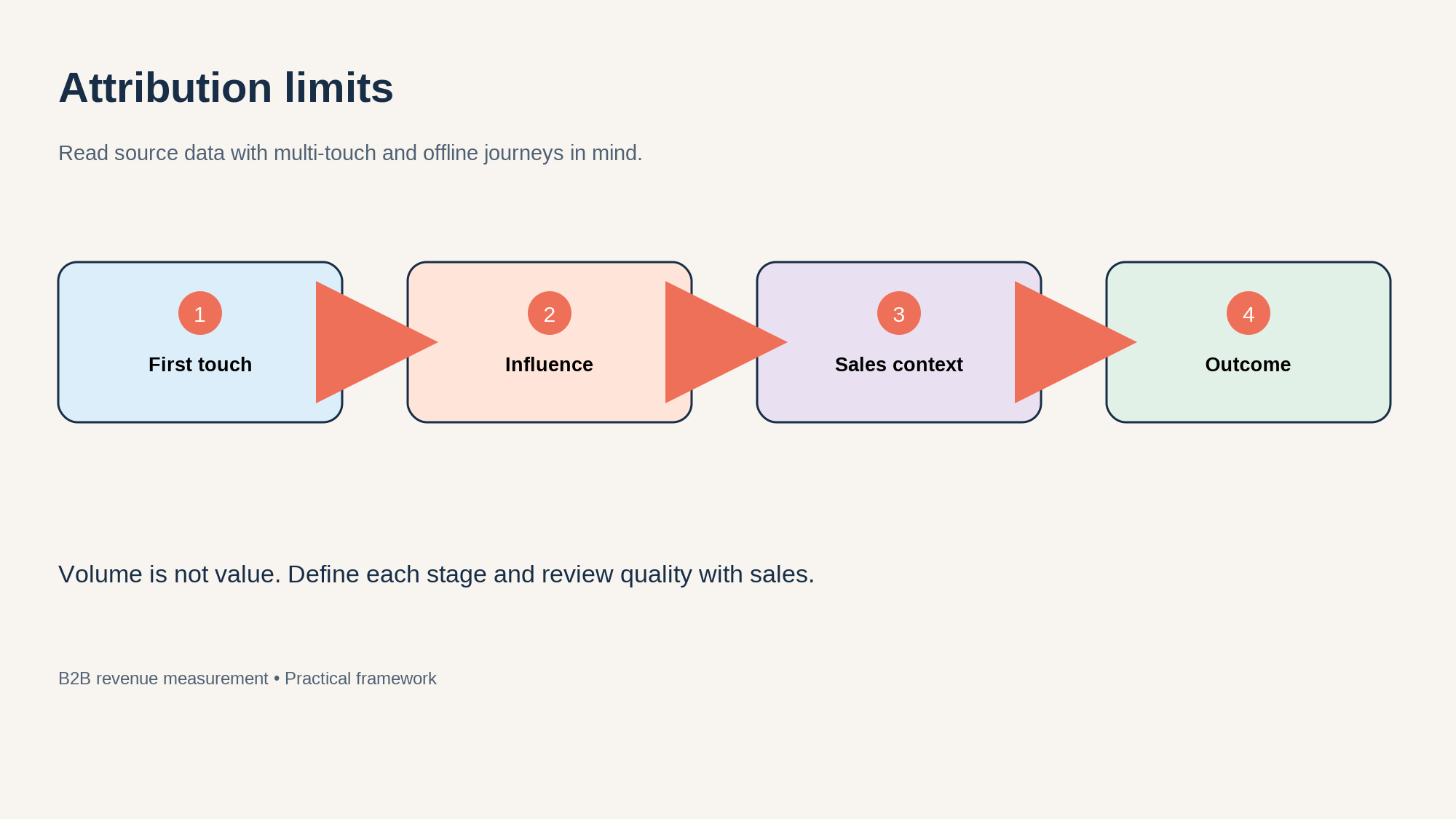
Attribution models allocate credit according to rules, not full causal truth. A first-touch model can show an initial recorded source; a last-touch model shows the latest tracked interaction; a multi-touch model distributes credit across selected touches. Each can be useful for a defined question, but none necessarily captures peer conversations, dark social, offline influence, or activity on platforms that do not share data.
State the model, window, exclusions, and data coverage beside reported figures. Compare trends across similar periods, and inspect actual account histories to understand unusual changes. If budget allocation needs causal evidence, use experiments or a suitable comparison group where possible. Do not describe “influenced pipeline” as incremental pipeline unless the measurement design supports that claim.
Improve quality rather than chase volume
Review rejected records, no-shows, stalled opportunities, and closed-lost reasons with marketing and sales. Look for patterns: wrong account fit, an unclear offer, low-quality source, timing mismatch, missing information, or a slow response. Validate a possible cause with calls, buyer feedback, and CRM evidence. Then change one part of the targeting, content, qualification, or handoff process and observe the result.
Keep enough capacity for follow-up before increasing campaign volume. If the sales team cannot respond to the current set of meaningful requests, more leads may worsen the experience. Marketing can support buyers with clear comparison and implementation resources, while sales returns recurring objections and questions to the editorial plan.
A practical 30-day reset
In week one, audit stage definitions and trace a sample from campaign source to outcome. In week two, agree on fit, intent, acceptance, and opportunity criteria. In week three, fix the handoff fields and reporting view, then brief the teams. In week four, review acceptance reasons, response, and early progression. Record data gaps and choose a follow-up experiment if a causal claim is required.
A healthy system measures what each stage is meant to accomplish. Replace activity targets that reward volume alone with evidence that helps teams make better decisions and buyers make progress.
Frequently Asked Questions
Frequently Asked Questions
What is the difference between an MQL and pipeline?
Should B2B companies stop using MQLs?
How do you measure marketing contribution to pipeline?
What is a good MQL-to-SQL conversion rate?
How should sales reject an MQL?
Does attribution prove marketing caused revenue?
Research and further reading
Gartner: Use B2B Marketing Metrics to Measure Growth discusses connecting marketing metrics to sales outcomes.
Salesforce: State of Marketing covers data access and cross-functional measurement.
Put this into practice
The GTM Funnel Playbook
How B2B teams find, win and keep customers, with a 90-day action plan. Seven funnel stages, one owner each, from the revenue number to the clients you keep.

Swapan Kumar Manna
Go-to-market & AI search strategist
Swapan Kumar Manna is a go-to-market and AI search strategist and Founder & CEO of Oneskai. He has spent 14+ years helping companies get found, get chosen and grow.