Part of the Revenue Systems: Connecting Marketing, Sales and CRM So Growth Doesn't Leak series
revenue operations work when expertise, audience fit, useful collaboration, clear disclosure, and fair terms come before reach. Measure qualified attention and buyer learning alongside commercial indicators, while keeping attribution limits clear.
Key Takeaways
- Define shared handoff rules and named ownership.
- Set response service levels for different request types.
- Document lifecycle stages and data ownership.
- Trace real buyer records to locate a breakdown.
- Measure the repair against a clear baseline.
Playbooks
Frameworks you can put to work
Growth marketing, LinkedIn presence, and more — delivered as PDFs.
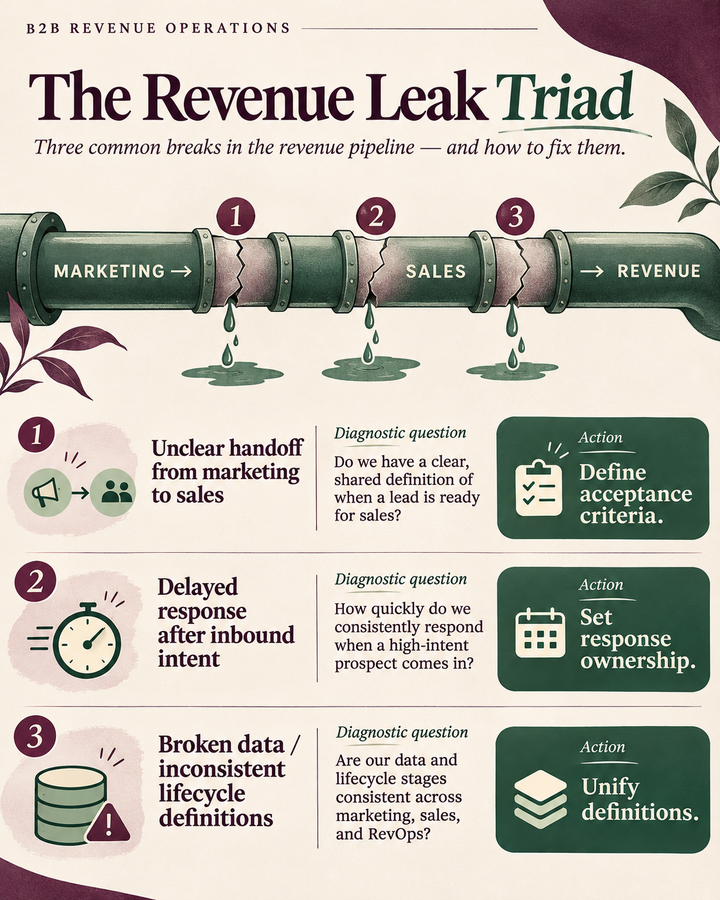
Browse the playbooksRevenue leaks appear when work, information, or ownership is lost between marketing, sales, and operations. A lead may meet one team’s definition but not another’s; a buyer can wait for a response; or CRM stages may not reflect how customers actually move through a decision. The label “revenue leak” is useful only when teams diagnose a specific breakdown and verify it with evidence.
This guide lays out a practical way to locate and fix those breaks. It belongs to the Revenue Systems pillar and connects to sales and marketing alignment and speed-to-lead response design.
The three common revenue leaks
The first leak is an unclear handoff. Marketing and sales may use different qualification criteria or expect different context. The second is delayed or inconsistent follow-up after a meaningful request. The third is fragmented data and stage definitions, which makes it difficult to see what happened or learn from it. These problems can overlap, so fix the process before buying another dashboard or tool.
Salesforce’s 2026 State of Sales research reported that 51% of surveyed sales leaders with AI said disconnected systems slow down their AI initiatives, and 74% of sales professionals said they were focusing on data cleansing. This survey of sales professionals does not establish that data silos cause every revenue shortfall, but it shows why connected, usable information is a practical operations concern. See the Salesforce report summary.
Leak one: the marketing-to-sales handoff
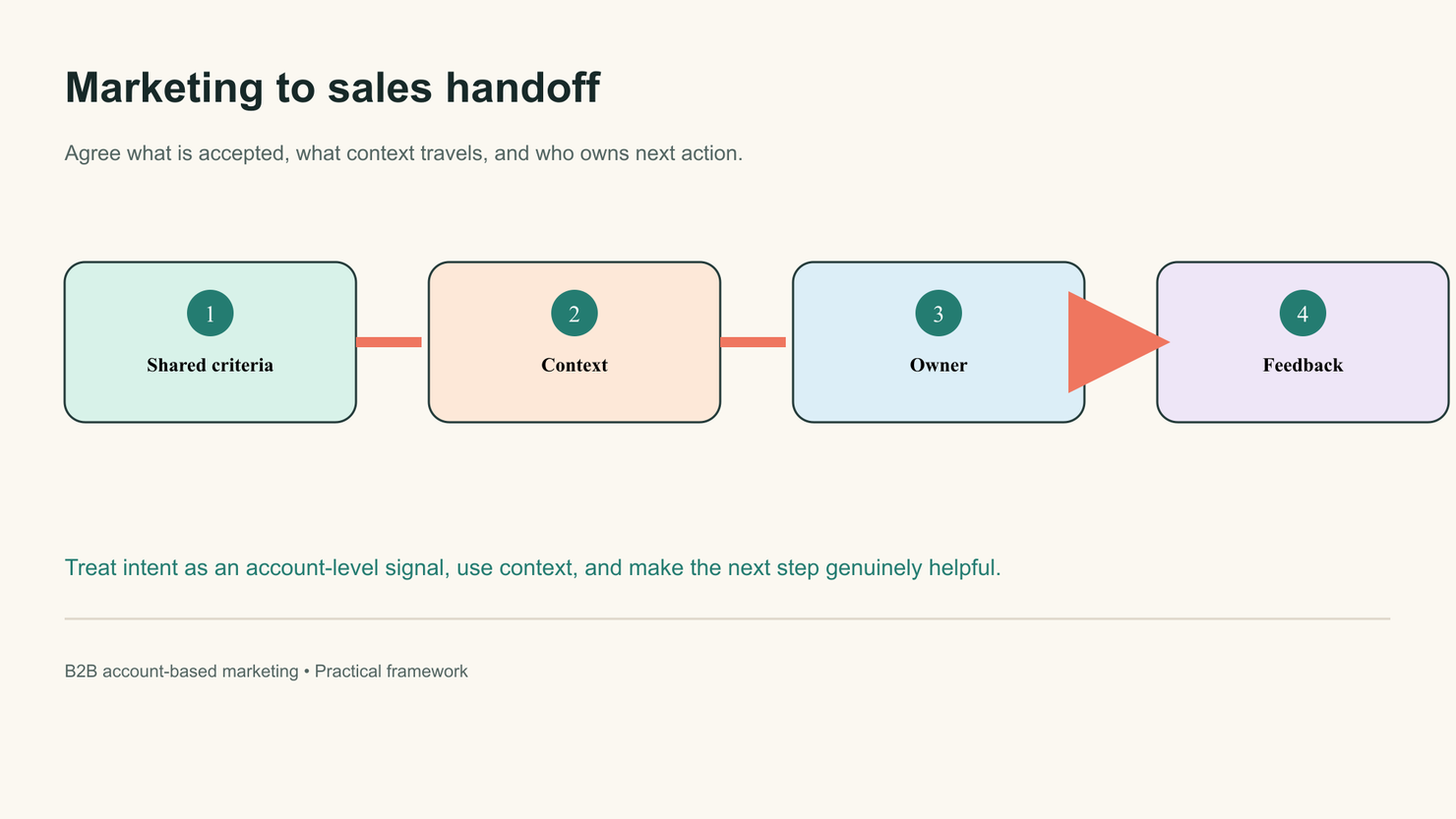
Write shared definitions for the events that trigger follow-up. Specify the account fit, buyer action, information needed, response owner, and situations that should go back to marketing nurture. Avoid treating every form fill as a sales-ready opportunity. A useful handoff includes what the person asked for, the relevant account context, consent or contact preferences, and the next agreed action.
Review examples together each month. Compare accepted and rejected handoffs, then ask whether the rule, the data, or the timing was wrong. Track acceptance and return reasons, but do not pressure teams to accept records that do not meet the agreed criteria. The purpose is to improve buyer experience and team learning, not create a metric that encourages low-quality transfers.
Leak two: slow or inconsistent response
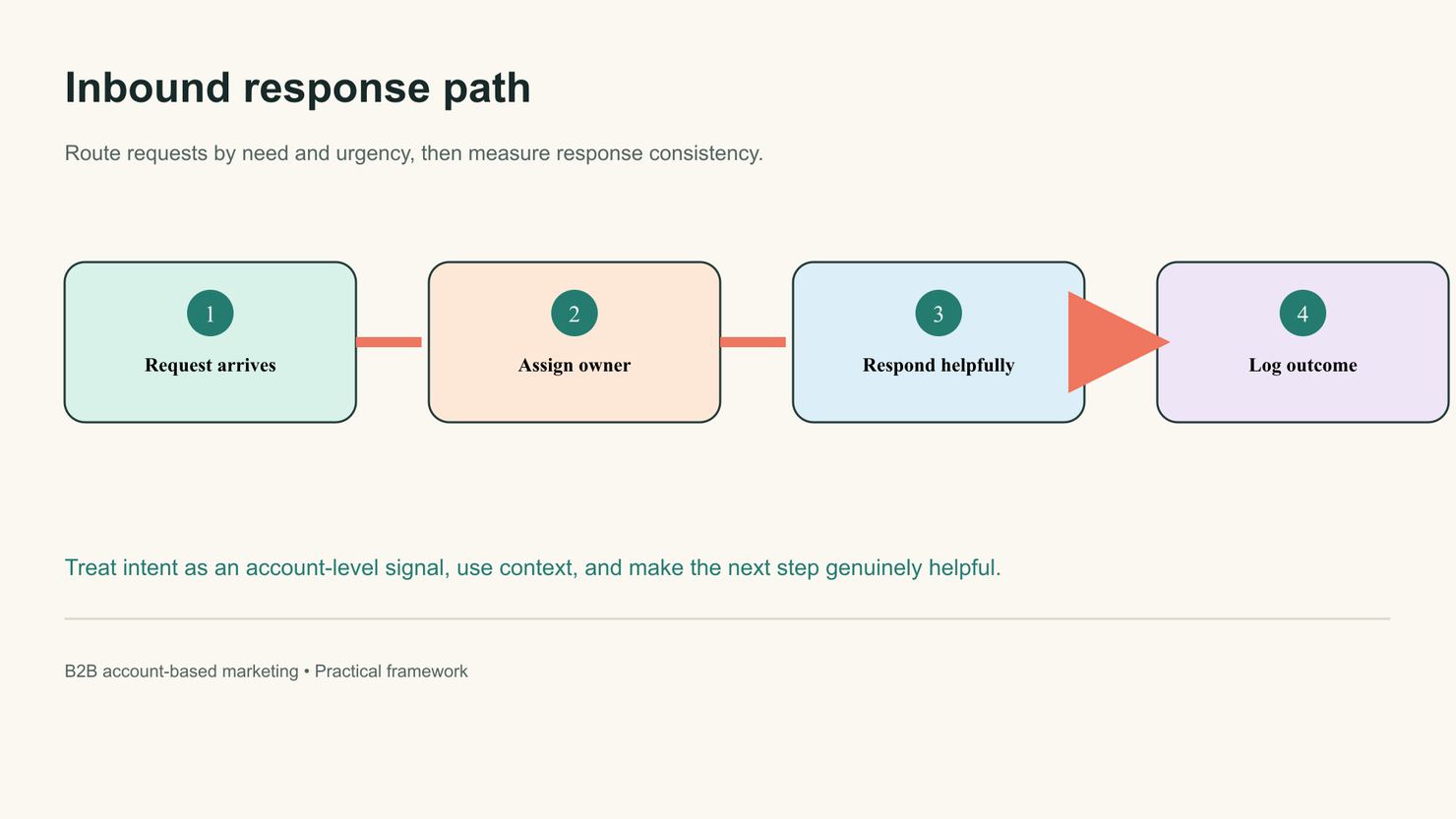
Define service levels by request type and business hours. A demo request, technical question, and general content download do not require the same response. Route each to a named team or queue, provide a fallback when the owner is absent, and tell the buyer what will happen next. Measure elapsed time from request to meaningful response, not just automated acknowledgment.
Test the path as a buyer would: submit a request, check that it reaches the right person, verify the follow-up is relevant, and confirm CRM records the result. If response time worsens, inspect routing, staffing, data quality, and notification failures before changing the target. Automation can assist with prioritization and routing, but humans should own complex or sensitive conversations.
Leak three: fragmented data and definitions
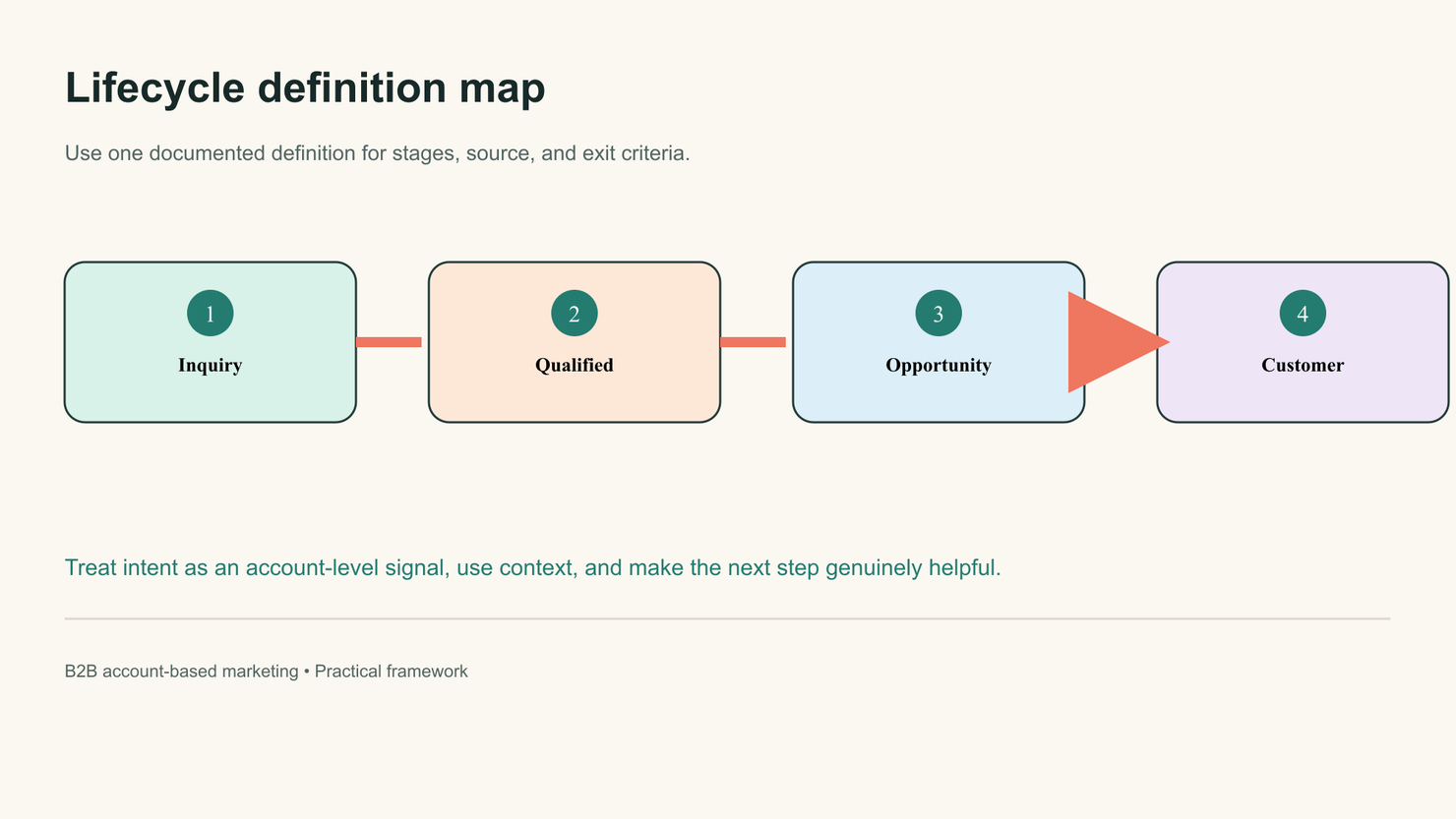
Choose a small set of lifecycle stages with entry and exit criteria, required fields, and a clear owner. Document which system is authoritative for account identity, contact preferences, opportunity status, and revenue. Define how duplicate records, re-opened opportunities, partner-sourced deals, and renewals are handled. A field dictionary can be more useful than another broad “single source of truth” claim.
Prioritize data that supports a decision. Audit completeness, duplicates, stale records, and inconsistent values for the fields teams actually use. Set a correction owner and a process for preventing the same errors from returning. If two systems disagree, define how the conflict is resolved and how changes are logged. Do not automate a process until teams trust the underlying definitions.
Diagnose before selecting a fix
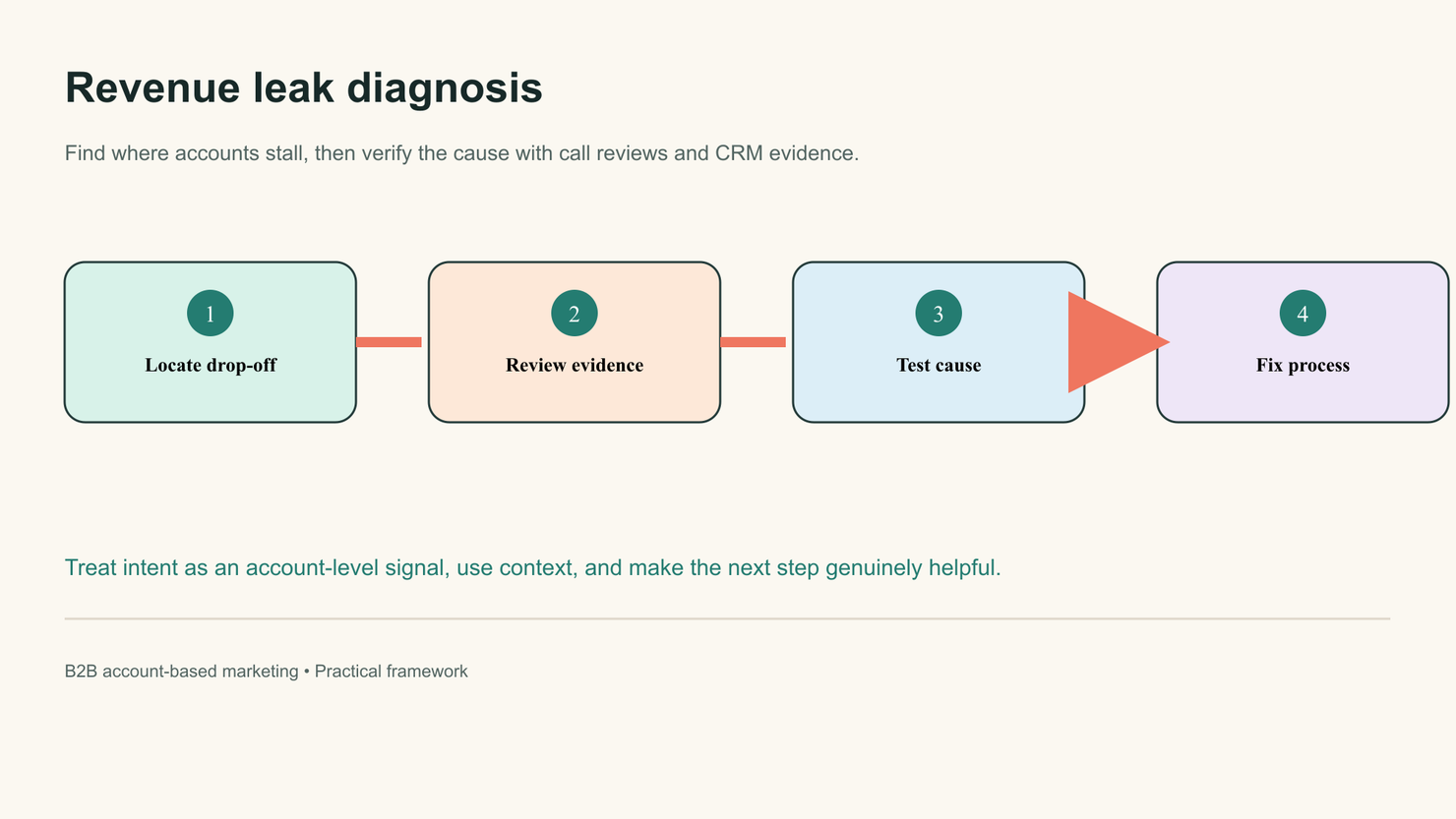
Start with one observable symptom, such as accepted leads that do not receive a response or opportunities with no recorded next step. Trace a sample of records from the first touch through the outcome. Review activity logs, call notes, routing rules, and customer feedback. Ask the people doing the work to explain where the process becomes unclear or repetitive.
Form a specific explanation and test it on a small segment. If the handoff is the issue, clarify the rule and measure acceptance and response quality. If routing is broken, repair ownership and fallback paths. If stage data is unreliable, clean the relevant fields and add validation at the point of entry. A change should reduce friction for buyers and staff, not merely improve a report.
Measure the repair and maintain it
Choose a baseline and a small set of measures: handoff acceptance with reasons, time to meaningful response, stage conversion with clear definitions, and data completeness for required fields. Review outcomes alongside call quality, buyer feedback, and team effort. Where possible, compare against a similar group or use a staged rollout. Do not claim that one process change caused revenue growth without an appropriate design.
Assign an operational owner to review definitions, exceptions, and data hygiene on a regular schedule. Record changes and notify teams when rules shift. Use customer-facing feedback to catch problems that internal metrics miss. The system should remain simple enough for people to follow and flexible enough to adapt when the buying process changes.
A 30-day starting plan
In week one, select one measurable breakdown and map the current buyer path. In week two, review a sample of records with marketing, sales, and operations, then agree on the likely cause. In week three, introduce one focused change and train the teams who use it. In week four, compare the agreed measures with the baseline, collect buyer and staff feedback, and decide whether to keep, revise, or roll back the change.
Revenue operations improves through clear agreements and steady correction. Find where a buyer or team gets stuck, verify why it happens, and fix that point before expanding the process.
Frequently Asked Questions
Frequently Asked Questions
What is a revenue leak?
What are common revenue leaks in B2B?
How do you find revenue leaks?
What metrics help identify revenue leaks?
Who owns revenue operations?
How can AI help reduce revenue leaks?
Research and further reading
Salesforce: State of Sales 2026 summarizes survey findings on disconnected systems, data quality, and sales teams.
Gartner: Adopting RevOps to align with buyer journeys outlines cross-functional coordination and data integration in revenue operations.
Frequently Asked Questions
What is a revenue leak?
What are common revenue leaks in B2B?
How do you find revenue leaks?
What metrics help identify revenue leaks?
Who owns revenue operations?
How can AI help reduce revenue leaks?

Swapan Kumar Manna
Go-to-market & AI search strategist
Swapan Kumar Manna is a go-to-market and AI search strategist and Founder & CEO of Oneskai. He has spent 14+ years helping companies get found, get chosen and grow.