Part of the Demand Generation and Brand Authority: How Companies Become the Brand Buyers (and AI) Already Know series
Anonymous B2B research can inform account-level priorities, but it does not prove an individual’s identity or intent. Build useful self-serve content, interpret signals with context, respect privacy choices, and measure outcomes with clear attribution limits.
Key Takeaways
- Treat anonymous activity as an account-level clue, not an identity.
- Match helpful content and outreach to evidence and expressed preferences.
- Coordinate marketing, sales, and privacy guardrails.
- Measure requested conversations and account progress with attribution limits.
Playbooks
Frameworks you can put to work
Growth marketing, LinkedIn presence, and more — delivered as PDFs.
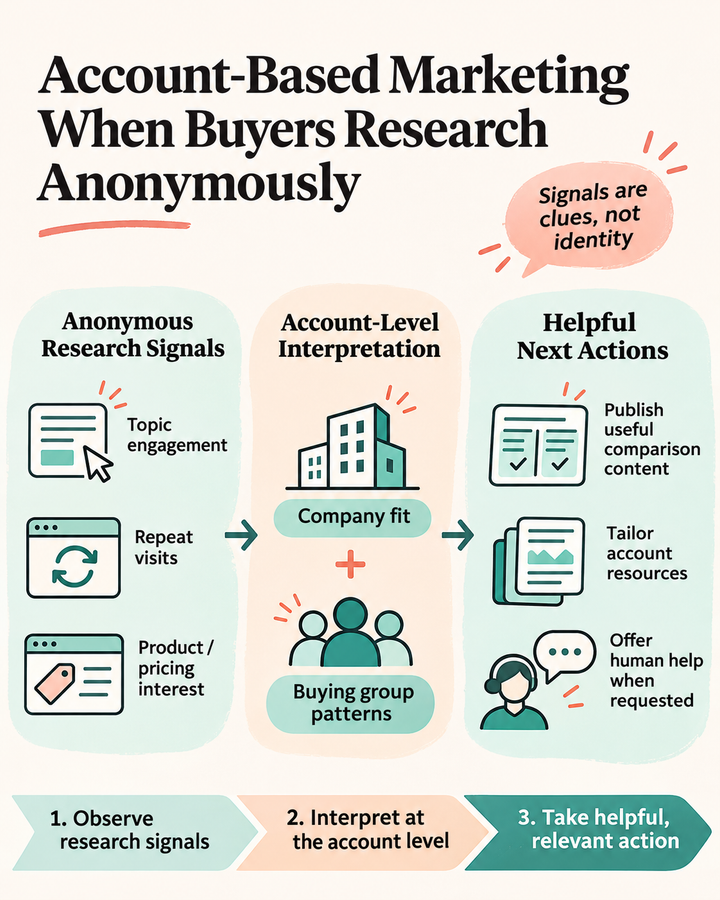
Browse the playbooksAccount-based marketing when buyers research anonymously means planning for buying groups whose members learn before they identify themselves to a vendor. The job is to make useful information available across the account journey, then use permitted, contextual signals to decide whether a relevant next step may help. Anonymous activity can guide priorities, but it rarely proves who visited or what a specific person intends.
This guide explains how to use account-level intent responsibly, choose helpful actions, and connect marketing with sales without turning weak signals into intrusive outreach. It belongs to the demand generation and brand authority pillar and complements the guides on demand generation versus lead generation and B2B dark social.
What anonymous buyer research looks like
B2B buying groups often research a problem through search, peer conversations, review sites, events, and vendor resources before speaking with sales. Some interactions are visible in first-party analytics; others are aggregated, mediated by platforms, or private. A return visit to a pricing page may be useful context, but it is not a reliable identity signal on its own.
Gartner reported in 2025 that 61% of surveyed B2B buyers preferred a rep-free buying experience for at least some purchase tasks, while still seeking seller input when they needed contextual guidance. That supports a balanced design: let people research independently and make expert help available when it adds value. The statistic describes a survey preference, not a rule for every buyer or market. Read the Gartner survey release.
Interpret signals at the account level
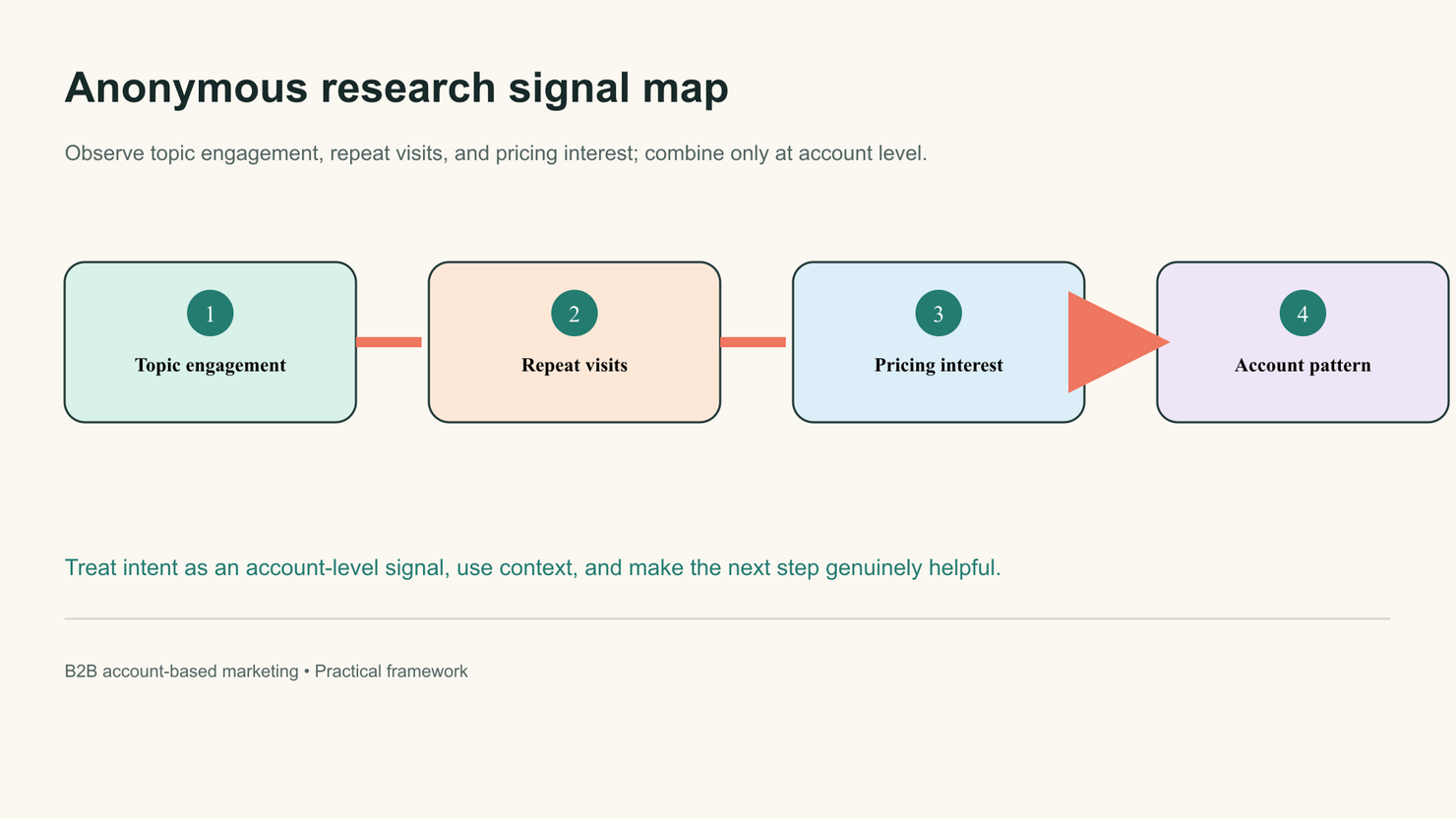
Start with fit: does the company match the segment the offer can serve? Then look for patterns across time and content, such as several relevant resources being read or repeat interest from an account already known through a legitimate interaction. Treat intent scores as prioritisation aids. Document how they are calculated, how long they remain useful, and what evidence can invalidate them.
Combine signals only when the data source and purpose are appropriate. Avoid inferring sensitive attributes or pretending that a named person visited when the evidence is only account-level. Respect consent choices and applicable privacy requirements. If an account is a poor fit, a high activity score should not override that fact. If the activity is ambiguous, continue improving general discoverability instead of initiating personal outreach.
Match the next action to the evidence
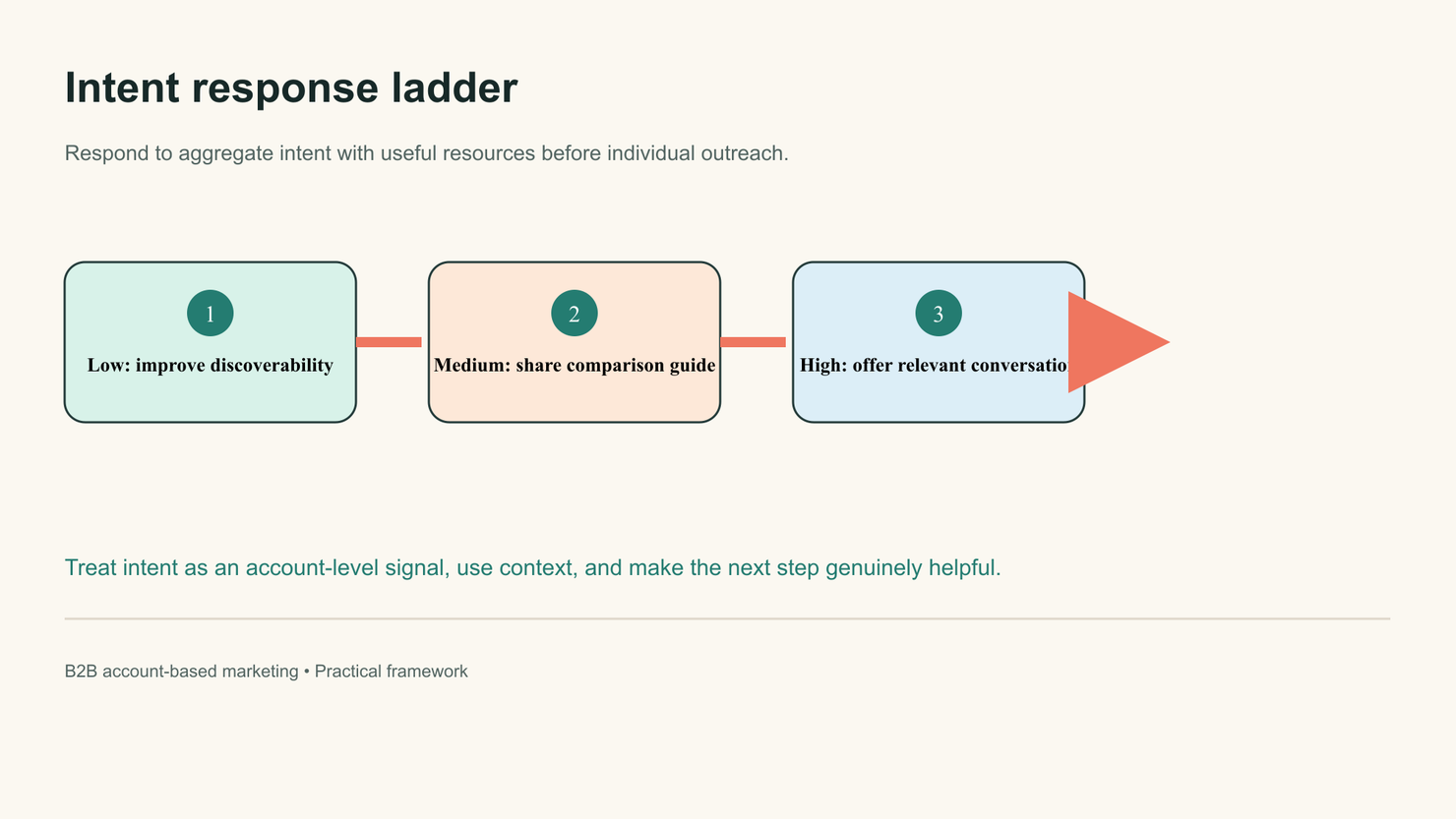
For broad or early interest, make foundational material easier to find: explain the problem, definitions, trade-offs, and evaluation criteria. For repeated engagement with a specific topic, consider a deeper comparison, implementation guide, or webinar. When a known contact requests help, respond directly and relevantly. An action should follow the buyer’s expressed need, not merely the marketer’s access to a signal.
Coordinate a shared response across marketing and sales. Agree which account patterns warrant a review, what information sales should see, and when a rep may contact someone. Give sales useful context and a resource to share, not a script that claims to know what an unidentified person did. Include a way for buyers to decline further contact and honour that preference promptly.
Build a privacy-conscious operating model
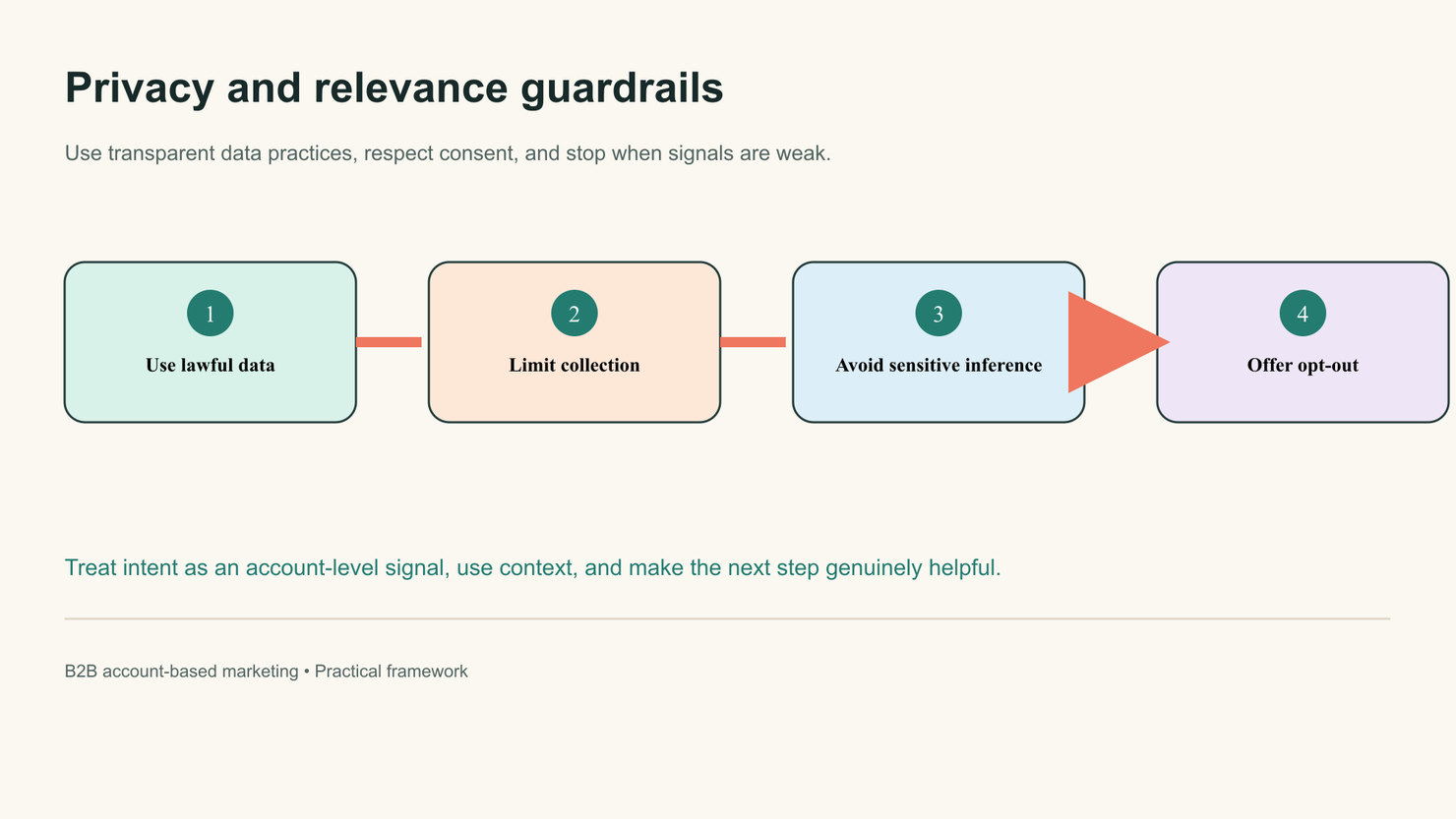
Write down the data sources, purpose, retention period, access rules, and review owner for the program. Check vendor contracts and local requirements before collecting or combining data. Use aggregated reporting where it is sufficient. Restrict exports and avoid retaining raw signals longer than needed. The relevant legal obligations vary by jurisdiction and data use, so obtain qualified advice for a specific implementation.
Make the buyer experience coherent. If content explains a topic, the next page should help with the same task. If someone asks for a conversation, sales should be able to respond with informed guidance. If the signal is only an inferred account pattern, marketing can still improve coverage without exposing the inference to a person. Useful self-serve content is often the safest and most scalable response.
Measure learning and business outcomes
Track a small set of measures across the process: target-account engagement with relevant content, return visits at an aggregate level, requested conversations, progression through agreed buying stages, and feedback from sales and customers. Define each measure and time window. Compare against a suitable baseline or holdout when possible. Do not credit a campaign with revenue simply because activity and a closed deal occurred in the same period.
Review false positives as carefully as positive responses. If a high-intent account never engages or is outside the target segment, refine the model. If useful content consistently appears in buyer conversations, preserve that evidence with consent and context. An ABM program becomes more credible when teams can explain what they know, what they inferred, and what remains uncertain.
A practical starting sequence
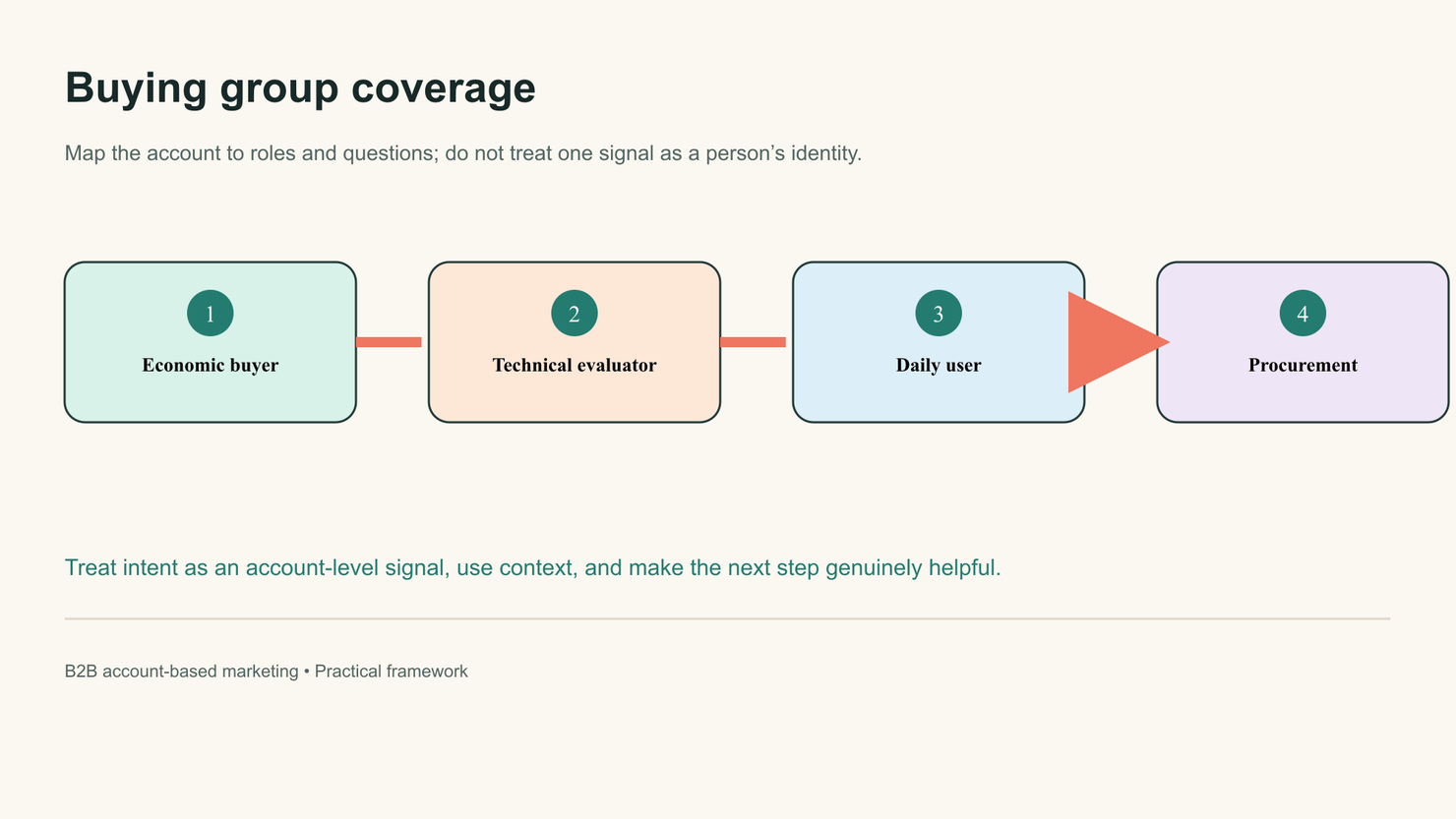
First, select a narrow group of accounts using fit criteria. Second, map the questions each buying role needs to answer. Third, ensure the site has clear, useful material for those questions. Fourth, define the few permitted account signals that can shape prioritisation. Fifth, agree on response thresholds with sales and privacy owners. Finally, review outcomes and buyer feedback monthly, adjust the content or rules, and remove signals that do not improve decisions.
The goal is not to identify every anonymous visitor. It is to help the right buying group make progress without forcing a conversation too early. Clear information, sensible account context, and respectful follow-up can make the experience more useful while preserving uncertainty where identity is unknown.
Frequently Asked Questions
Frequently Asked Questions
What is anonymous buyer research in B2B?
Can ABM identify anonymous website visitors?
How should sales respond to account intent data?
What content helps buyers who are researching privately?
How do you measure anonymous ABM?
Is anonymous intent data always accurate?
Research and further reading
Gartner: 61% of B2B buyers prefer a rep-free buying experience summarizes survey findings on independent research and where buyers seek seller guidance.
Frequently Asked Questions
What is anonymous buyer research in B2B?
Can ABM identify anonymous website visitors?
How should sales respond to account intent data?
What content helps buyers who are researching privately?
How do you measure anonymous ABM?
Is anonymous intent data always accurate?

Swapan Kumar Manna
Go-to-market & AI search strategist
Swapan Kumar Manna is a go-to-market and AI search strategist and Founder & CEO of Oneskai. He has spent 14+ years helping companies get found, get chosen and grow.