Part of the Revenue Systems: Connecting Marketing, Sales and CRM So Growth Doesn't Leak series
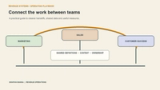
B2B buying groups can stall when stakeholders evaluate different risks without a shared business outcome. Map decision roles, provide consistent evidence, and agree on the process and next steps.
Key Takeaways
- Map roles and decision rights around the purchase.
- Connect role-specific evidence to one shared outcome.
- Surface disagreements and agree what proof resolves them.
- Diagnose stalled deals before sending another follow-up.
Playbooks
Frameworks you can put to work
Growth marketing, LinkedIn presence, and more — delivered as PDFs.
Browse the playbooksBuying groups rarely stall because one person needs another reminder. They stall when several people are trying to reduce different risks, and no one has helped them agree on the outcome or evidence that would make a decision safe. Sales and marketing can help the group make progress before a late-stage proposal is sent.
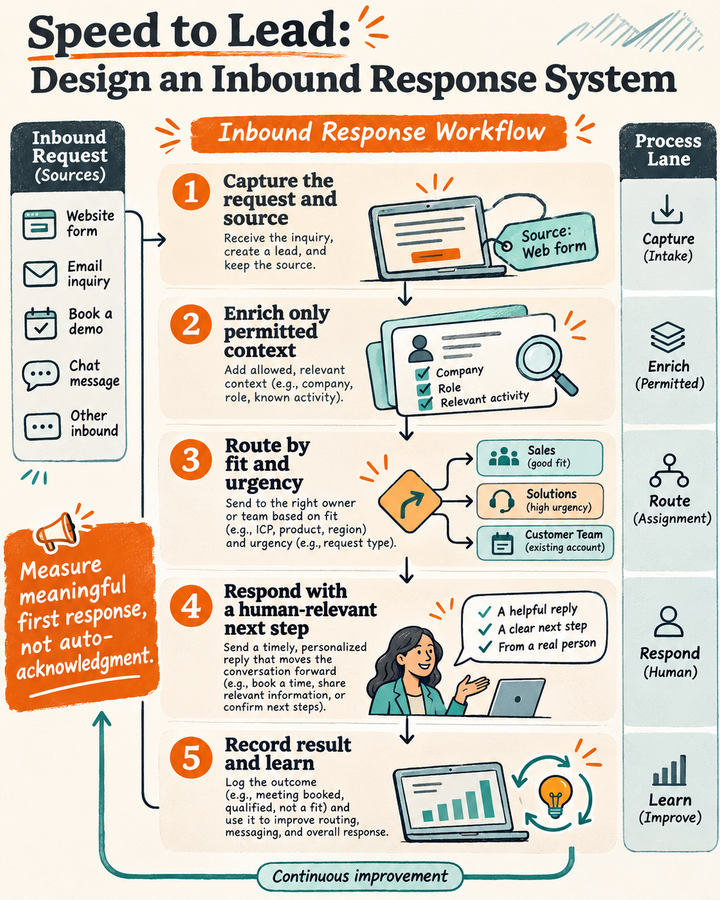
This guide is part of the Revenue Systems pillar. It connects stakeholder alignment to speed to lead and the first response and B2B conversion optimization.
Why buying groups stall
A buyer may support the business case while finance questions payback, IT flags data or integration risks, and the people expected to use the product worry about workflow disruption. Each concern can be reasonable. A deal stalls when these concerns remain separate, or when the seller answers one stakeholder in a way that makes the overall decision harder for the others.
Gartner reported that 74% of surveyed B2B buyer teams experienced unhealthy conflict during a decision process. The same research found that groups reaching consensus were more likely to describe the purchase as high quality. The implication is practical: help the group evaluate the decision together, instead of sending disconnected role-specific pitches. See Gartner’s 2025 buyer-team findings.
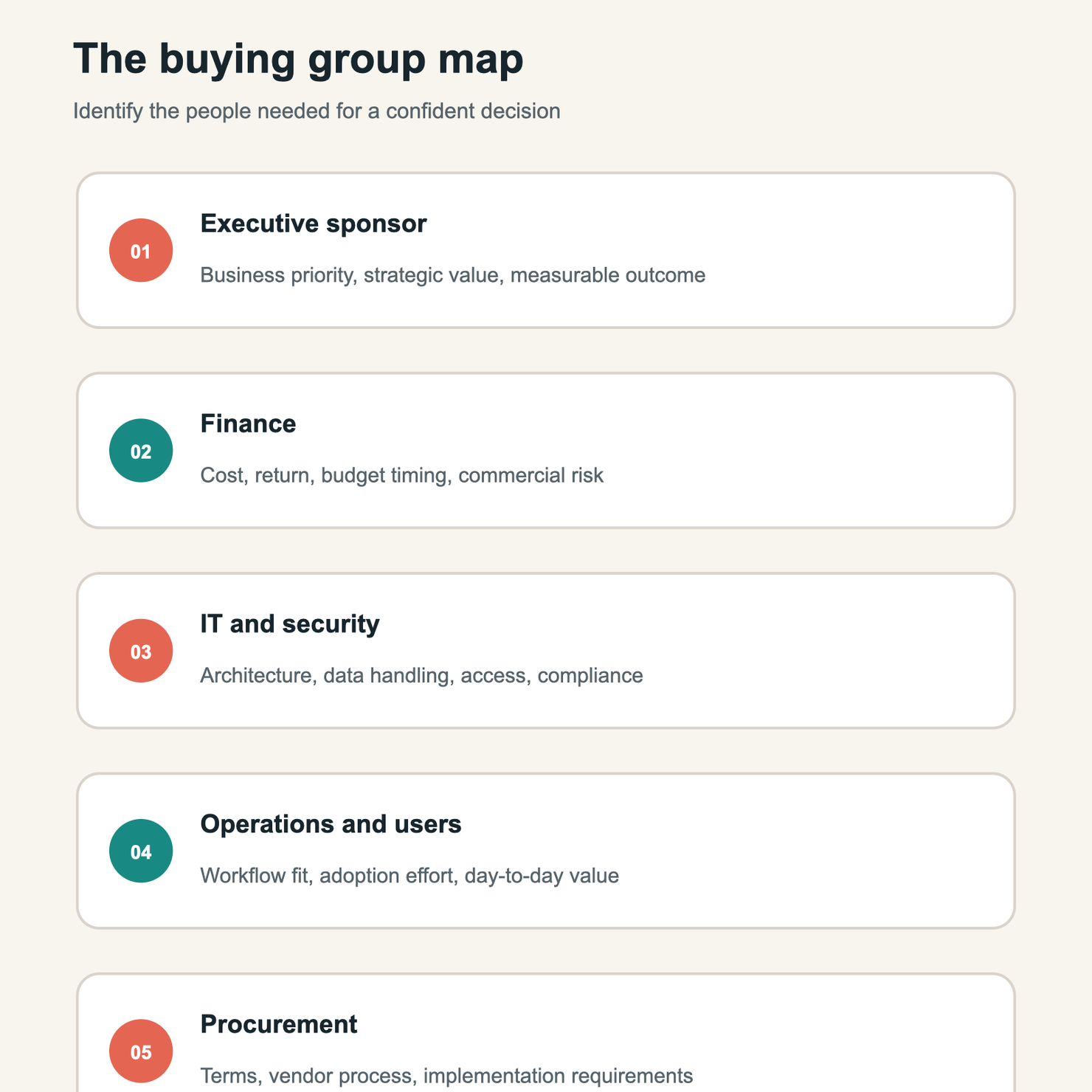
Map the group around the decision
Start with the decision rather than a generic persona list. What outcome is the organization trying to achieve? Who owns that result, who will use the solution, who must assess risk, who controls the budget, and who coordinates procurement? One person may play more than one role, and the group can change as the purchase moves forward.
Ask the champion what each participant needs to believe, what evidence they trust, and what internal process must be completed. Do not assume that the person who booked the first meeting can approve the purchase. Confirm decision rights and missing voices early, while there is still time to address their questions.
Translate individual concerns into shared proof
A role-based response can be useful, but the material should help colleagues reach the same conclusion. Pair a finance view of cost and return with the assumptions behind it. Pair a technical overview with data flows, controls, and ownership. Pair a workflow demonstration with an adoption plan and a clear measure of value. Make the evidence consistent across the group.
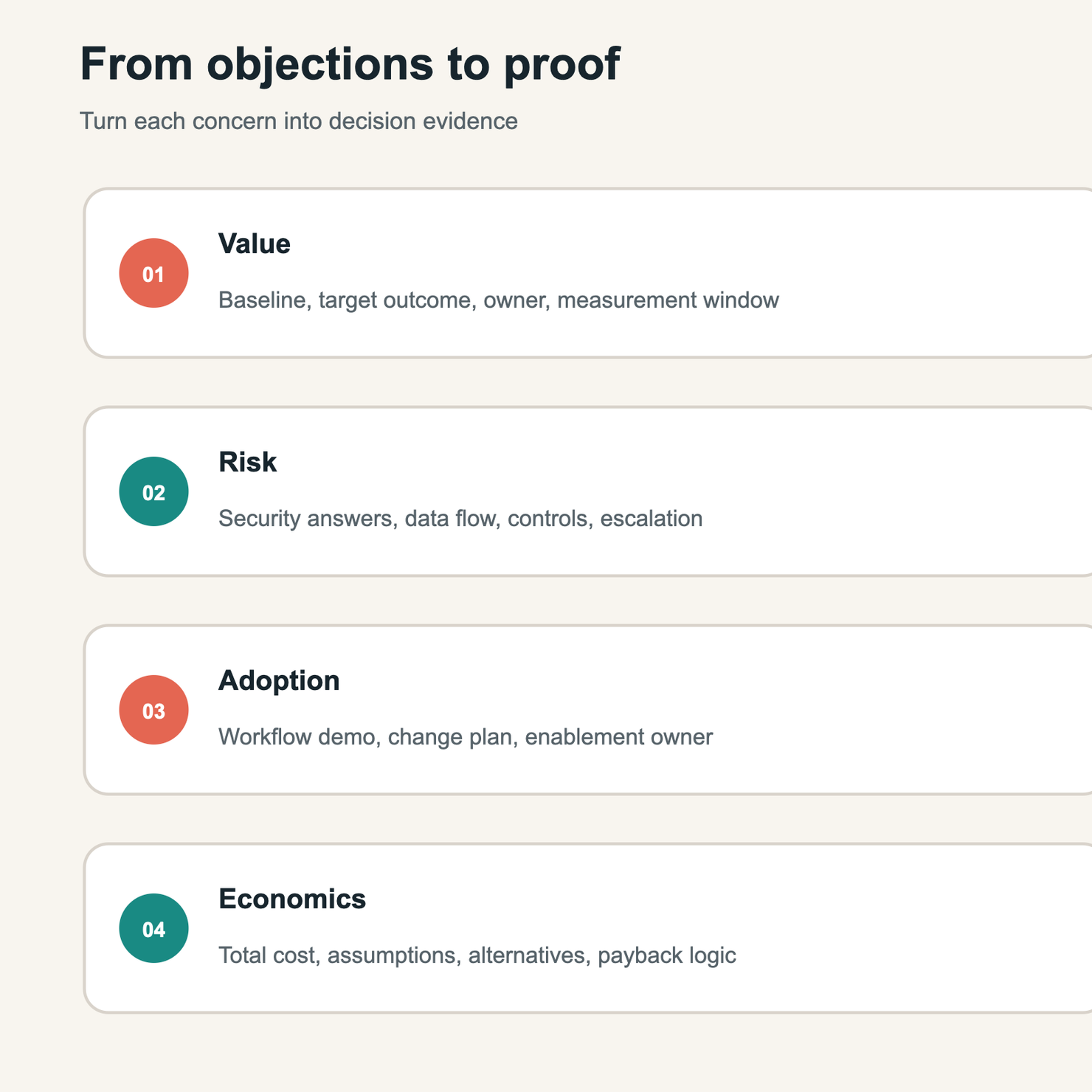
Use a shared outcome and credible evidence to support consensus. Gartner’s discussion of buying-group relevance cautions that messages aimed only at individual preferences can reinforce disagreement; its published summary explains the distinction.
Run a useful consensus conversation
When several stakeholders can attend, set an agenda that surfaces differences without forcing artificial agreement. Confirm the business outcome, invite each person to name a concern, separate facts from assumptions, and agree what evidence would resolve open questions. End with a decision owner, next steps, unresolved risks, and a date to review them.
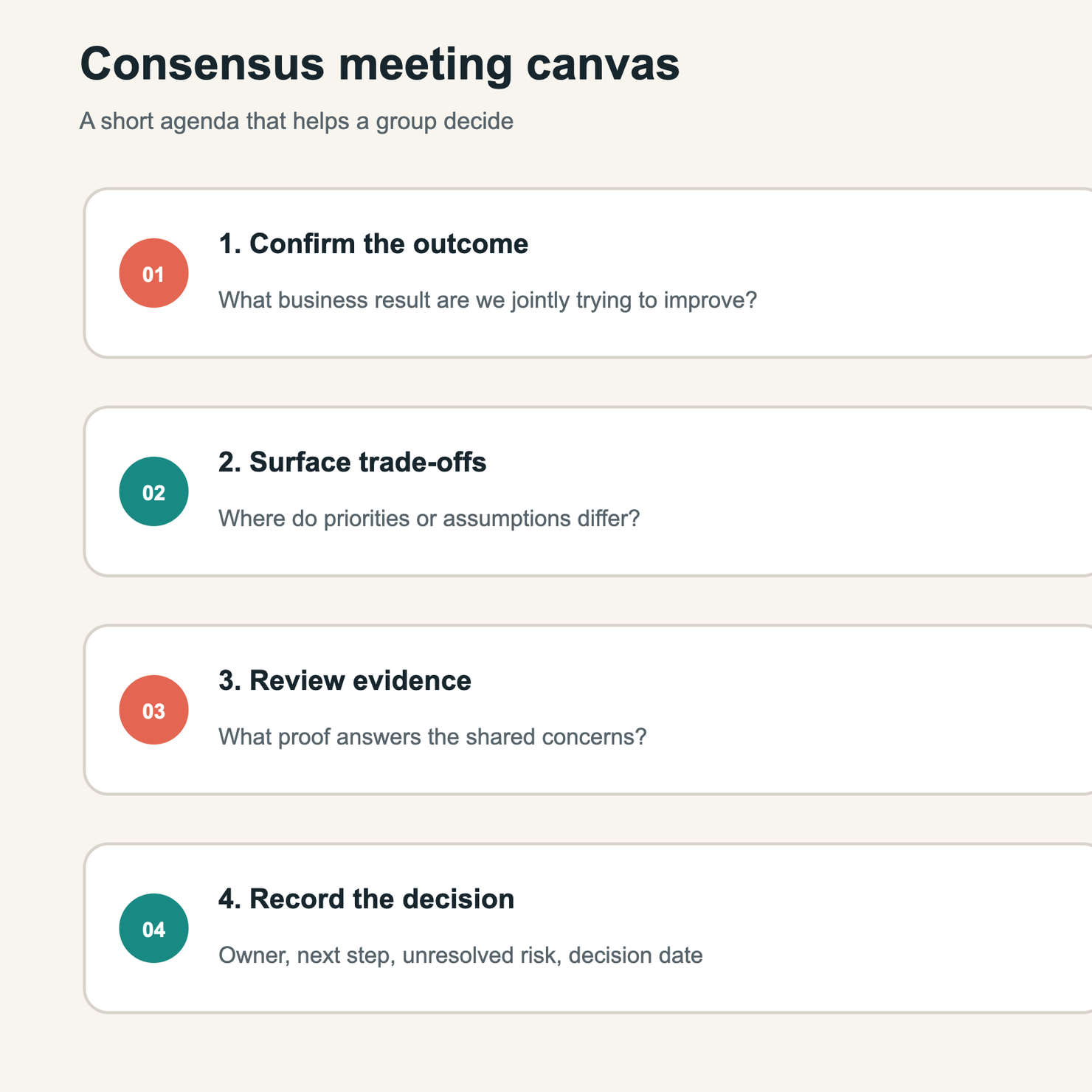
If the group is not ready for a meeting, give the champion a concise internal brief: the problem, expected outcomes, costs and assumptions, key risks, implementation needs, alternatives considered, and open questions. Make it easy to share and difficult to misquote.
Put this into practice
The GTM Funnel Playbook
How B2B teams find, win and keep customers, with a 90-day action plan. Seven funnel stages, one owner each, from the revenue number to the clients you keep.
Diagnose a stalled deal before following up
When momentum drops, ask what changed. Was the priority displaced? Is a stakeholder missing? Did new security or procurement requirements appear? Is the group unclear about how to compare options? A helpful follow-up names the likely obstacle and offers a concrete way to resolve it, rather than asking whether the prospect has an update.
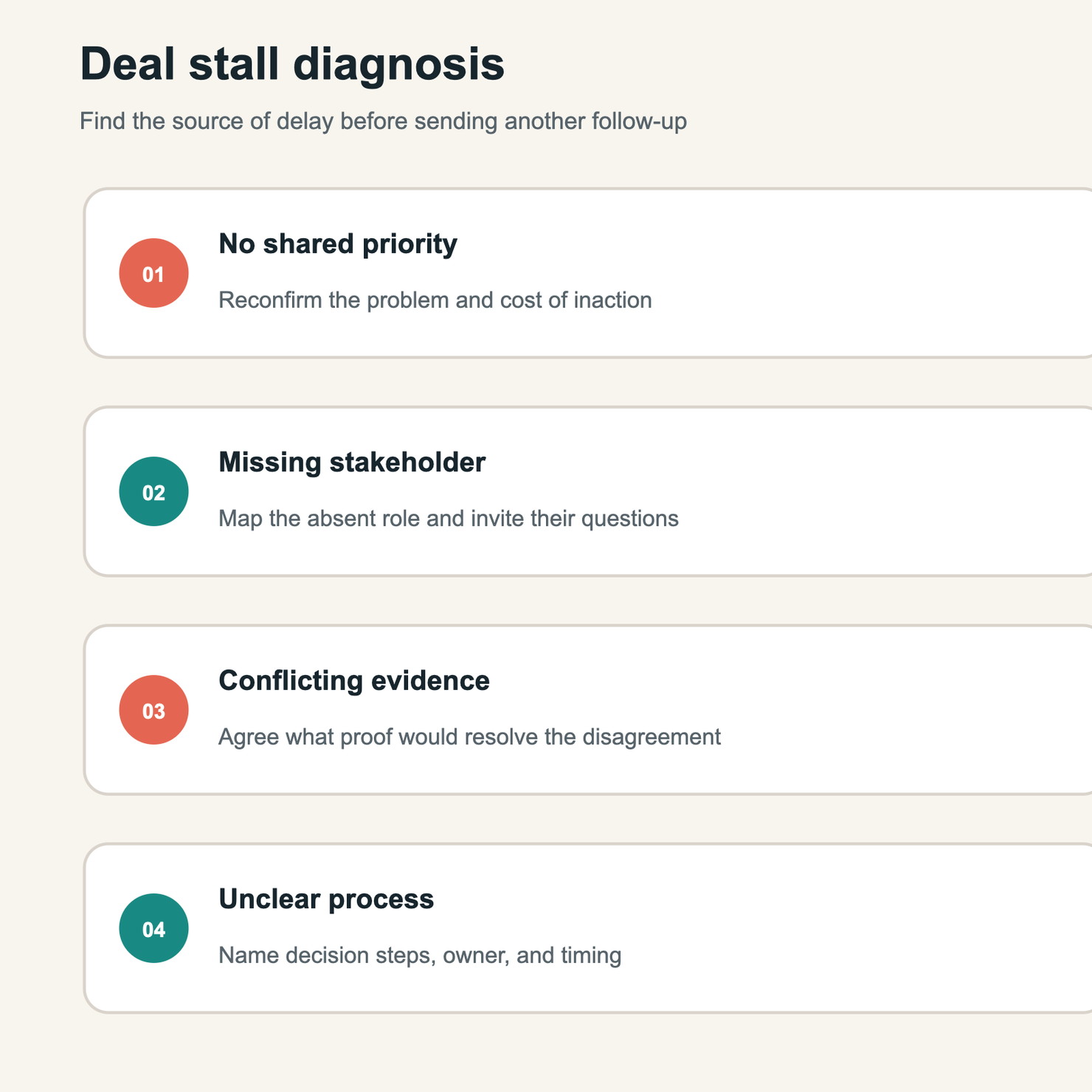
A practical sequence is to reconfirm the outcome, identify whose input is missing, agree the evidence required, and clarify the approval process. If there is no active priority or credible path to a decision, update the forecast honestly and set a relevant future check-in rather than manufacturing urgency.
How marketing supports consensus
Marketing can make buying decisions easier by publishing clear comparison guidance, implementation details, security and privacy information, customer evidence with context, and realistic business cases. Sales can then share material that answers the group’s questions without promising a one-size-fits-all outcome. Review repeated objections and lost-deal feedback together so the content reflects real buyer concerns.
This is where sales and marketing alignment matters: agree on outcome definitions, buying roles, objection patterns, and what happens after an inquiry. Explore the related guide to sales and marketing alignment.
Frequently Asked Questions
Frequently Asked Questions
What is a B2B buying committee?
Why do B2B deals stall late in the sales process?
How can sellers build consensus in a buying group?
What content helps a buying committee make a decision?
How do you identify missing stakeholders?
Should content be personalized for each buying role?
Research and further reading
Gartner: 74% of B2B buyer teams demonstrate unhealthy conflict summarizes buyer-team conflict and consensus research.
Forrester: Three realities about B2B buying networks discusses the wider network involved in business purchases.
Put this into practice
The GTM Funnel Playbook
How B2B teams find, win and keep customers, with a 90-day action plan. Seven funnel stages, one owner each, from the revenue number to the clients you keep.

Swapan Kumar Manna
Go-to-market & AI search strategist
Swapan Kumar Manna is a go-to-market and AI search strategist and Founder & CEO of Oneskai. He has spent 14+ years helping companies get found, get chosen and grow.