Part of the Revenue Systems: Connecting Marketing, Sales and CRM So Growth Doesn't Leak series
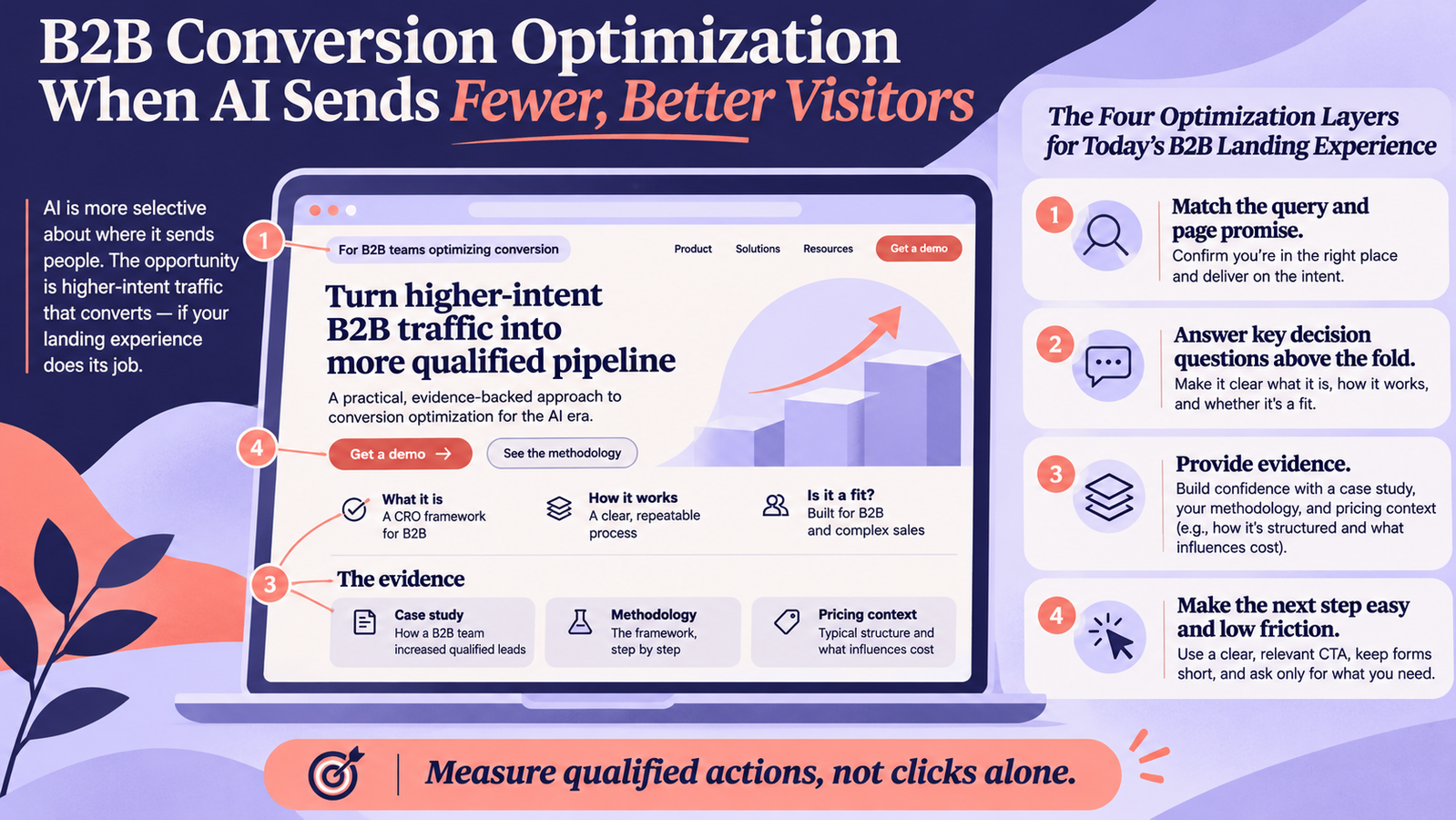
AI search may change how visitors arrive, but it does not guarantee higher conversion. Match page intent, answer decision questions, show relevant proof, reduce friction, and measure qualified actions with your own data.
Key Takeaways
- Match each page to the visitor’s question and decision stage.
- Answer core buying questions before asking for a form.
- Support important claims with relevant, verifiable evidence.
- Test friction changes using qualified outcomes and buyer feedback.
Playbooks
Frameworks you can put to work
Growth marketing, LinkedIn presence, and more — delivered as PDFs.
Browse the playbooksB2B conversion rate optimization is the disciplined work of making a page or journey more useful for the people it is meant to serve. If AI search, organic search, or a referral sends fewer but more informed visitors, the first visit may happen later in the decision process. The opportunity is to answer their questions and help them judge fit. A higher-intent visit is not guaranteed, so measure what visitors actually do.
This guide explains how to optimize for intent, information, evidence, and a low-friction next step. It is part of the Revenue Systems pillar and connects to sales enablement content for AI-shortlisted buyers and sales and marketing alignment.
What changes when visitors arrive informed
Google says its AI search experiences are designed to help users find relevant websites and has described clicks from AI Overviews as higher quality on average, based on its own data. That is Google’s reported trend, not a forecast for every site. Marketers should inspect their own referral, engagement, and conversion data rather than assume AI referrals will automatically convert better. See Google’s AI search guidance and its discussion of click quality.
A visitor who has already compared options may need proof, implementation details, pricing context, security information, or answers for another buying-group member. A generic homepage may not provide those things. Start by identifying what a visitor needs to know at that stage, then make the page easy to scan and verify.
Match the page to the question
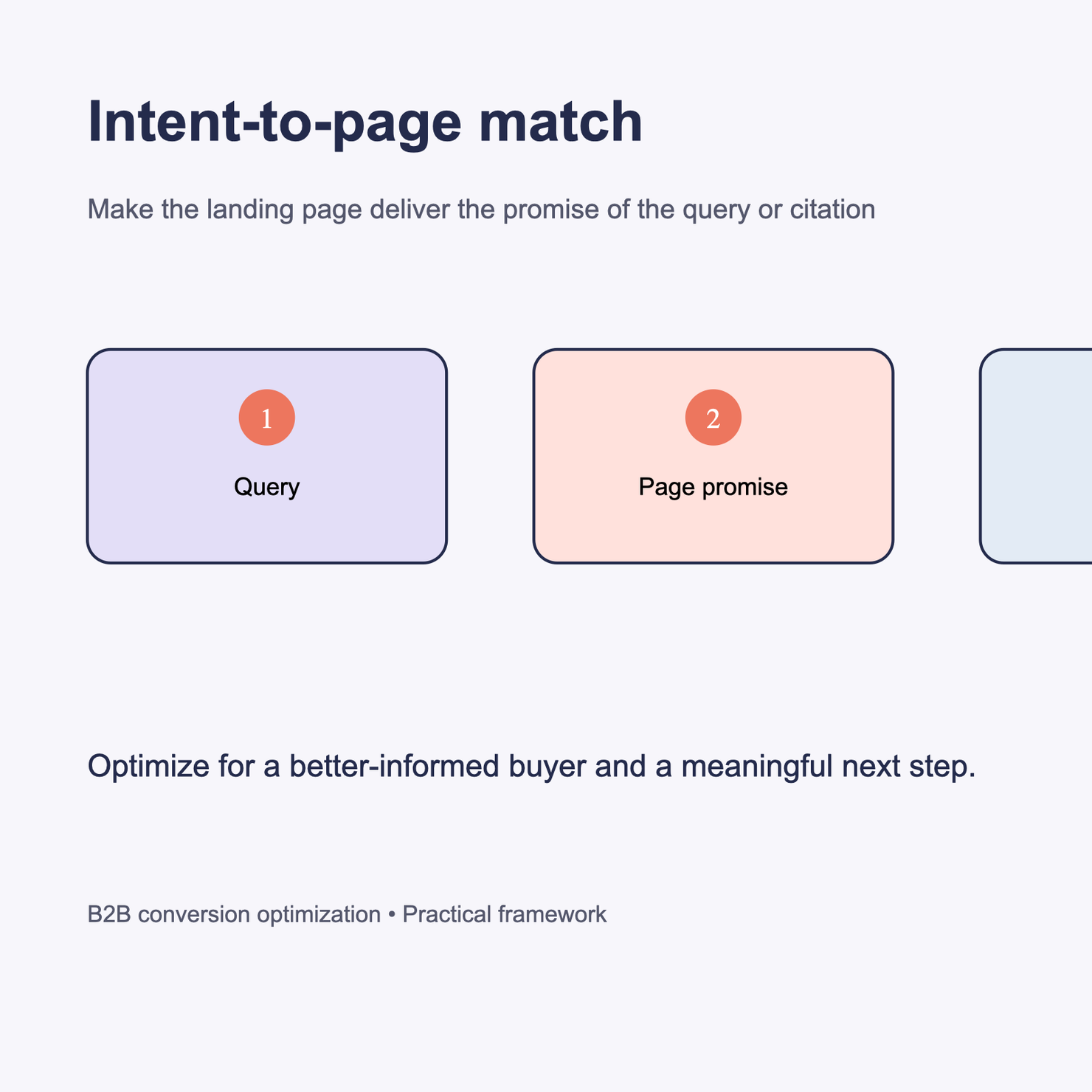
Map each high-value landing page to the question or intent it serves. Ensure the title, opening, and first screen make that connection obvious. If a page promises a comparison, show the comparison criteria. If it promises implementation guidance, explain the steps and prerequisites. If the page is general, link to more specific pages without forcing every visitor through the same funnel.
Use Search Console and analytics to find pages that receive relevant visits but do not support the next task. Review search queries, AI referral sources when available, engagement depth, form abandonment, and customer questions. Combine quantitative signals with usability sessions and sales feedback. A low conversion rate may reflect poor fit, unclear messaging, a slow page, or an action that does not match the buyer’s readiness.
Answer decision questions before asking for a form
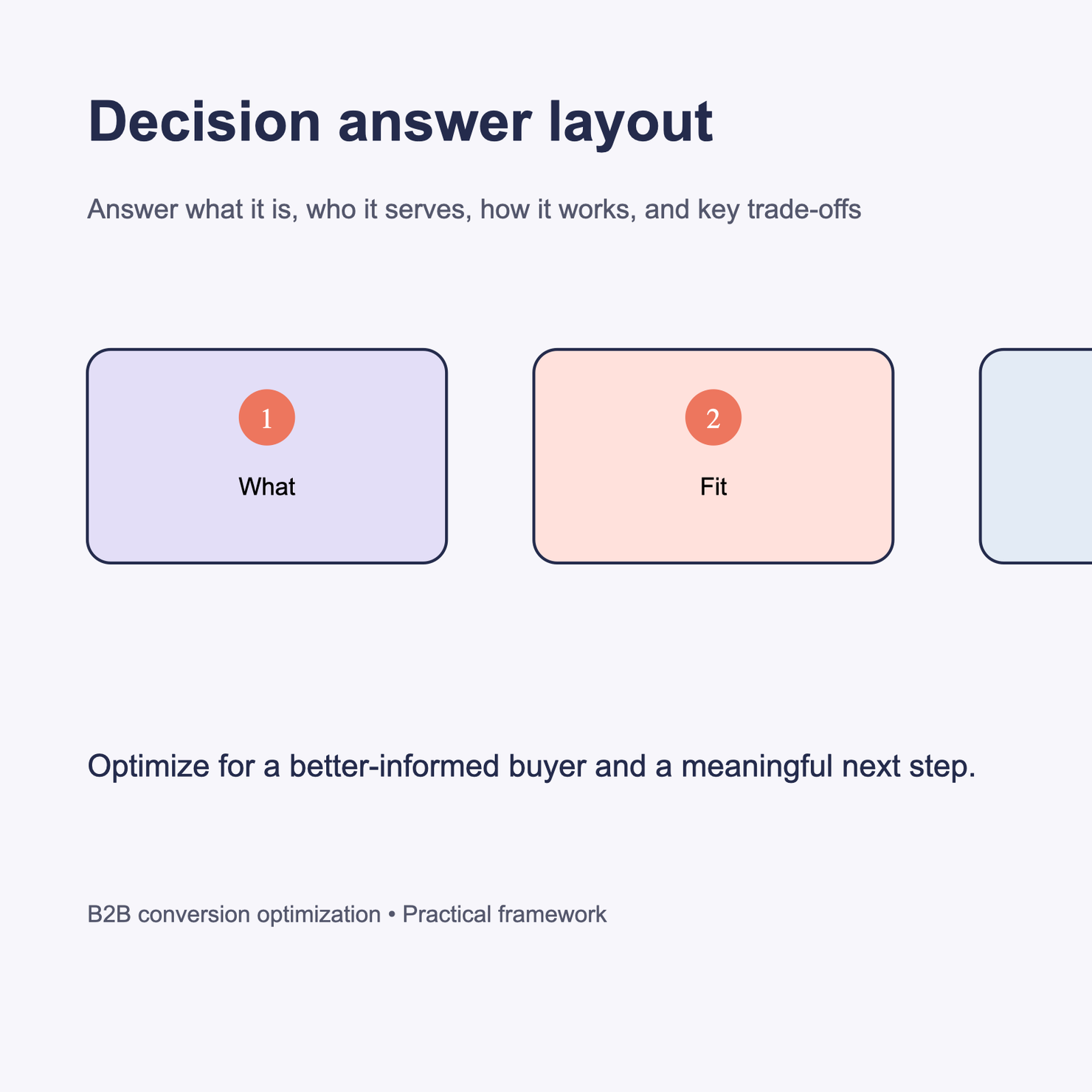
Make the core answer easy to find: what the product or service does, who it suits, how it works, and what conditions affect results. Add transparent boundaries and trade-offs. Use clear headings and direct descriptions so a person can scan the page. Keep substantive details available without requiring contact information, especially when the visitor is comparing alternatives.
Use a call to action that fits the page and the buyer’s stage. A high-intent product page might offer a demo or consultation. An early research page might offer a deeper guide or assessment. Give visitors enough context to understand what happens after they click. Avoid competing buttons that send different signals.
Place credible evidence near the claim
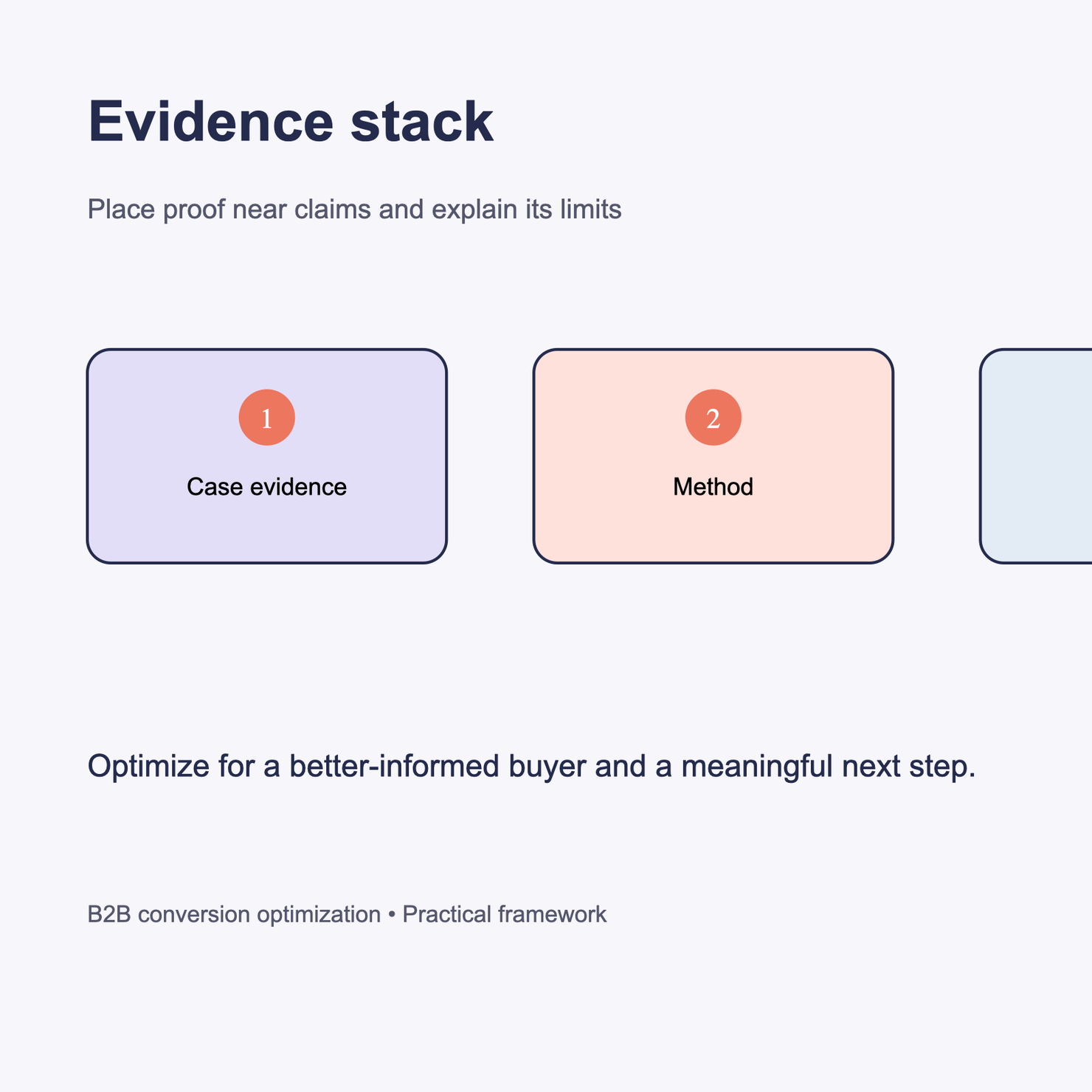
Support important claims with evidence close to where they appear. A case study should name the context, intervention, and result, and explain any limits. Product comparisons should state criteria and disclose commercial relationships where relevant. Security, integration, and implementation details should be accurate and easy to verify. If a customer quote or statistic cannot be substantiated, remove it.
Put this into practice
The Growth Marketing Playbook
A step-by-step guide to planning, running, and optimizing campaigns that drive real revenue — not just clicks and followers.
Reduce friction without reducing qualification
Ask for only the information needed to make the next step useful. Tell the visitor why it is requested, when a person will respond, and what they can expect. Provide clear error messages, accessible labels, and a usable mobile layout. Offer another route for people who prefer to speak, read documentation, or send a question. Test the full path, including confirmation and follow-up.
Shorter forms can increase submissions but may reduce qualification context. Longer forms can deter suitable visitors. Use a hypothesis, test one meaningful change, and review both the quantity and quality of resulting actions. In B2B, a completed form is not the final outcome; look at accepted conversations, opportunity progression, and feedback.
Design CRO tests around decisions
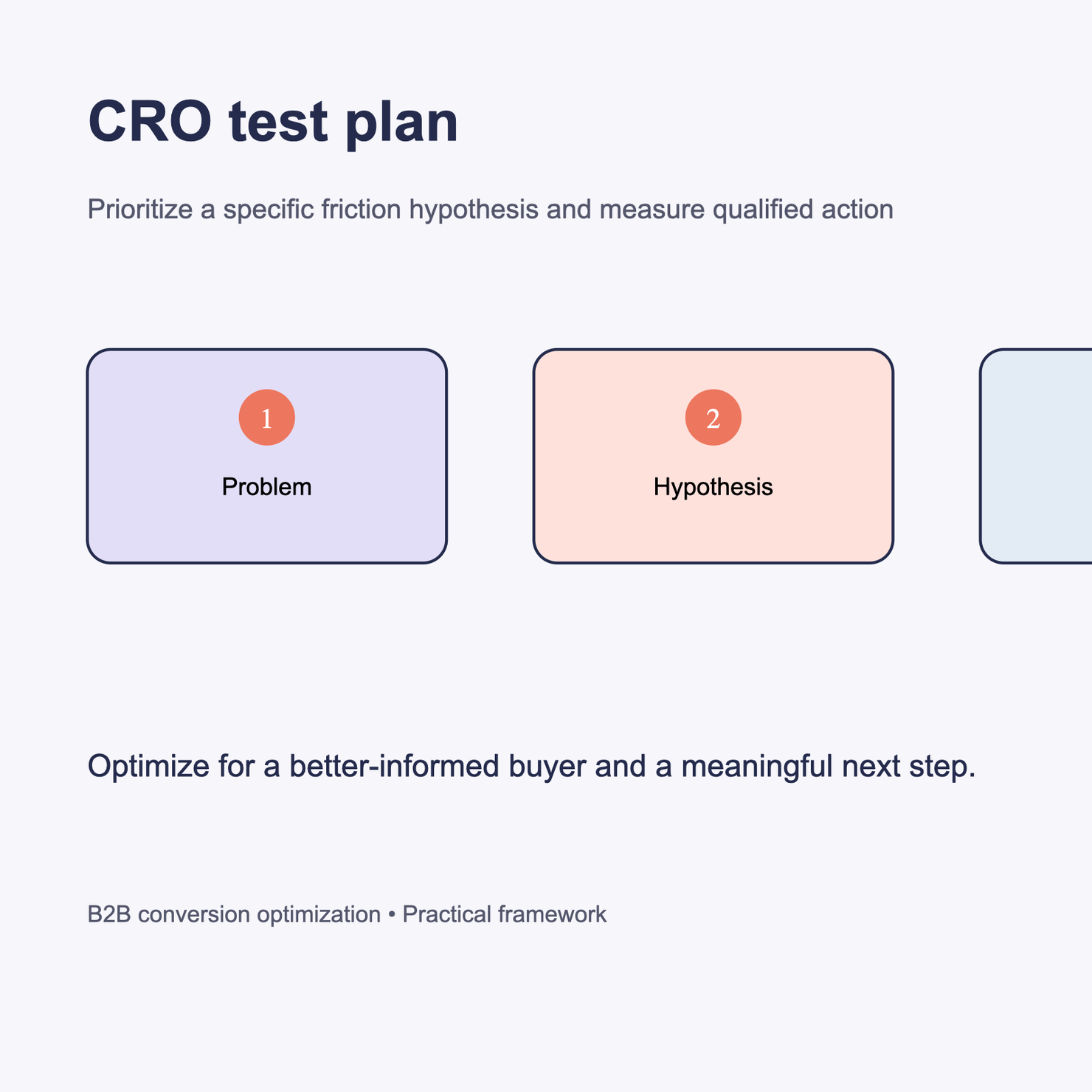
Prioritize tests by user impact, evidence, effort, and risk. For each test, define the problem, the expected mechanism, the primary measure, and the guardrail. A test might compare a product-fit explanation near the top of a page with the current layout, measuring qualified demo requests and support questions. Avoid changing several unrelated elements at once if you need to learn what caused the result.
Use sufficient time and data to avoid reacting to noise. If traffic is low, qualitative testing and incremental improvements may provide more useful learning than a weak A/B test. Record the audience, period, traffic source, and changes so results can be interpreted later. Keep a change log and check whether results hold across device types and buyer segments.
A practical page review
Review one important page with four questions: does the opening match the visitor’s intent; can the visitor answer core decision questions; are the key claims supported by evidence; and is the next step clear and proportionate? Watch a few target buyers use the page, note confusion, and fix the highest-impact issue first. Then compare qualified actions and buyer feedback against a baseline.
The goal is not to push every visitor toward conversion. It is to make the decision and next step clearer for people who may be a fit. Good CRO helps the right visitor understand the offer and decide what to do next, including deciding it is not right for them.
Frequently Asked Questions
Frequently Asked Questions
What is B2B conversion rate optimization?
How does AI search affect conversion optimization?
What should a B2B landing page include?
Should I shorten my B2B lead form?
How do you measure B2B CRO?
Do A/B tests always improve conversion?
Research and further reading
Google Search Central: AI features and your website explains how AI search features are included in Search reporting.
Google: AI search and click quality shares Google’s reported traffic observations.
Put this into practice
The Growth Marketing Playbook
A step-by-step guide to planning, running, and optimizing campaigns that drive real revenue — not just clicks and followers.

Swapan Kumar Manna
Go-to-market & AI search strategist
Swapan Kumar Manna is a go-to-market and AI search strategist and Founder & CEO of Oneskai. He has spent 14+ years helping companies get found, get chosen and grow.