Part of the Revenue Systems: Connecting Marketing, Sales and CRM So Growth Doesn't Leak series
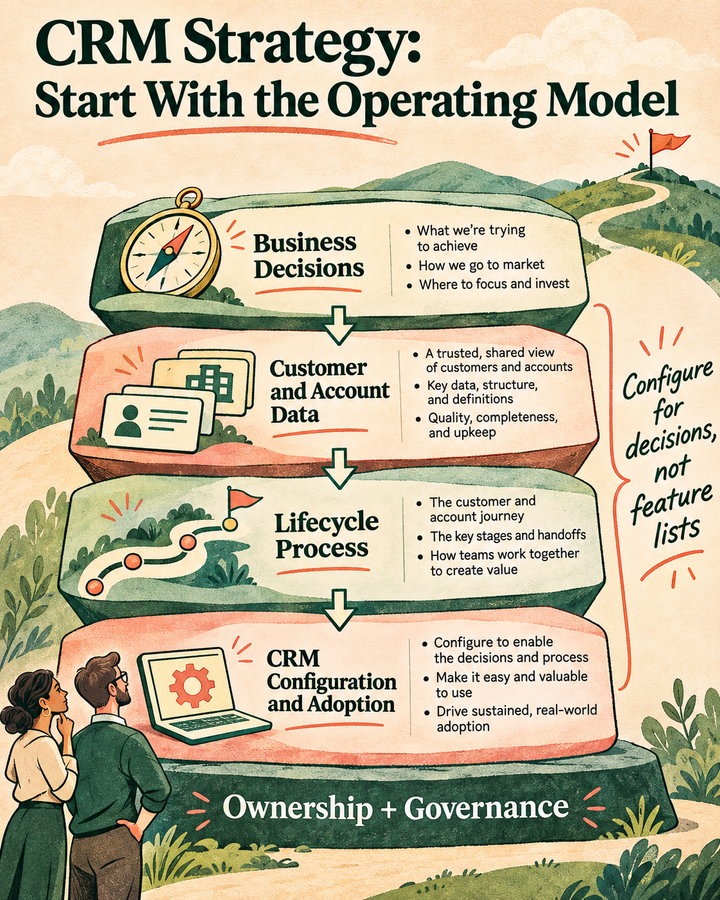
A practical CRM strategy starts with business decisions and workflows, then defines data, lifecycle stages, adoption, and governance. Choose technology to support that operating model and review it regularly.
Key Takeaways
- Define the decisions and workflows before selecting features.
- Model trusted records and assign data ownership.
- Agree lifecycle stages and handoffs using evidence.
- Plan training, adoption, governance, and ongoing review.
Playbooks
Frameworks you can put to work
Growth marketing, LinkedIn presence, and more — delivered as PDFs.
Browse the playbooksA CRM strategy is a plan for how customer and prospect information, processes, and teams will support business decisions. The platform is one part of that strategy. Before choosing features or migrating records, define the work the CRM should help people do: understand accounts, coordinate follow-up, manage opportunities, support customers, or report performance.
This guide covers goals, data, lifecycle design, adoption, and governance. It sits within the Revenue Systems pillar and connects to sales and marketing alignment and revenue data architecture.
Start with decisions and workflows
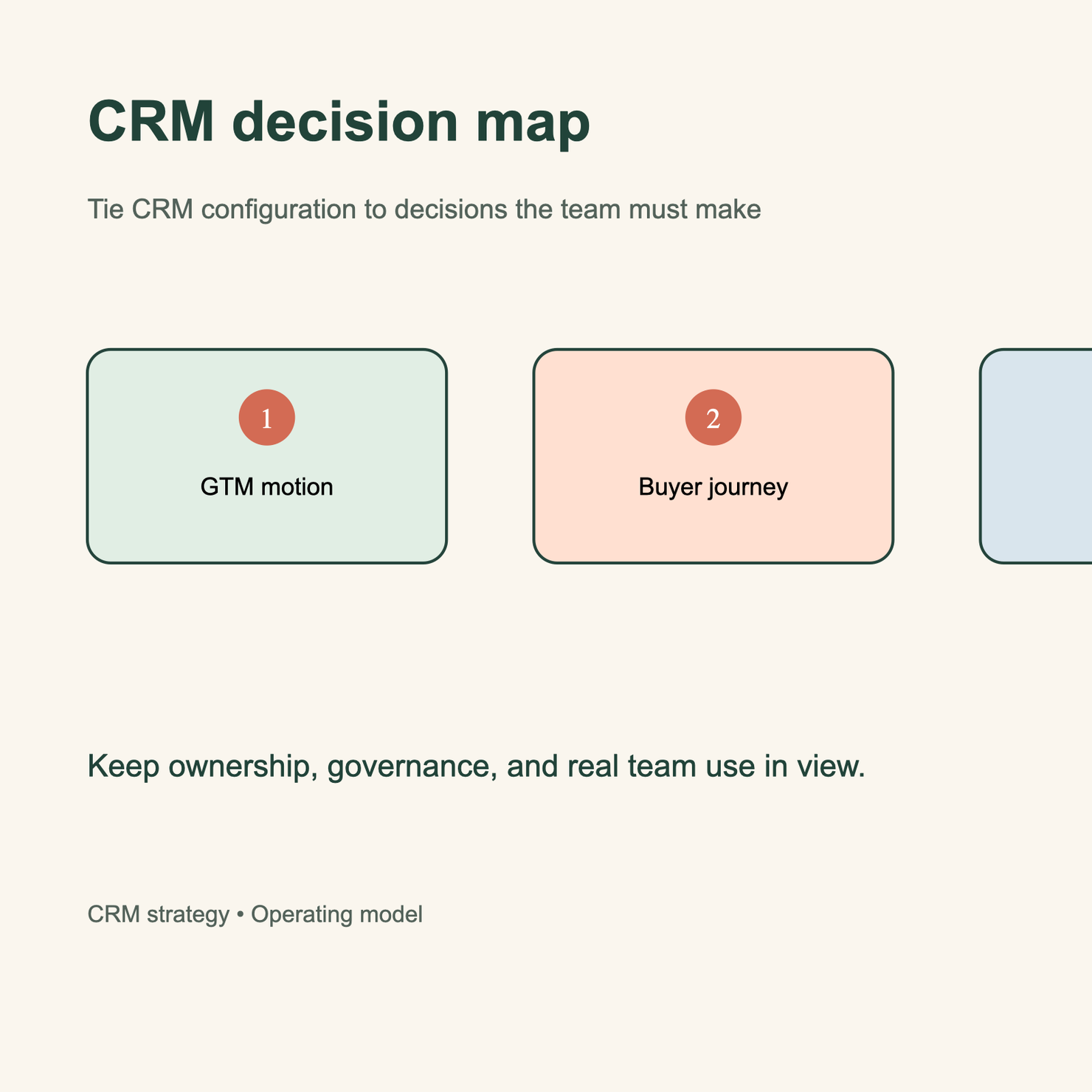
List the decisions the CRM must support and the people who make them. A sales manager may need pipeline coverage and next steps; a marketer may need accurate lifecycle and campaign context; customer success may need product, renewal, and service history. Map the current workflow for each role and identify what causes delay, duplicate work, or lost context. Set a small number of outcomes before discussing software.
Ask each team which records and fields it needs, what action each one supports, and who will maintain it. If no one can explain why a field matters, do not make it mandatory by default. The result should be a short requirements map, not a feature wish list assembled from vendor demos.
Design a trusted customer data model
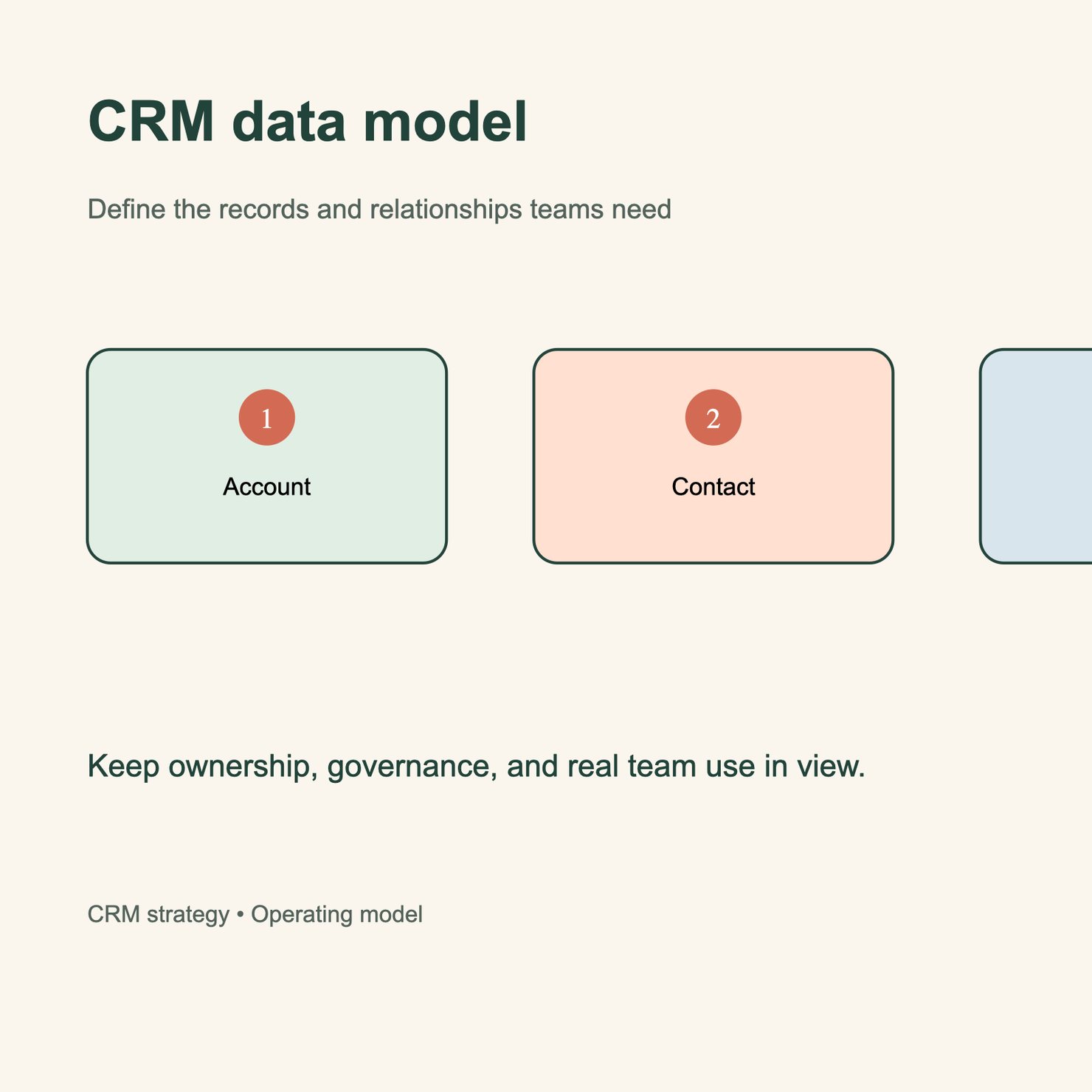
Choose the core records: accounts or companies, people, activities, opportunities, and service cases where relevant. Define how they relate. Establish rules for duplicates, parent-child organizations, shared contacts, data sources, consent preferences, and record ownership. Document which system is authoritative for each important field and how updates move between platforms.
Keep the model as simple as possible while preserving the context teams need. Standardize key values, define required fields at the point they become useful, and decide how old or incomplete records are handled. HubSpot’s guidance on maintaining a trusted source of customer data emphasizes monitoring data quality and reviewing properties that add little value. See the HubSpot data quality guide.
Define lifecycle stages and handoffs
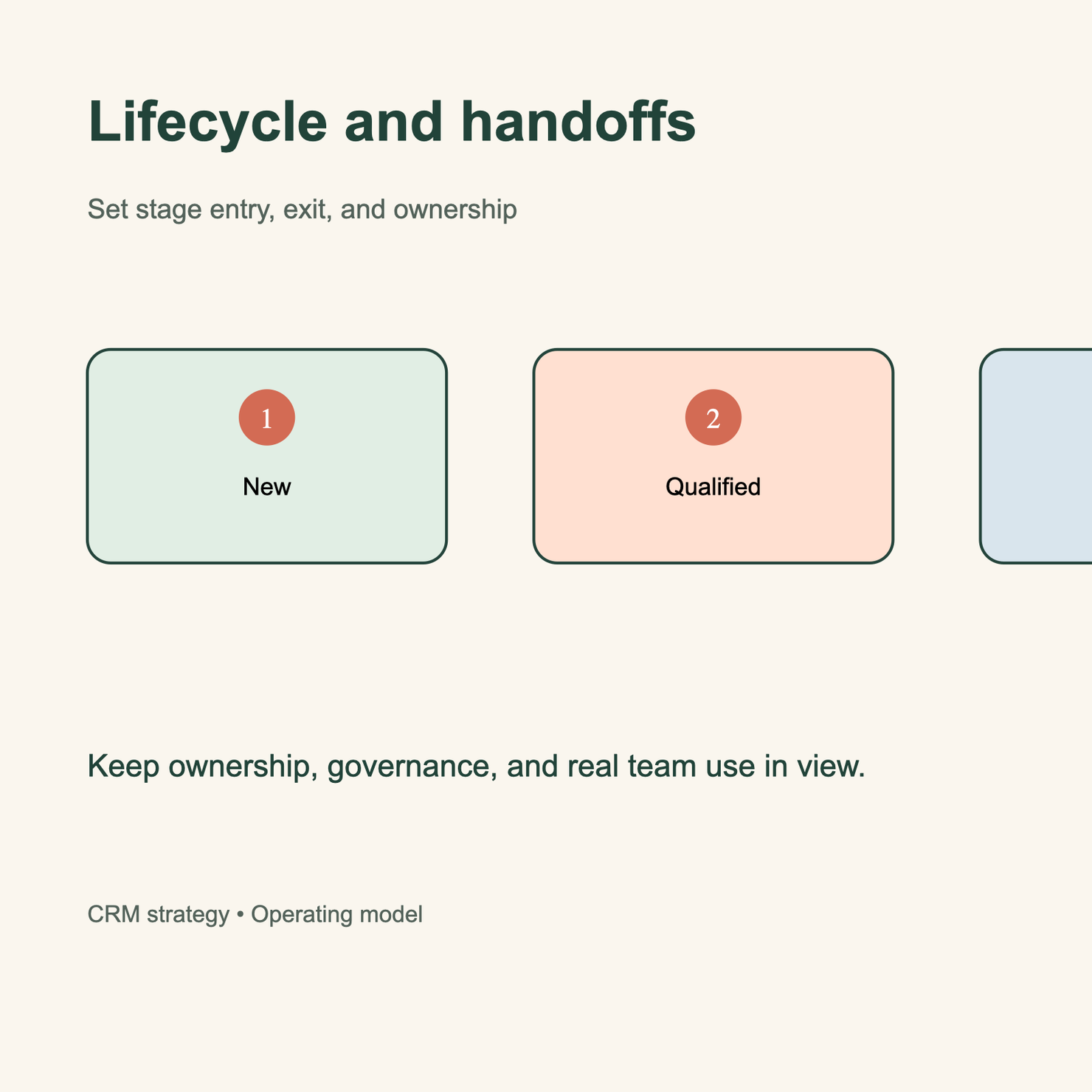
Write entry and exit criteria for each lifecycle and opportunity stage. Clarify what evidence supports qualification, who accepts the handoff, and what happens when a record is not ready. Align stage changes with a real process step rather than an arbitrary field update. This makes pipeline reporting more consistent and reduces disagreements between marketing and sales.
Test the stage design using real examples. Include renewals, partner-sourced opportunities, reopened deals, and customers with multiple products if they apply. Remove stages that do not change an action or forecast. Keep definitions visible in the CRM and train teams on the reasoning, not only where to click.
Put this into practice
The GTM Funnel Playbook
How B2B teams find, win and keep customers, with a 90-day action plan. Seven funnel stages, one owner each, from the revenue number to the clients you keep.
Plan adoption before configuration
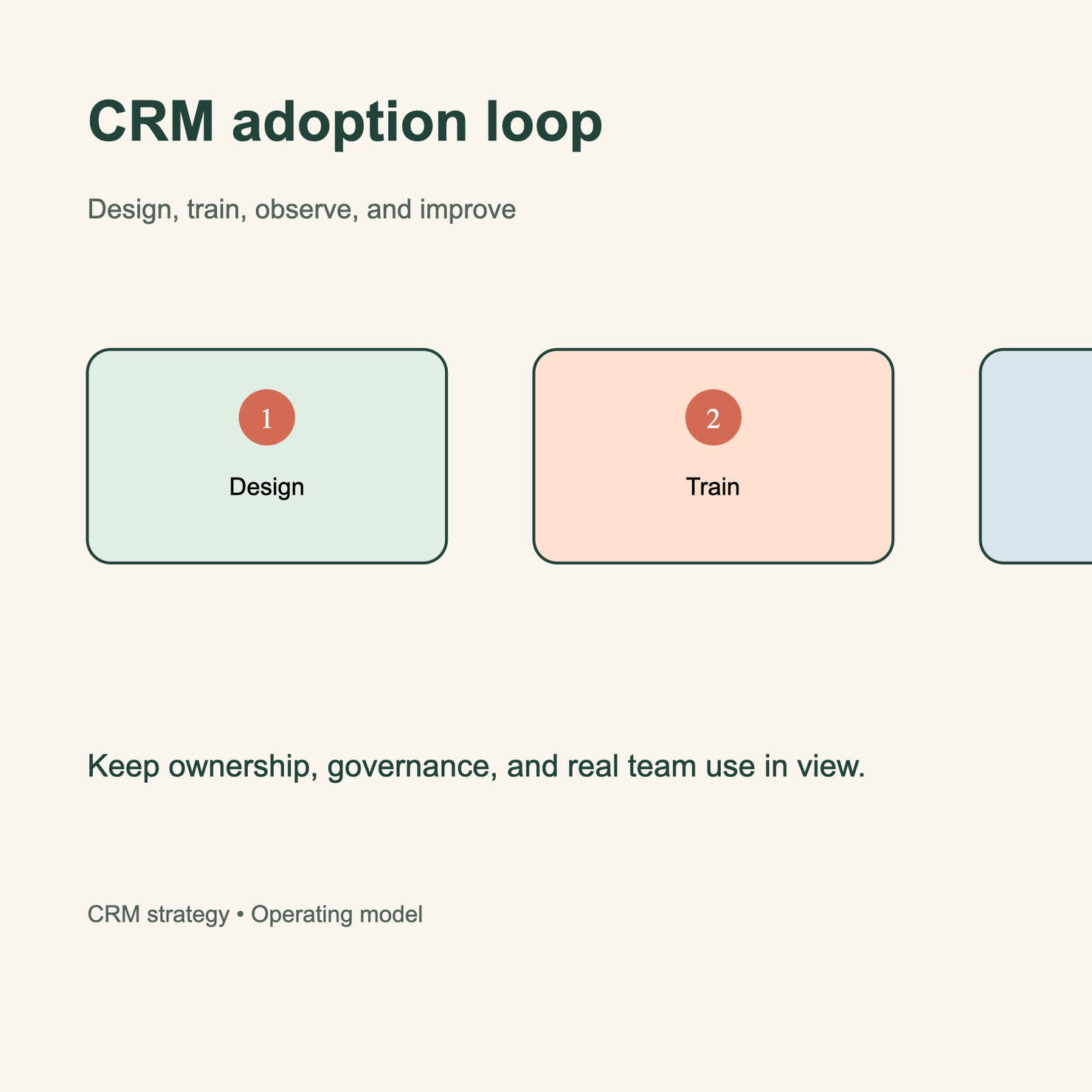
Involve the people who will use the system in process design and testing. Build role-based views and automations around their actual work. Migrate only data that is needed and can be trusted; clean and map it before loading. Test permissions, reports, integrations, and workflows with representative scenarios. Prepare training and support before go-live, then give users a clear channel to report friction.
Adoption does not mean measuring logins alone. Look for completion of important workflows, data accuracy, time saved, and user feedback. If people work around the CRM, ask whether the process, fields, training, incentives, or system design caused it. Update the system and explain changes so users understand why their work is easier or more reliable.
Establish governance and review
Assign owners for data definitions, integrations, permissions, lifecycle rules, and change requests. Establish how new fields or automations are approved, tested, and documented. Set access by role and review it regularly. Make retention and deletion practices consistent with the organization’s policies and applicable obligations.
Review the CRM quarterly against business goals. Identify unused properties, duplicate workflows, broken integrations, and reporting that no longer informs a decision. Prioritize a small number of improvements, record who owns them, and confirm whether they helped. Strategy is an ongoing operating practice, not a one-time implementation document.
A practical CRM strategy checklist
Before configuring or changing platforms, confirm: business outcomes and decision owners; user workflows; core records and relationships; lifecycle and stage definitions; data quality and source of truth; integrations; permissions and governance; migration and testing scope; training and support; adoption and performance measures; and a recurring review owner. A clear answer to each item reduces risk and makes vendor comparison more grounded.
Frequently Asked Questions
Frequently Asked Questions
What is a CRM strategy?
How do you create a CRM strategy?
What should a CRM strategy include?
Who should own CRM strategy?
How often should a CRM strategy be reviewed?
Should a company change CRM platforms to improve adoption?
Research and further reading
HubSpot: Maintain a trusted source of customer data covers ongoing CRM data quality practices.
HubSpot: CRM implementation strategy outlines goals, needs assessment, implementation, training, and review.
Put this into practice
The GTM Funnel Playbook
How B2B teams find, win and keep customers, with a 90-day action plan. Seven funnel stages, one owner each, from the revenue number to the clients you keep.

Swapan Kumar Manna
Go-to-market & AI search strategist
Swapan Kumar Manna is a go-to-market and AI search strategist and Founder & CEO of Oneskai. He has spent 14+ years helping companies get found, get chosen and grow.