Part of the Revenue Systems: Connecting Marketing, Sales and CRM So Growth Doesn't Leak series
A dependable revenue data architecture connects customer systems through shared definitions, clear ownership, quality checks, and safe access rules. Start with decisions and minimum useful data, then add complexity as needed.
Key Takeaways
- Assign a source of truth and owner to each critical field.
- Agree on shared lifecycle, pipeline, and revenue definitions.
- Monitor integration failures and data quality in the workflow.
- Limit AI access and review consequential actions.
Playbooks
Frameworks you can put to work
Growth marketing, LinkedIn presence, and more — delivered as PDFs.
Browse the playbooksA revenue data architecture is the set of systems, definitions, rules, and owners that help a company turn customer activity into dependable decisions. It does not require a large data platform. It does require agreement about what important records mean, where they come from, how they move, and who fixes them when they are wrong.
This guide is part of the Revenue Systems pillar and builds on CRM strategy for growing B2B companies. It also connects measurement to pipeline and revenue metrics.
Start with decisions and definitions
List the decisions the team needs to make: which accounts deserve attention, whether an inquiry is qualified, which opportunities need help, and what is driving revenue. For each decision, identify the fields and events it depends on, the system that owns each value, and the person accountable for keeping it useful. Collecting more data without a decision or owner usually creates more noise.
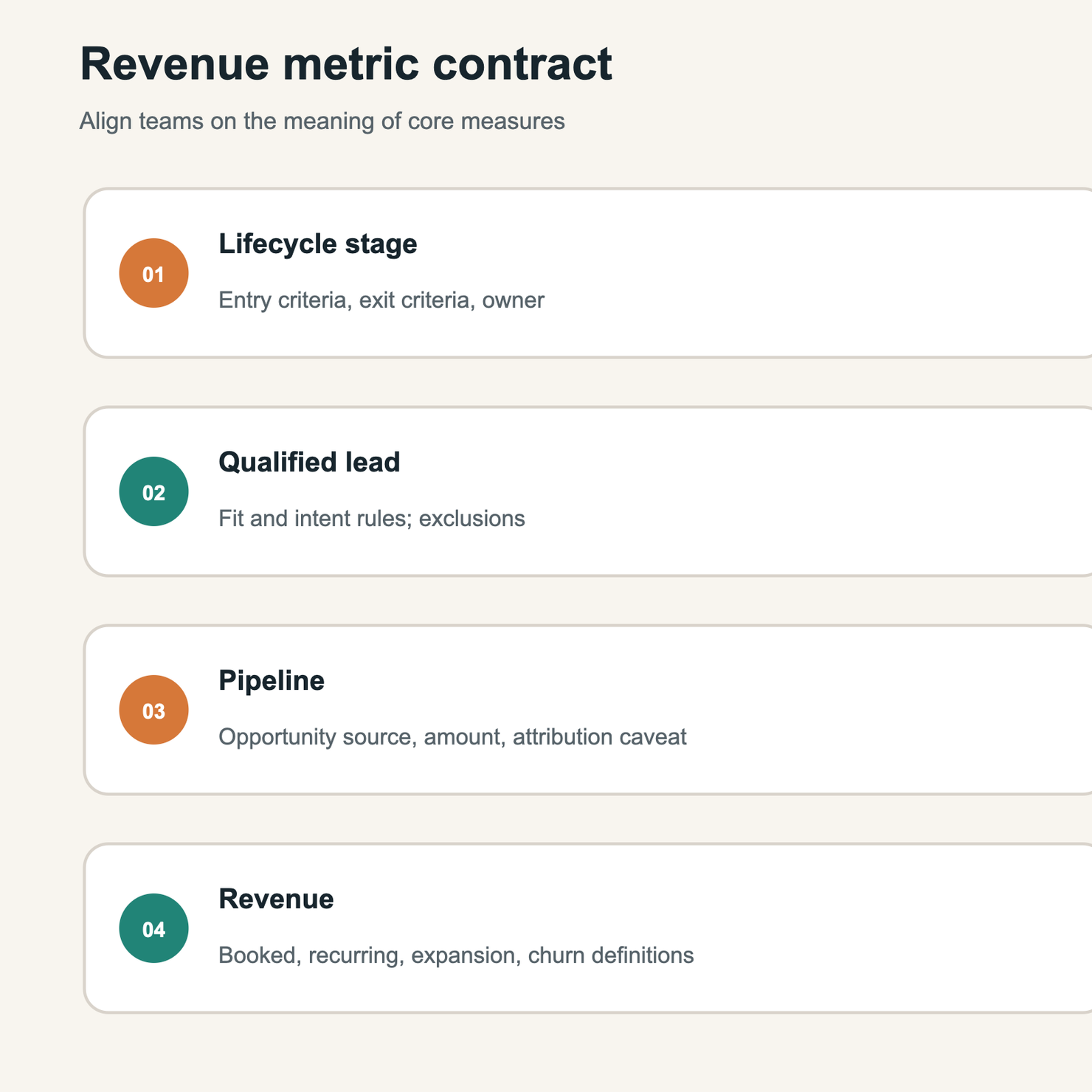
Agree on a small business glossary. Define lifecycle stages, qualified leads, opportunity creation, pipeline source, bookings, recurring revenue, expansion, and churn in plain language. Record entry and exit criteria, not just labels. When sales, marketing, finance, and operations use different definitions, dashboards can look precise while telling conflicting stories.
Design the connections between systems
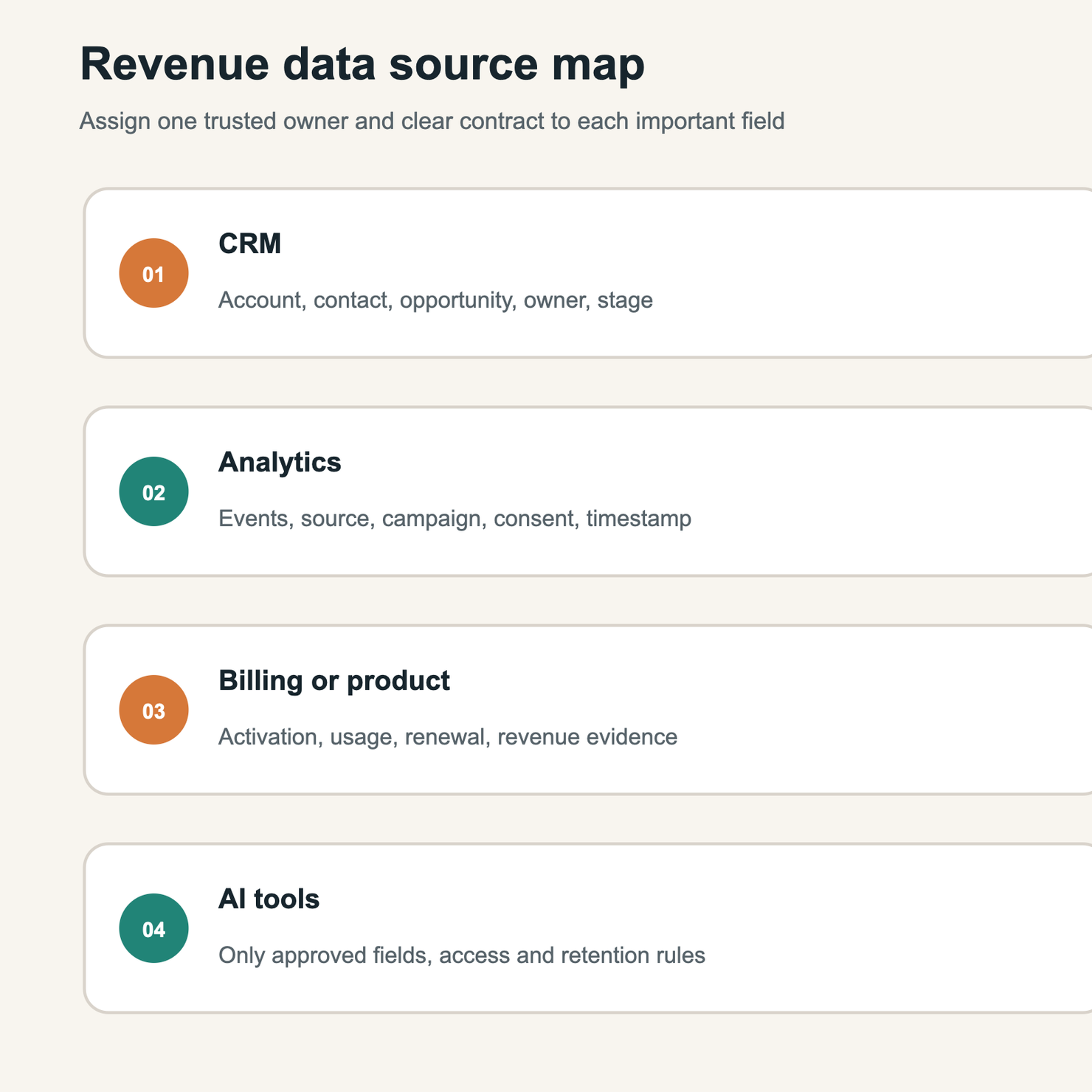
A simple architecture often has a CRM as the working record for accounts, contacts, and opportunities; analytics for site and campaign events; and product or billing systems for activation, usage, and revenue evidence. These systems may connect through native integrations, a warehouse, or carefully managed exports. Choose the least complex setup that meets the reporting and operating need.
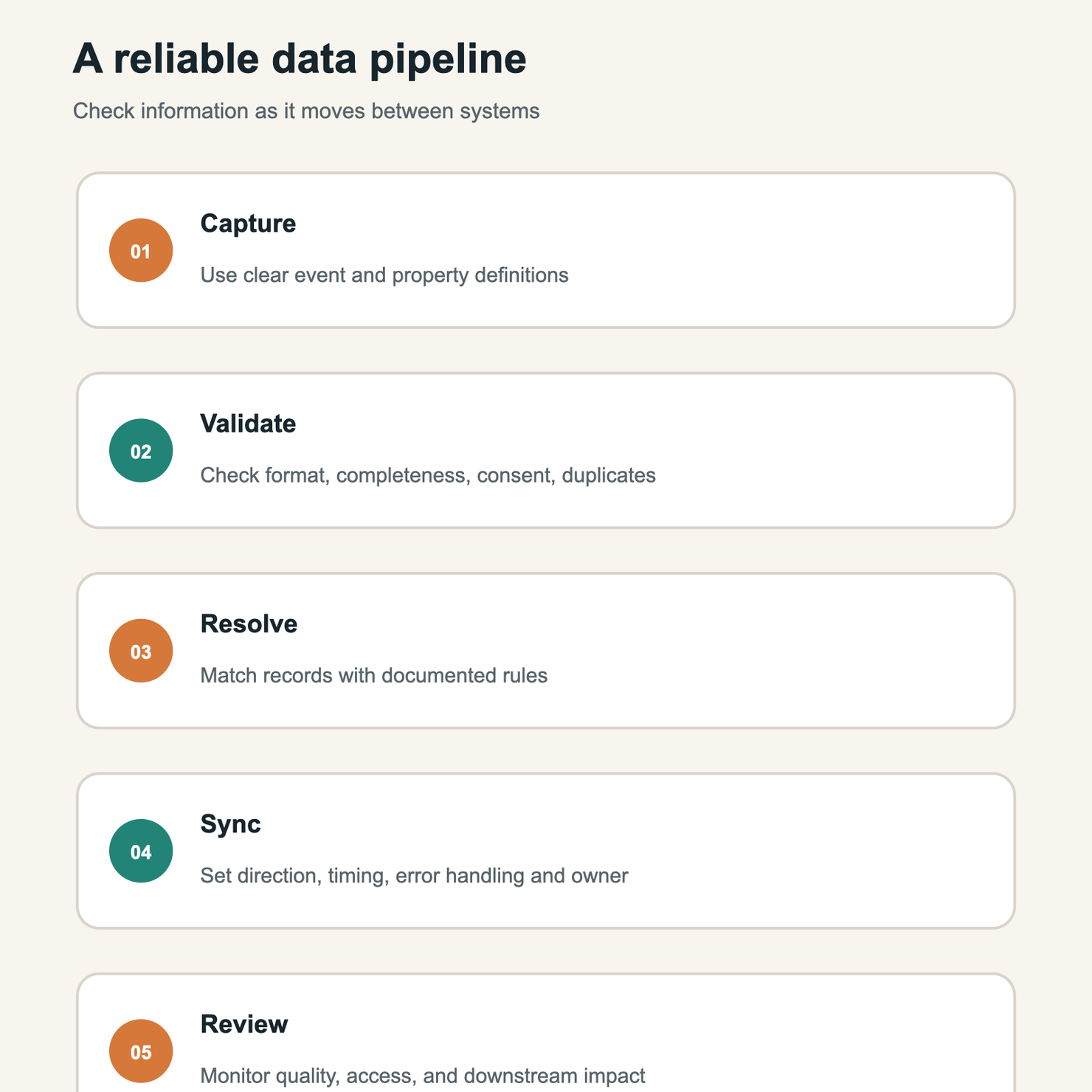
For every integration, document which system is authoritative, whether data moves one way or both, how often it syncs, how duplicates are handled, what happens when a record fails, and who receives an alert. Avoid allowing several systems to overwrite the same key field without a clear precedence rule.
For web analytics, Google describes events as measurements of user interactions that are used to create business reports. Its GA4 event documentation is a useful reference when naming and configuring event capture.
Build quality checks into the workflow
Useful checks include required fields, accepted formats, timestamp and currency consistency, duplicate detection, valid ownership, consent status, and sensible stage transitions. Begin with the errors that change a real decision or create downstream rework. Assign an owner and a repair path; a report that identifies bad data but no one can correct is not a control.
Monitor a few measures: completeness for key fields, duplicate rate, time from event to CRM, sync failures, unmatched records, and the share of records with a clear owner. Review trends and sample records with the teams entering or using the information. Quality is maintained through process and feedback, not a one-time cleanup.
Put this into practice
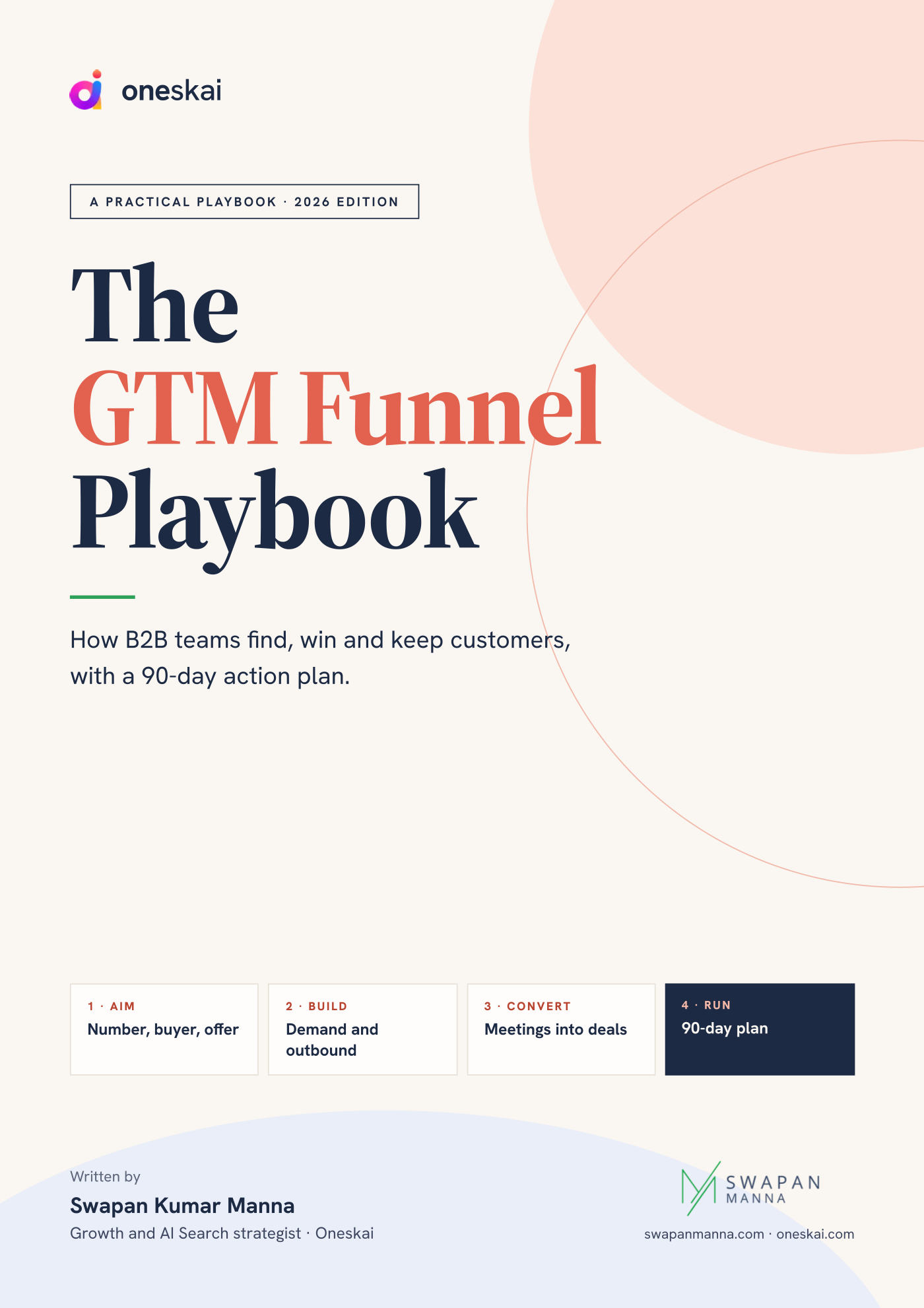
The GTM Funnel Playbook
How B2B teams find, win and keep customers, with a 90-day action plan. Seven funnel stages, one owner each, from the revenue number to the clients you keep.
Give AI access to approved data only
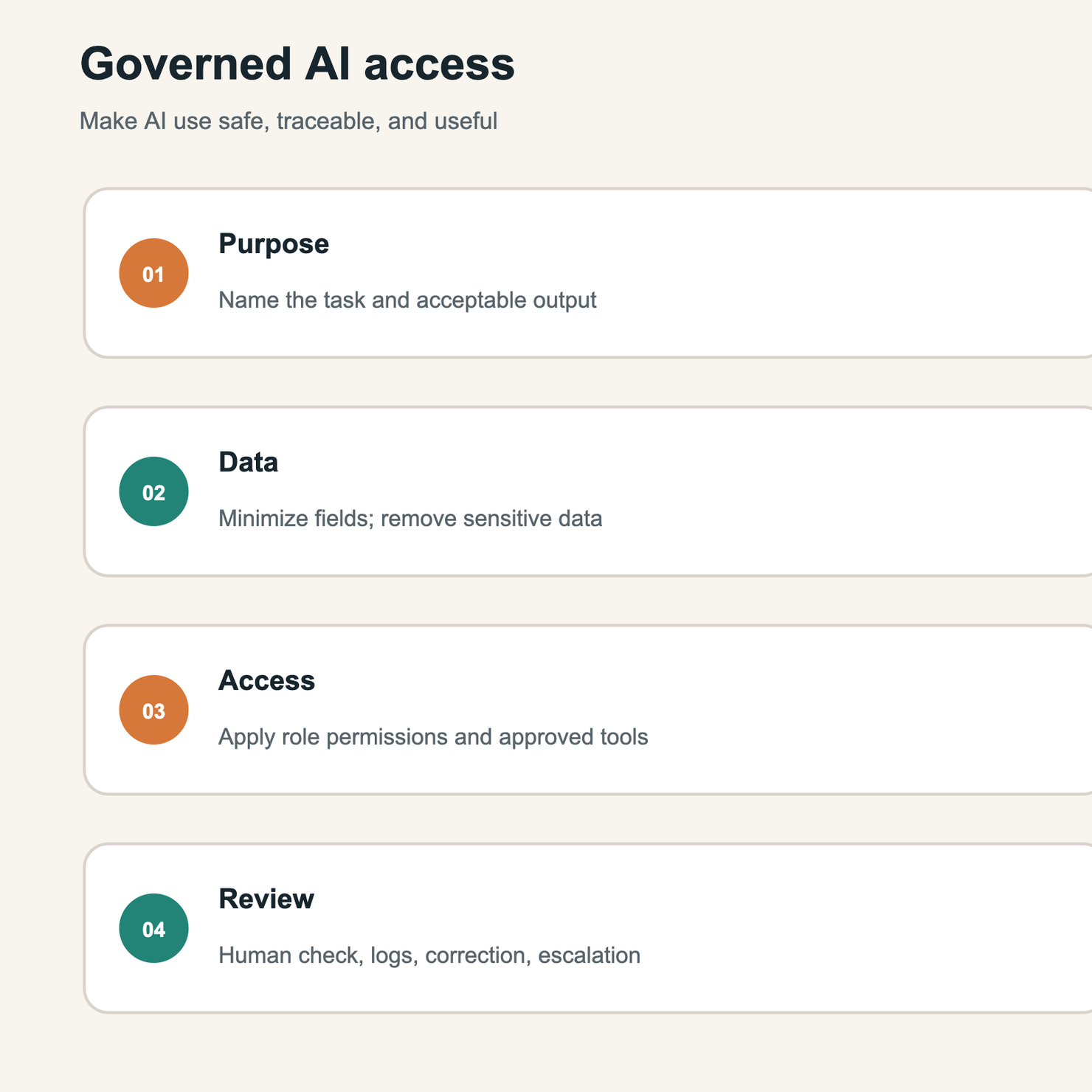
AI features can summarize account history, draft a follow-up, or help answer a question across connected systems. Their usefulness depends on whether the underlying information is current, relevant, and permitted for that purpose. Decide what data the tool can access, what it may produce or change, where outputs are logged, and when a person must review the result.
Minimize sensitive fields, apply role-based access, and check vendor data handling and retention terms before connecting customer information. Keep human review for consequential actions such as changing records, sending external messages, or making financial commitments. NIST’s AI Risk Management Framework organizes risk work around governance, mapping, measurement, and management; use it as a guide appropriate to the system and context.
A practical implementation sequence
Choose one reporting or workflow problem with a clear business owner. Map the systems and fields involved. Agree on definitions and source-of-truth rules. Fix the highest-impact data issues. Connect the systems with a named owner and basic monitoring. Then introduce AI only where the data, access, and review rules are ready. Revisit the design as the business changes.
A useful architecture is one people can explain and maintain. Keep the data model small enough to govern, make ownership visible, and improve the parts that affect customer experience, commercial decisions, and responsible AI use.
Frequently Asked Questions
Frequently Asked Questions
What is revenue data architecture?
Which system should be the source of truth for revenue data?
How do you improve CRM data quality?
Do small companies need a data warehouse?
What data can AI use in a revenue workflow?
How do you connect CRM and marketing analytics?
Research and further reading
Google Analytics: Set up events explains event-based measurement.
HubSpot: Maintain a trusted source of customer data covers CRM data governance, syncs, and data health.
NIST AI Risk Management Framework provides voluntary guidance for managing AI-related risks.
Put this into practice
The GTM Funnel Playbook
How B2B teams find, win and keep customers, with a 90-day action plan. Seven funnel stages, one owner each, from the revenue number to the clients you keep.

Swapan Kumar Manna
Go-to-market & AI search strategist
Swapan Kumar Manna is a go-to-market and AI search strategist and Founder & CEO of Oneskai. He has spent 14+ years helping companies get found, get chosen and grow.