Part of the Demand Generation and Brand Authority: How Companies Become the Brand Buyers (and AI) Already Know series
B2B newsletter strategy work when expertise, audience fit, useful collaboration, clear disclosure, and fair terms come before reach. Measure qualified attention and buyer learning alongside commercial indicators, while keeping attribution limits clear.
Key Takeaways
- Define the audience promise and cadence before inviting subscriptions.
- Build issues around recurring reader questions and original perspective.
- Use permission-based sign-ups and honor unsubscribe preferences.
- Track deliverability, feedback, and business actions separately.
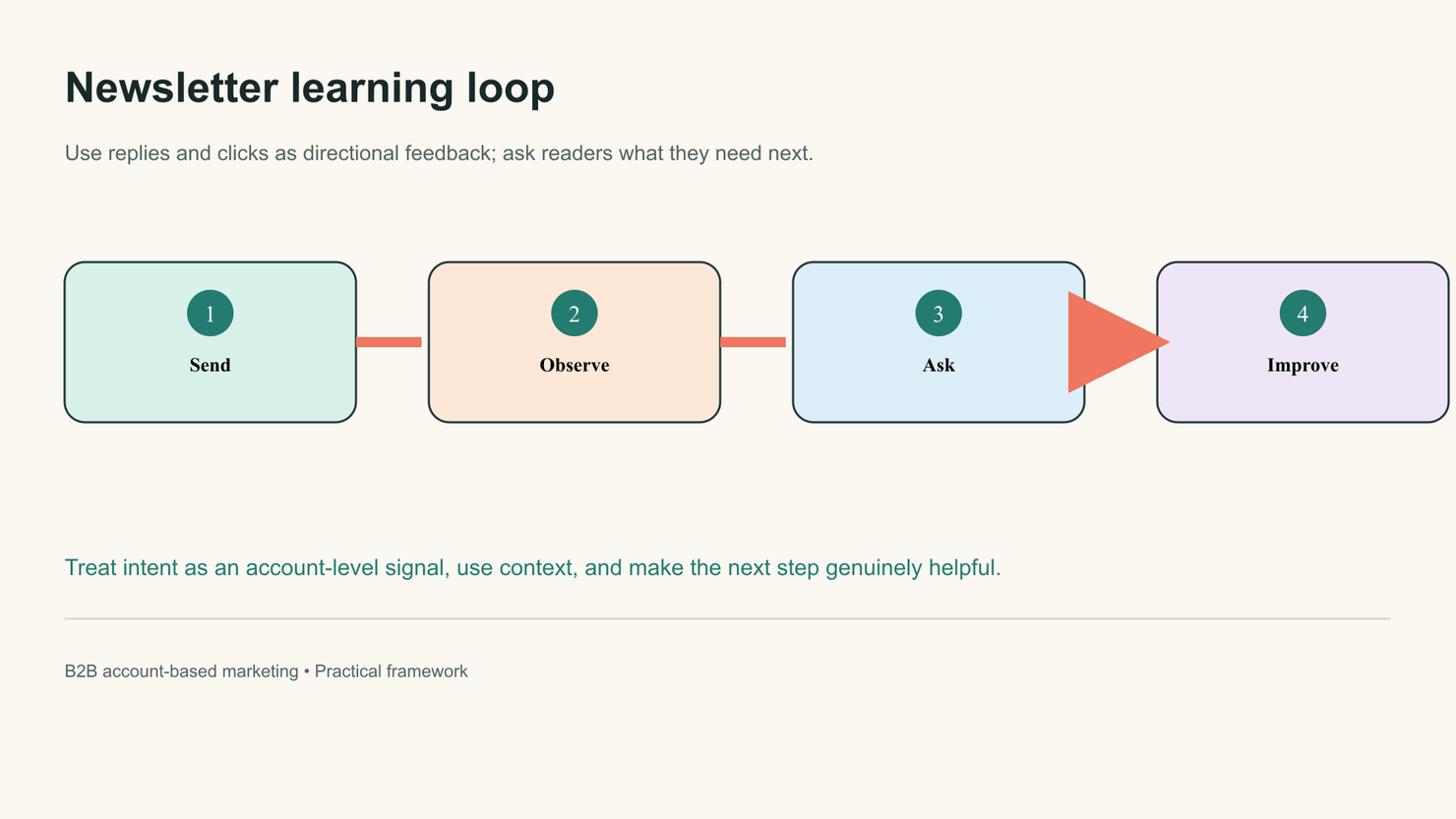
- Use reader feedback to improve future issues.
Playbooks
Frameworks you can put to work
Growth marketing, LinkedIn presence, and more — delivered as PDFs.
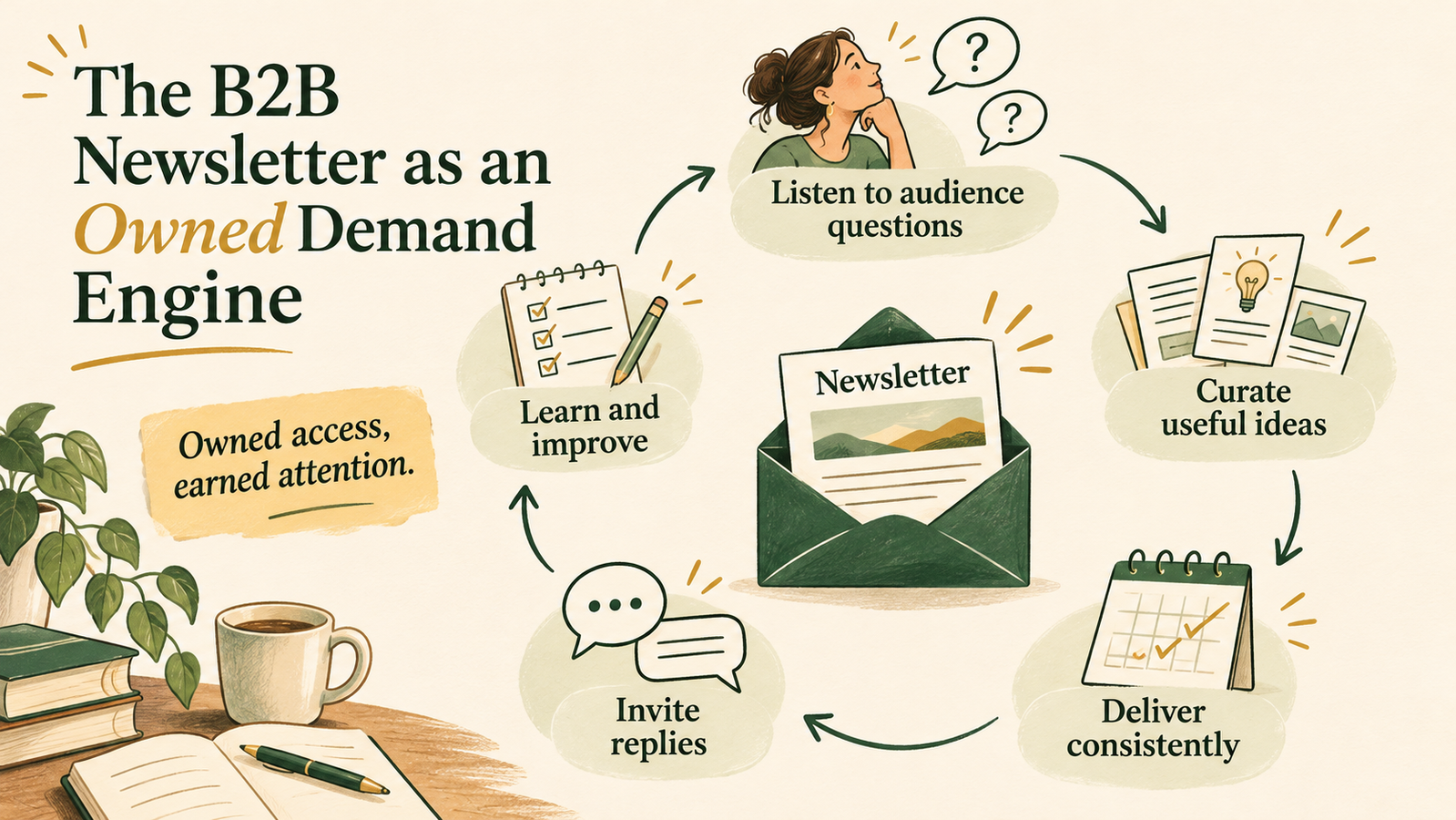
Browse the playbooksA B2B newsletter can become an owned demand engine when it earns permission to deliver useful ideas directly to a defined audience. “Owned” describes control of the subscriber relationship and delivery channel; it does not mean guaranteed reach, attention, or immunity from platform and inbox changes. The newsletter works when its promise is clear, its content helps readers, and the team listens to what subscribers need next.
This guide covers the audience promise, editorial design, consent, distribution, and measurement. It sits within the demand generation and brand authority pillar and connects with founder-led marketing and B2B dark social.
Why newsletters support demand generation
A website helps readers find information when they need it; a newsletter can bring selected ideas back to subscribers on a regular basis. This repeated contact may help a company stay useful between buying moments, share new research, and invite readers into a conversation. It is one channel in a wider demand program, not a replacement for search, community, customer experience, or sales.
The newsletter also creates a feedback channel. Replies, questions, unsubscribes, and clicks can indicate whether the topics and cadence fit audience expectations. These signals need context: opens can be affected by privacy protections and filtering, while clicks may reflect curiosity rather than purchase intent. Treat metrics as evidence to interpret, not as a complete view of reader attention.
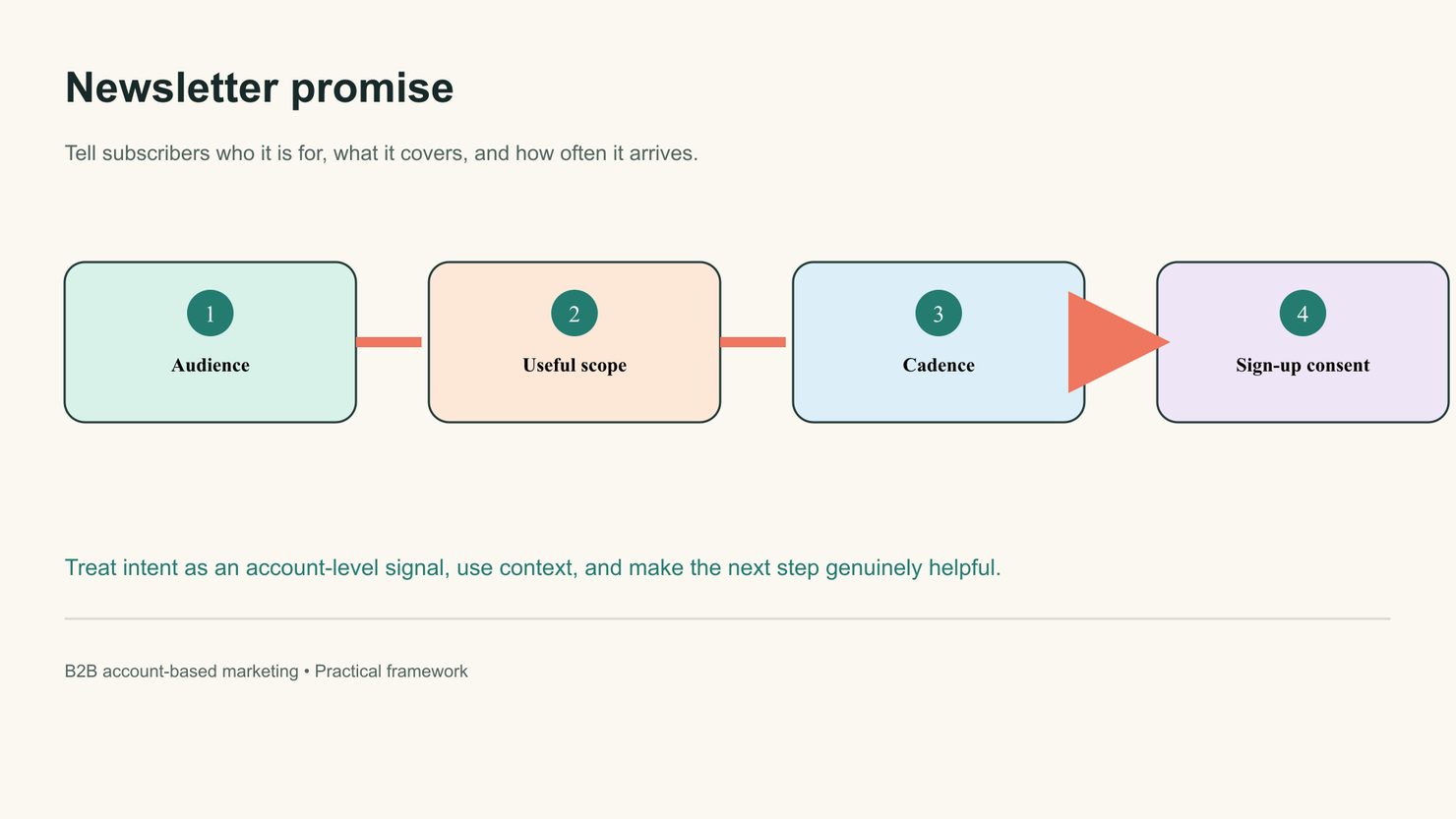
Set a clear promise and permission process
Define the reader, the recurring problem, and what each issue will deliver. A founder newsletter might share operating lessons; a category newsletter might explain emerging practices; a product newsletter may focus on implementation and customer education. State the frequency before subscription and make sign-up easy to understand. Do not add people who have not agreed to receive marketing email.
Use a sign-up form that describes the content and cadence, collect only information the team needs, and store the preference. Provide an obvious unsubscribe path in every issue. Requirements vary by country and message type. For example, the US Federal Trade Commission’s CAN-SPAM guidance describes rules for commercial email, including accurate sender information and honoring opt-outs. Check the rules for each audience and market rather than assuming one jurisdiction’s requirements apply everywhere.
Read the FTC CAN-SPAM compliance guide for US commercial email requirements. For permission-based list practices, see Mailchimp’s permission guidance.
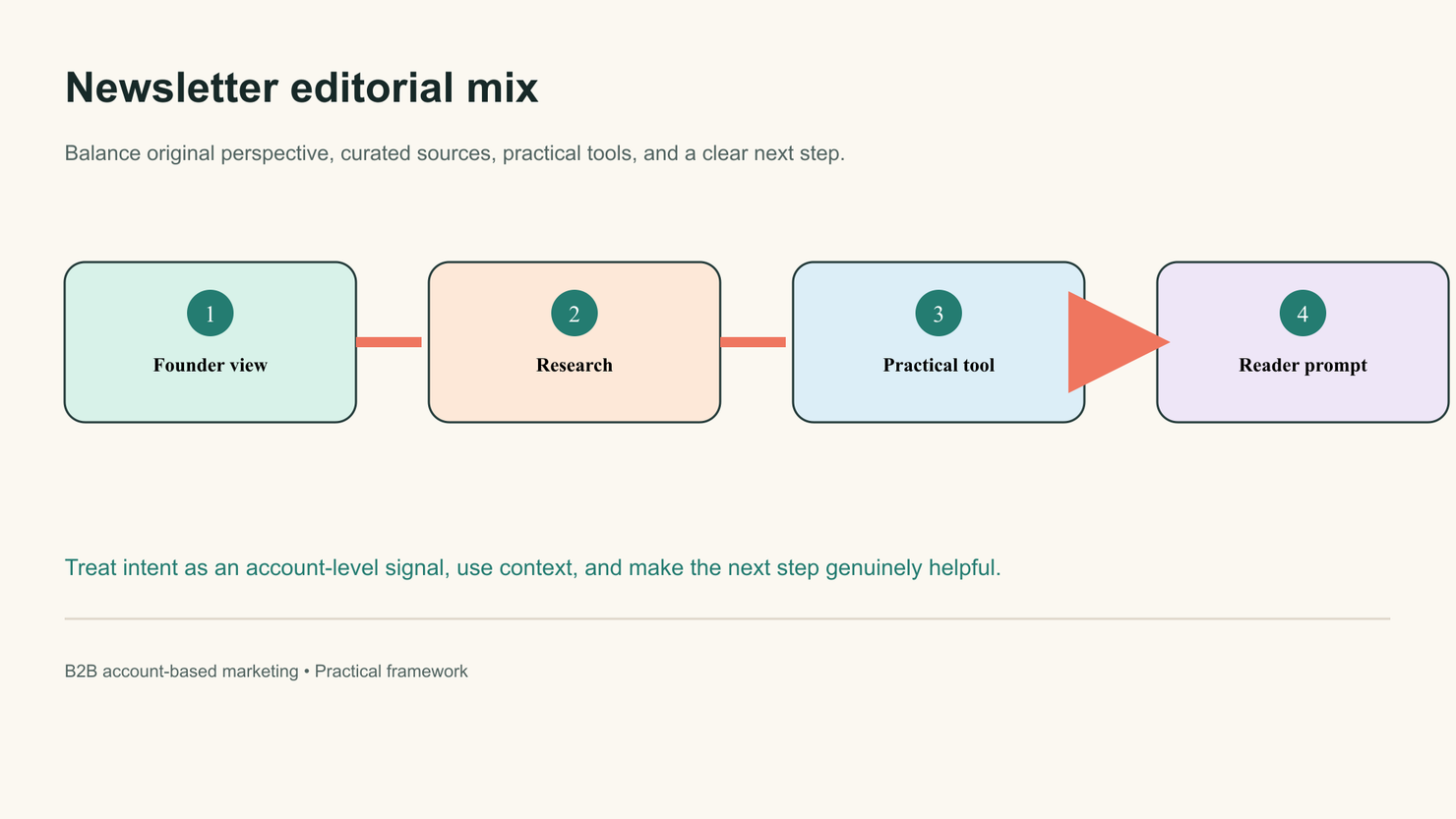
Build an editorial system readers can rely on
Plan issues around recurring audience questions rather than a calendar that forces weak topics. A useful issue might include one main idea, a brief explanation of why it matters, a practical example or framework, links to reliable sources, and a prompt for reader feedback. Distinguish the author’s opinion from sourced facts. When a claim changes, update the supporting page or explain what is new.
Consistency matters more than a particular weekly or monthly cadence. Choose a schedule the team can sustain without padding issues. A short, useful issue that arrives as promised can be better than a long one sent irregularly. Keep paragraphs readable, use descriptive headings, and make the primary action clear. Avoid stuffing an issue with unrelated promotions or multiple competing calls to action.
Make the newsletter part of the content journey
A newsletter should add context, not just repeat a blog post’s opening paragraph. It can explain what changed, why a source matters, offer a founder’s interpretation, or invite a response. Link to the full article, research, or tool for readers who want more. Keep a durable archive or landing page when appropriate, and make sure the destination matches the email’s promise.
Invite internal subject experts to contribute, but use editorial review to check clarity and evidence. Where a customer story appears, confirm the facts and permission. Where an external report is summarized, link to the original. A consistent editorial process can reduce errors while preserving a recognisable voice.
Put this into practice
The Growth Marketing Playbook
A step-by-step guide to planning, running, and optimizing campaigns that drive real revenue — not just clicks and followers.
Grow the audience without damaging trust
Promote the newsletter where its intended readers already spend time: the website, relevant articles, events, founder channels, communities, and partner content. Explain the value and cadence near the sign-up. Let subscribers share an issue, and include a simple path to subscribe from useful material. Do not buy lists, scrape addresses, or use misleading sign-up language; these approaches can harm trust and deliverability.
Segment when it improves relevance and the data was collected appropriately. A reader interested in a specific topic may prefer a focused series, but every segmentation rule adds maintenance and governance. Begin with a small number of meaningful preferences, explain them clearly, and allow subscribers to change or withdraw them.
Measure reader value and business contribution
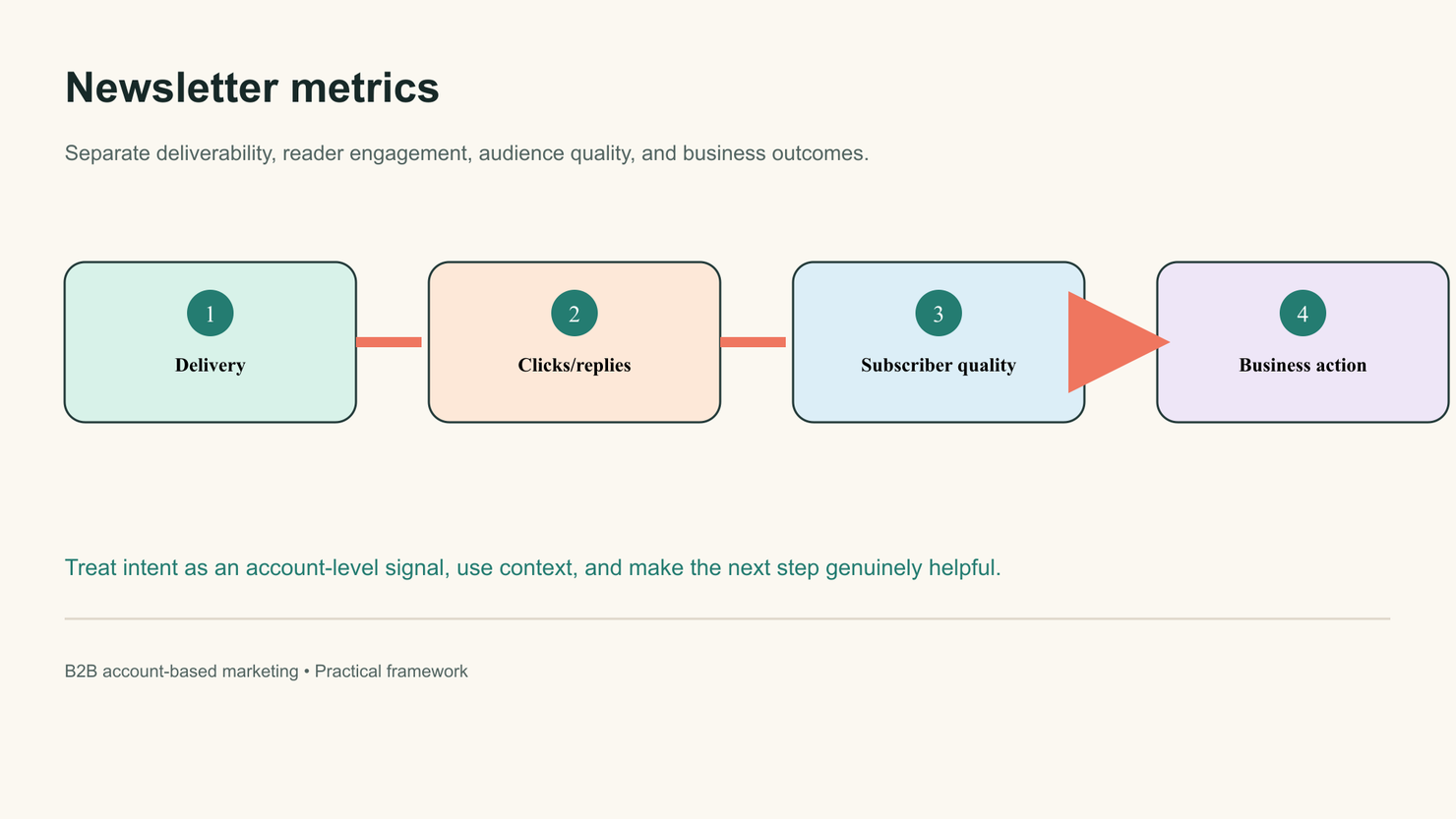
Track delivery and deliverability, list growth by source, unsubscribes, spam complaints, clicks to relevant resources, replies, and conversions tied to a defined action. Use open rates cautiously because privacy features can distort them. Evaluate cohorts and trends rather than reacting to one issue. Compare similar periods and note changes in audience, content, or sending practices.
Business contribution may include a reader returning to a resource, sharing an issue with a colleague, asking a question, or entering a buying conversation. Use tagged links and CRM notes where suitable, but avoid claiming that the newsletter caused revenue based only on a last-click report. Combine analytics with subscriber feedback, interviews, and sales context.
A simple 90-day launch plan
In the first month, define the audience, promise, consent flow, editorial owner, and first three issue themes. In the second month, send on the planned cadence, review replies and delivery signals, and fix friction in sign-up or the landing page. In the third month, assess topic usefulness, source quality, subscriber feedback, and downstream actions. Adjust the format based on evidence rather than chasing a universal send frequency.
The newsletter becomes a demand asset when people choose to receive it and continue finding value in it. Protect that choice, publish ideas worth sharing, and use the relationship to learn what the audience wants help understanding next.
Frequently Asked Questions
Frequently Asked Questions
What is a B2B newsletter?
How often should a B2B newsletter be sent?
How do I grow a newsletter subscriber list?
What should a B2B newsletter include?
How do you measure newsletter performance?
Is an email newsletter an owned channel?
Research and further reading
HubSpot: Newsletter content strategy covers editorial planning and formats.
FTC: CAN-SPAM Act compliance guide explains US requirements for commercial email.
Put this into practice
The Growth Marketing Playbook
A step-by-step guide to planning, running, and optimizing campaigns that drive real revenue — not just clicks and followers.
Frequently Asked Questions
What is a B2B newsletter?
How often should a B2B newsletter be sent?
How do I grow a newsletter subscriber list?
What should a B2B newsletter include?
How do you measure newsletter performance?
Is an email newsletter an owned channel?

Swapan Kumar Manna
Go-to-market & AI search strategist
Swapan Kumar Manna is a go-to-market and AI search strategist and Founder & CEO of Oneskai. He has spent 14+ years helping companies get found, get chosen and grow.