Part of the Demand Generation and Brand Authority: How Companies Become the Brand Buyers (and AI) Already Know series
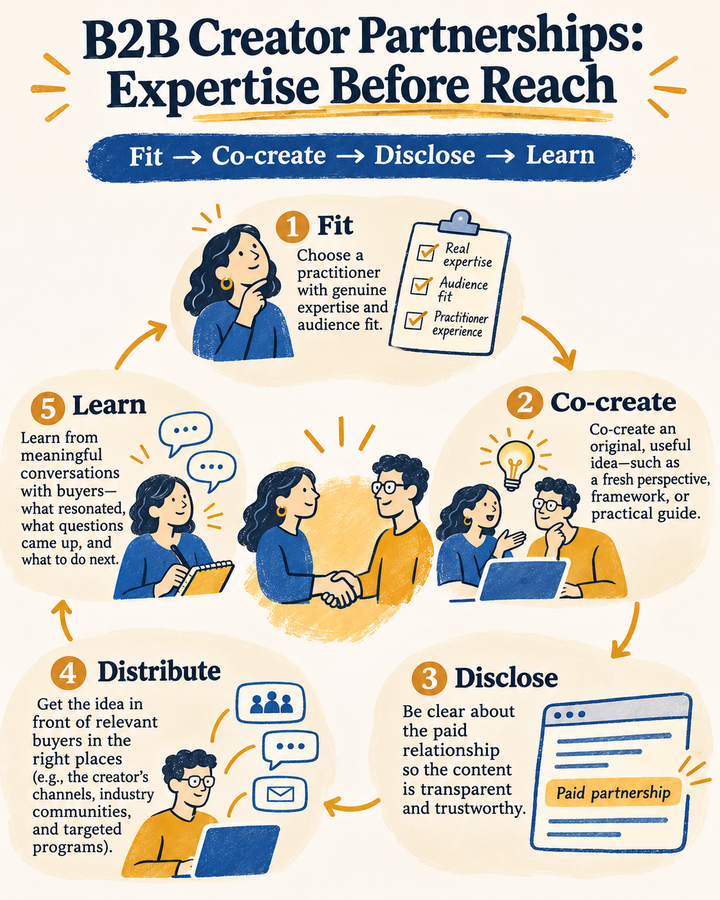
B2B creator partnerships work when expertise, audience fit, useful collaboration, clear disclosure, and fair terms come before reach. Measure qualified attention and buyer learning alongside commercial indicators, while keeping attribution limits clear.
Key Takeaways
- Choose partners for expertise and audience fit, not follower count alone.
- Brief for useful work while preserving independent judgment.
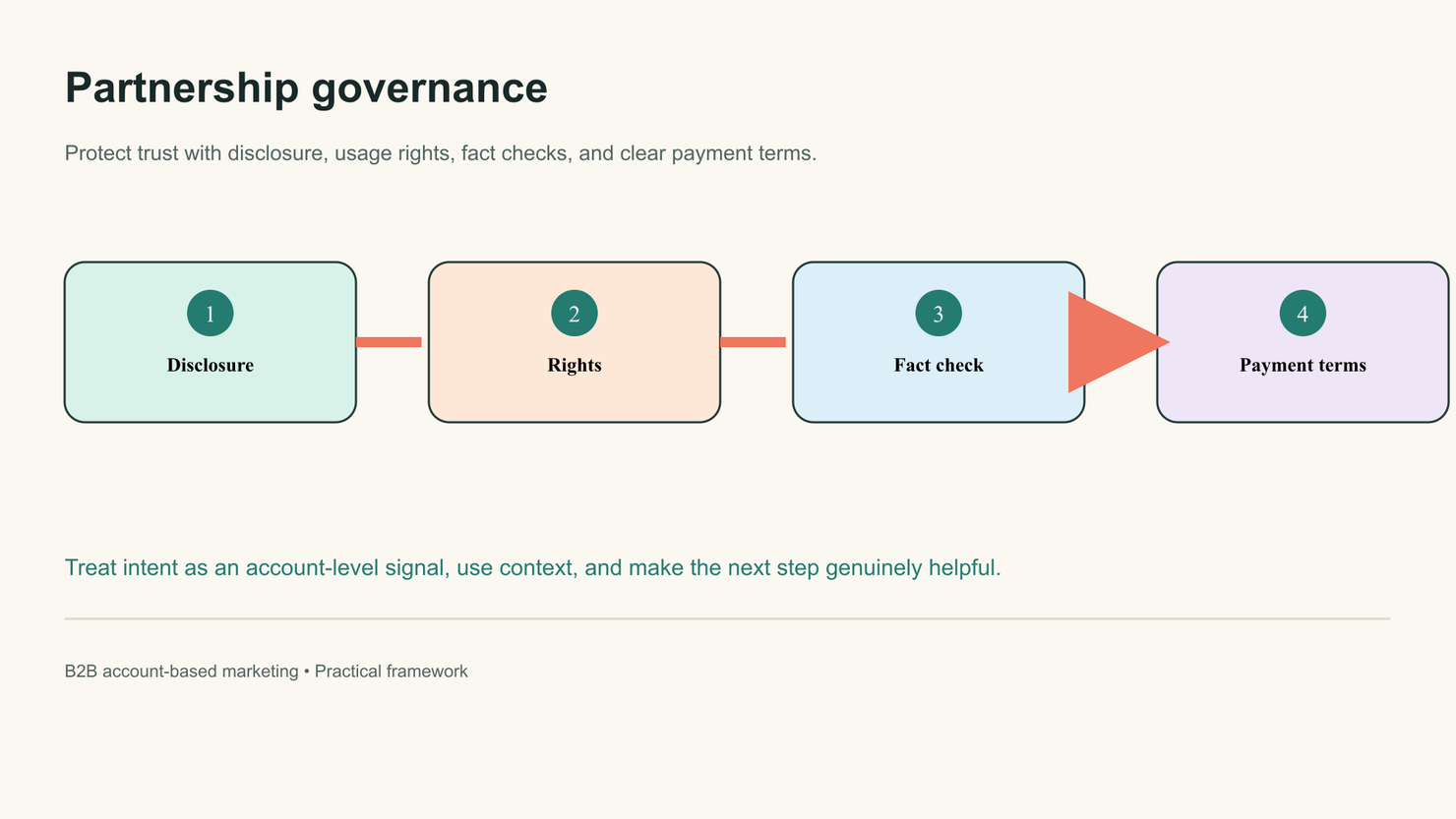
- Disclose material relationships clearly and verify claims.
- Set rights and payment terms in writing.
- Measure audience value and business results separately.
Playbooks
Frameworks you can put to work
Growth marketing, LinkedIn presence, and more — delivered as PDFs.
Browse the playbooksCreator and expert partnerships in B2B work when an independent practitioner contributes real knowledge that helps a defined audience understand a business problem. The partner might be an operator, analyst, educator, consultant, community host, or specialist publisher. The objective is not to rent a large audience for a brief campaign. It is to earn attention and credibility through relevant expertise, honest collaboration, and useful work.
This guide covers partner selection, briefing, disclosure, distribution, and measurement. It supports the demand generation and brand authority pillar and complements the articles on founder-led marketing and B2B dark social.
Why B2B creator partnerships matter
B2B buyers often rely on people who have direct experience with the work: practitioners, specialist creators, analysts, and peers. A partner can explain a category or implementation choice in language that resonates with an audience the company may not reach through its own channels. But a paid mention alone does not transfer trust. The credibility rests on the partner’s independence, knowledge, and audience relationship.
LinkedIn and Ipsos’s 2025 B2B Marketing Benchmark reports that 55% of surveyed B2B marketers use influencer marketing and work with creators. That is a measure of adoption, not proof that every program works. Their benchmark overview discusses trust as a reason marketers invest. The 2026 Edelman-LinkedIn report also notes that trusted external voices can strengthen thought leadership’s credibility. These findings support testing partnerships for fit and usefulness rather than assuming reach produces impact.
Choose partners for expertise and audience fit
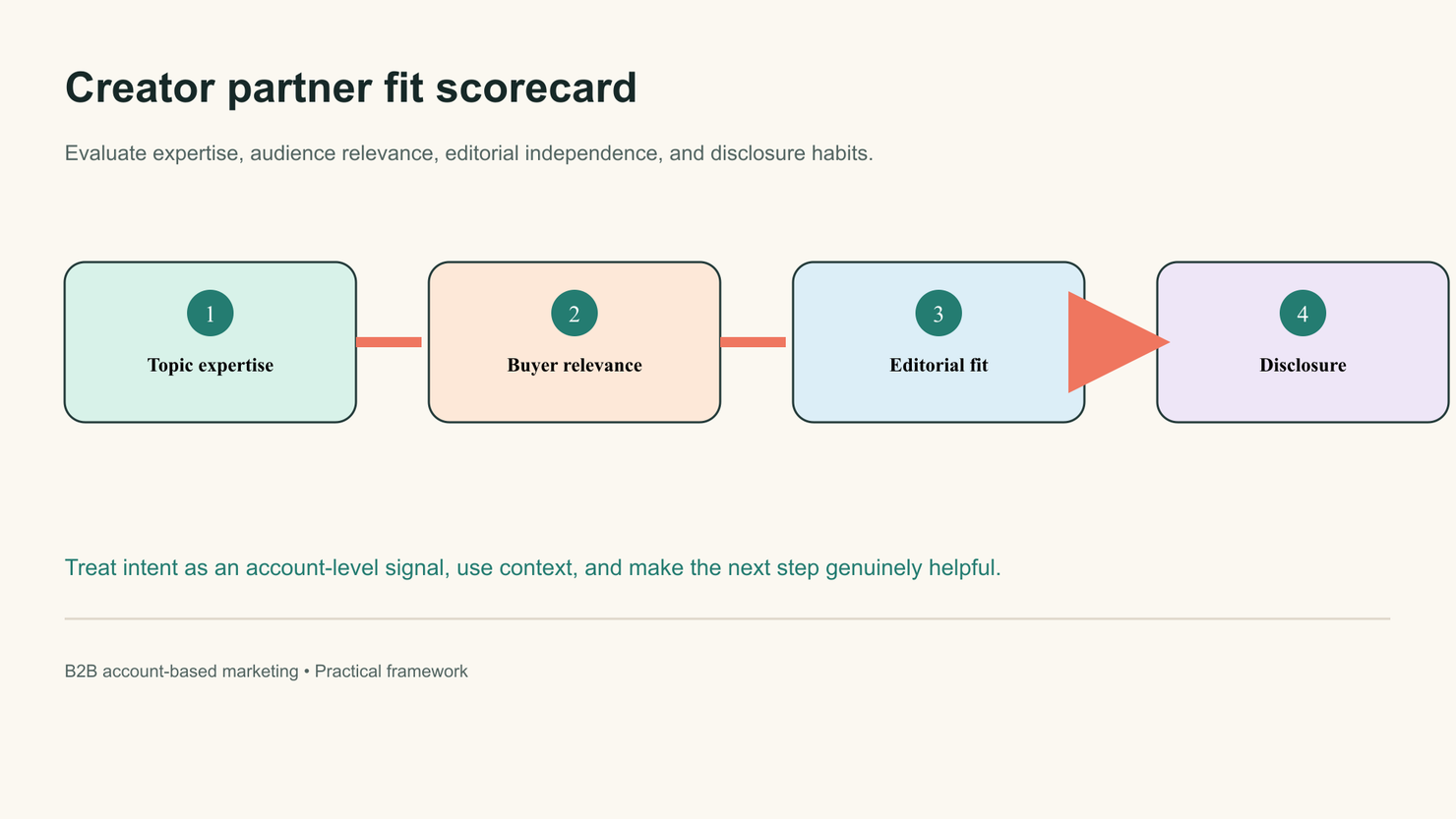
Begin with the buyer question. What does the audience need to understand, compare, or decide? Identify practitioners who have relevant experience and can explain their perspective in their own voice. Review the quality of their work, the substance of audience discussion, and whether their readers match the buying roles or communities the company wants to serve. Ask for examples of past work and how they handle sponsorships.
Audience size is only one factor. A smaller specialist newsletter, technical educator, or community host may be more relevant than a broad business personality. Look at audience overlap, format, geography, and credibility. Check for conflicts with competitors or clients and discuss them openly. Avoid choosing a creator solely because a metric looks large; impressions from the wrong audience have little strategic value.
Co-create a useful idea
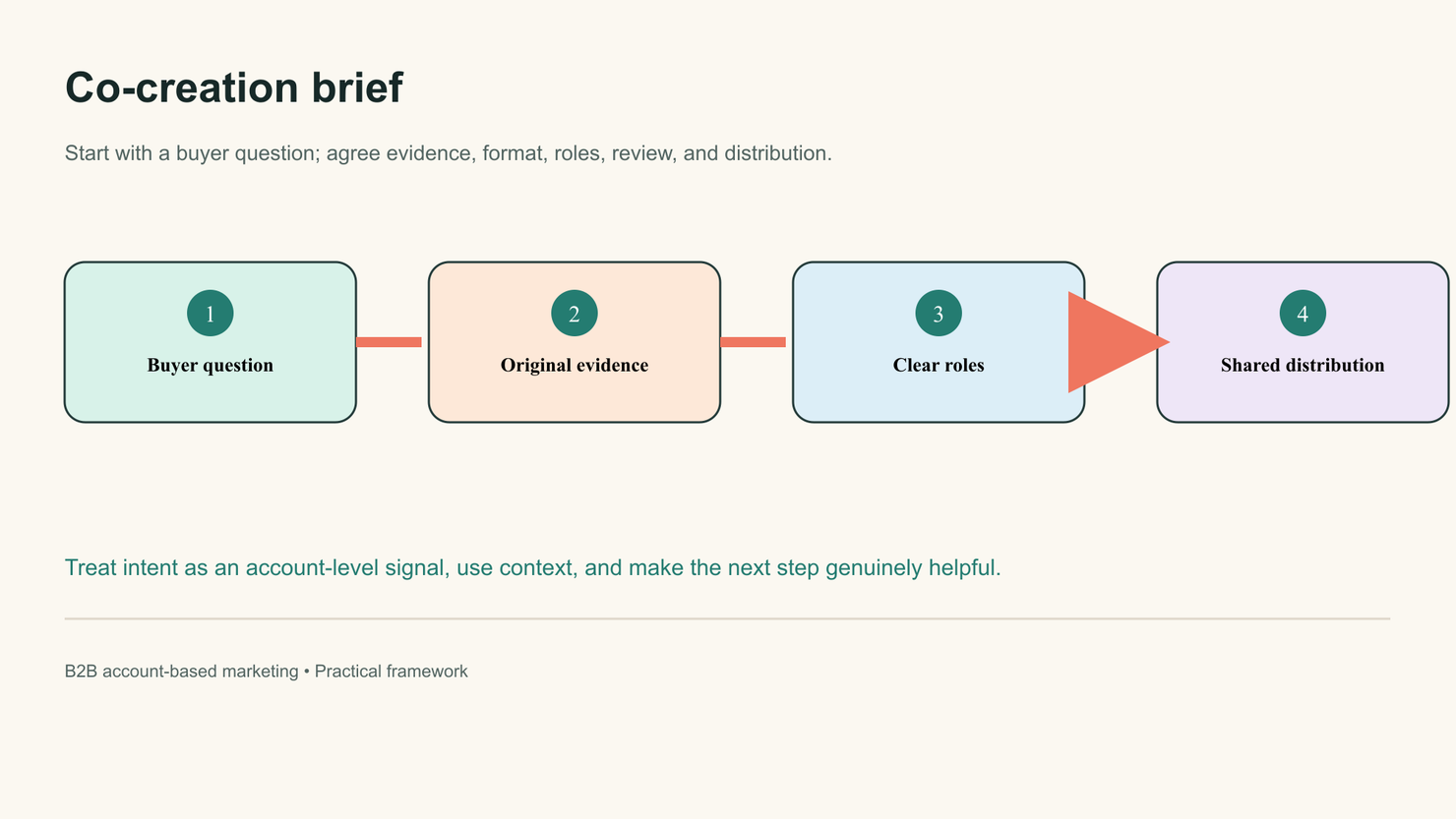
A good brief sets the purpose and boundaries while leaving room for the partner’s judgment. Share the audience, question to address, factual context, evidence available, deliverables, timeline, payment, usage rights, and disclosure expectations. Agree which claims need verification and who can review them. Do not require a favorable conclusion or script a personal endorsement that the creator cannot honestly support.
The strongest format depends on the subject: a practical teardown, interview, research discussion, demonstration, checklist, or event can all work. Give the partner enough time to form an independent view. If a product is involved, make clear what the partner actually used and what the experience can and cannot establish. Label hypothetical examples and avoid unsupported outcome promises.
Disclose relationships clearly
When there is payment, a gift, a commission, employment, or another material relationship, make the connection clear to the audience in a way they can notice and understand. Disclosure rules vary by jurisdiction and channel. The US Federal Trade Commission’s endorsement guides explain that material connections should be disclosed clearly and conspicuously. Review the rules that apply to the campaign’s audience, creator, and format, and make disclosure part of the brief rather than a last-minute edit.
See the FTC Endorsement Guides for US guidance. Clear disclosure does not weaken a legitimate partnership; it helps the audience interpret the recommendation. Do not ask partners to conceal payment, imply product use that did not happen, or publish fabricated testimonials. Keep records of approved claims, source material, and final versions.
Distribute and measure with context
Plan distribution with the creator rather than simply reposting their work. The partner may reach an audience through a newsletter, event, podcast, professional network, or specialist community. The company can contribute related resources and make the material easy to find later. Use tracking links when appropriate, but do not mistake clicks for trust or a single conversion for the full value of a partnership.
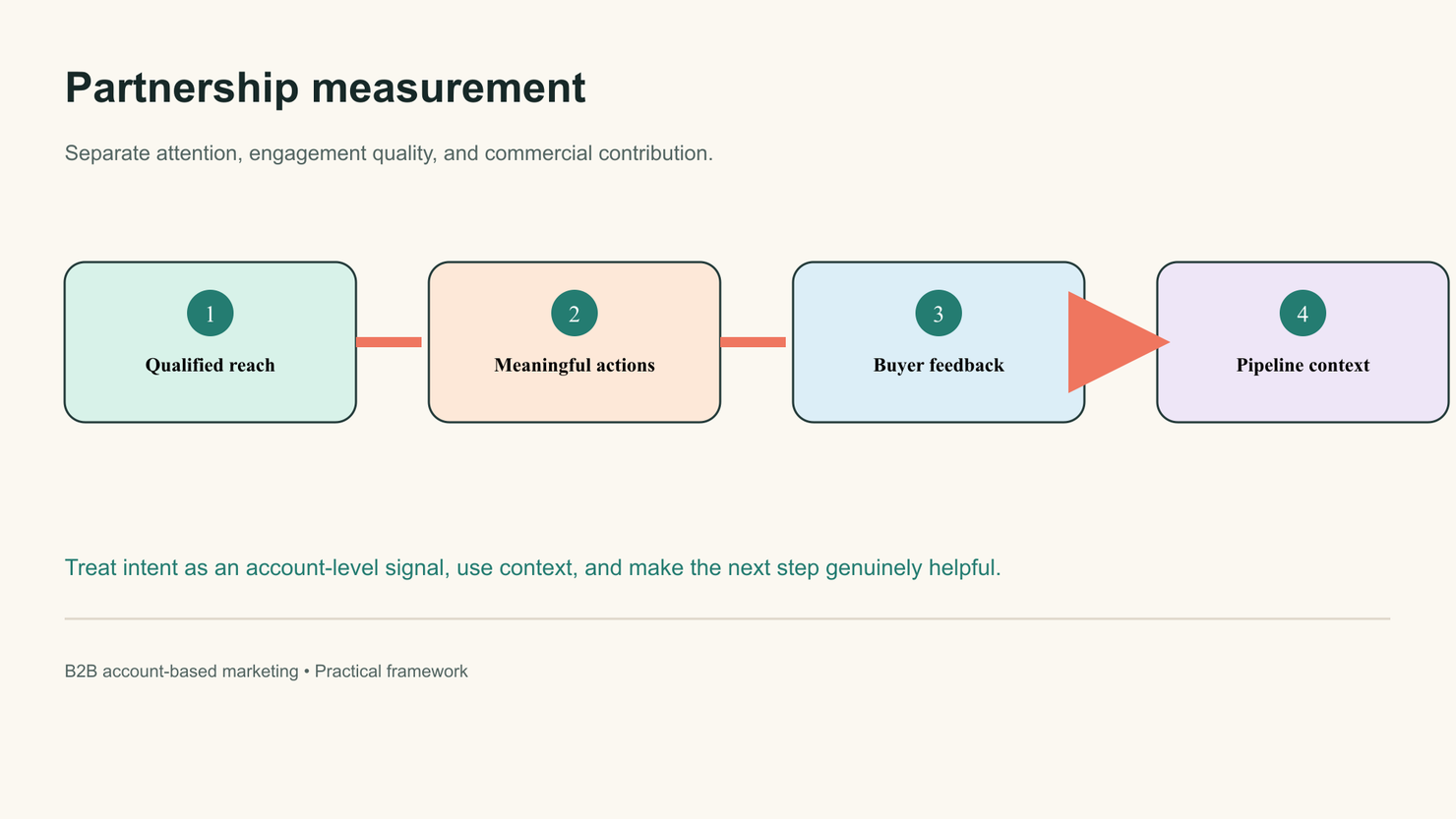
Separate leading indicators from business outcomes. Qualified reach, completion, saves, substantive questions, resource visits, and event attendance show different kinds of response. Sales feedback and buyer interviews can reveal whether the work helped someone understand a choice. Pipeline measures may be useful over time, but multi-touch B2B decisions make precise attribution difficult. Use a baseline, holdout, or comparison when the business needs a stronger causal estimate.
Set terms and protect the relationship
Agree on compensation, deliverables, deadlines, revision limits, cancellation terms, paid amplification, content ownership, reuse duration, and approval rights in writing. Define how each party may use names, logos, clips, and performance data. Protect the partner’s ability to state an honest opinion. For a long-term relationship, schedule periodic reviews and avoid overloading one person with conflicting campaigns.
Maintain a record of the brief, disclosure, sources, permissions, and results. Review what the audience found useful, what questions emerged, and what should change next time. If the content contains an error, correct it transparently. If the partner’s audience or expertise no longer fits, end the relationship respectfully. Durable creator programs depend on fair treatment as well as campaign performance.
A practical pilot
Choose one audience and one buyer question. Shortlist a few practitioners whose work shows relevant expertise. Have a discovery conversation before committing to production. Agree on a simple format, fee, disclosure, rights, and success measures. Publish the work through channels the audience uses, then review reach quality, questions, feedback, and any requested next steps. Record what the pilot can demonstrate and what it cannot.
If the work was useful and the relationship was sound, plan a next contribution based on audience questions. If results were weak, diagnose the fit, format, distribution, and brief before increasing spend. A small, well-evaluated partnership can teach more than a broad campaign built around vanity reach.
Frequently Asked Questions
Frequently Asked Questions
What is B2B creator marketing?
How do you choose a B2B creator?
Should B2B creator partnerships be paid?
How much should a B2B creator partnership cost?
How do you measure B2B creator marketing?
Can a company control what a creator says?
Research and further reading
LinkedIn and Ipsos: 2025 B2B Marketing Benchmark reports on creator use and trust in B2B marketing.
Edelman and LinkedIn: 2026 B2B Thought Leadership Impact Report examines how external voices influence the credibility of company ideas.

Swapan Kumar Manna
Go-to-market & AI search strategist
Swapan Kumar Manna is a go-to-market and AI search strategist and Founder & CEO of Oneskai. He has spent 14+ years helping companies get found, get chosen and grow.