Part of the Demand Generation and Brand Authority: How Companies Become the Brand Buyers (and AI) Already Know series
Founder-led marketing works when a founder shares relevant experience and judgment to help buyers understand a problem, supported by research, editorial review, and a sustainable distribution process. Measure audience response, buyer conversations, and business outcomes separately.
Key Takeaways
- Use direct expertise and buyer questions to choose topics.
- Support claims with evidence and label personal experience clearly.
- Let editors support production while the founder verifies the viewpoint.
- Choose channels based on buyer behavior and available capacity.
- Separate reach, buyer response, and commercial outcomes when measuring.
Playbooks
Frameworks you can put to work
Growth marketing, LinkedIn presence, and more — delivered as PDFs.
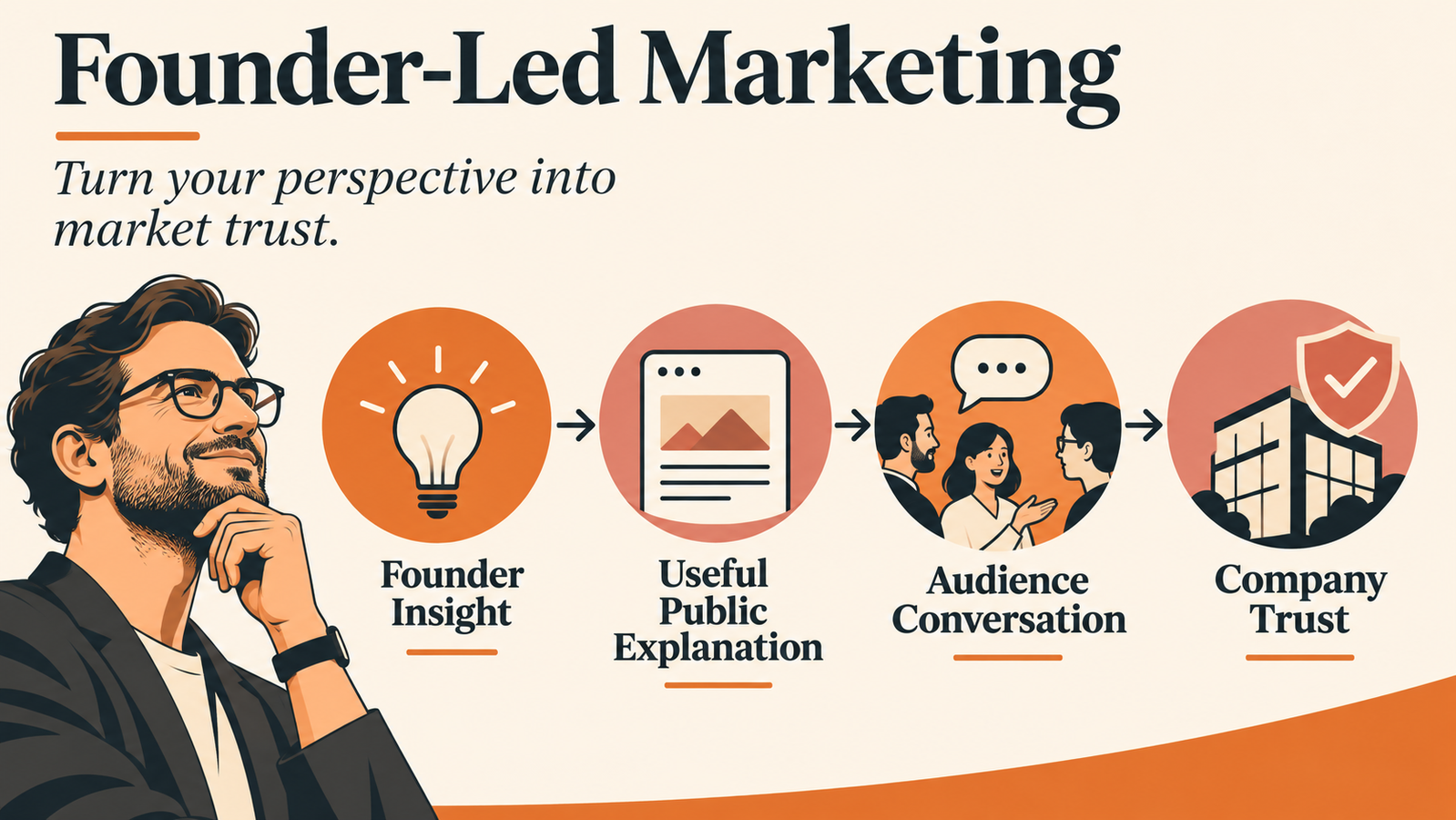
Browse the playbooksFounder-led marketing is a company’s practice of sharing a founder’s relevant expertise and point of view in public, in a way that helps the market understand a problem or make a decision. It works when the founder contributes original judgment and the company supports it with research, editing, distribution, and follow-through. Simply posting more often under a CEO’s name does not create trust by itself.
This guide explains how to build a repeatable, credible founder-led marketing program, what the founder should own, and how to measure whether it is helping. It sits within the demand generation and brand authority strategy and complements the guide to demand generation versus lead generation.
What founder-led marketing means
Founder-led marketing uses a founder’s experience, expertise, decisions, and relationships to communicate with customers and the wider market. The founder may write, speak, participate in interviews, or contribute to company content. The medium is secondary. The value comes from a perspective that is difficult to get from a generic company statement: a clear explanation of what changed, why it matters, and what buyers should consider.
That does not mean every idea needs to come directly from the founder, or that the founder must become the only public voice. A sustainable program makes the founder’s expertise available while allowing subject experts, customers, and the marketing team to contribute. The founder remains accountable for the point of view and factual claims attributed to them.
Why it can matter in B2B
B2B buyers often need to explain a decision to colleagues who are not in the first conversation with a vendor. Useful expert content can travel into those private discussions, help make a complex issue clearer, and give a potential buyer language for evaluating an approach. The 2026 Edelman-LinkedIn B2B Thought Leadership Impact Report draws on more than 1,100 management-level professionals and reports that buyers share useful ideas with colleagues and use thought leadership in discovery and evaluation. The study concerns thought leadership broadly; it does not prove that founder posts alone cause pipeline or sales.
A founder’s public presence can also put a human, accountable voice behind a company’s choices. That may help a prospect understand the company’s principles, expertise, or view of a market change. It is not a substitute for product quality, customer evidence, clear positioning, or a good buying experience. If the company’s claims and the founder’s actions do not match, visibility can magnify the gap.
Start with the founder’s real expertise
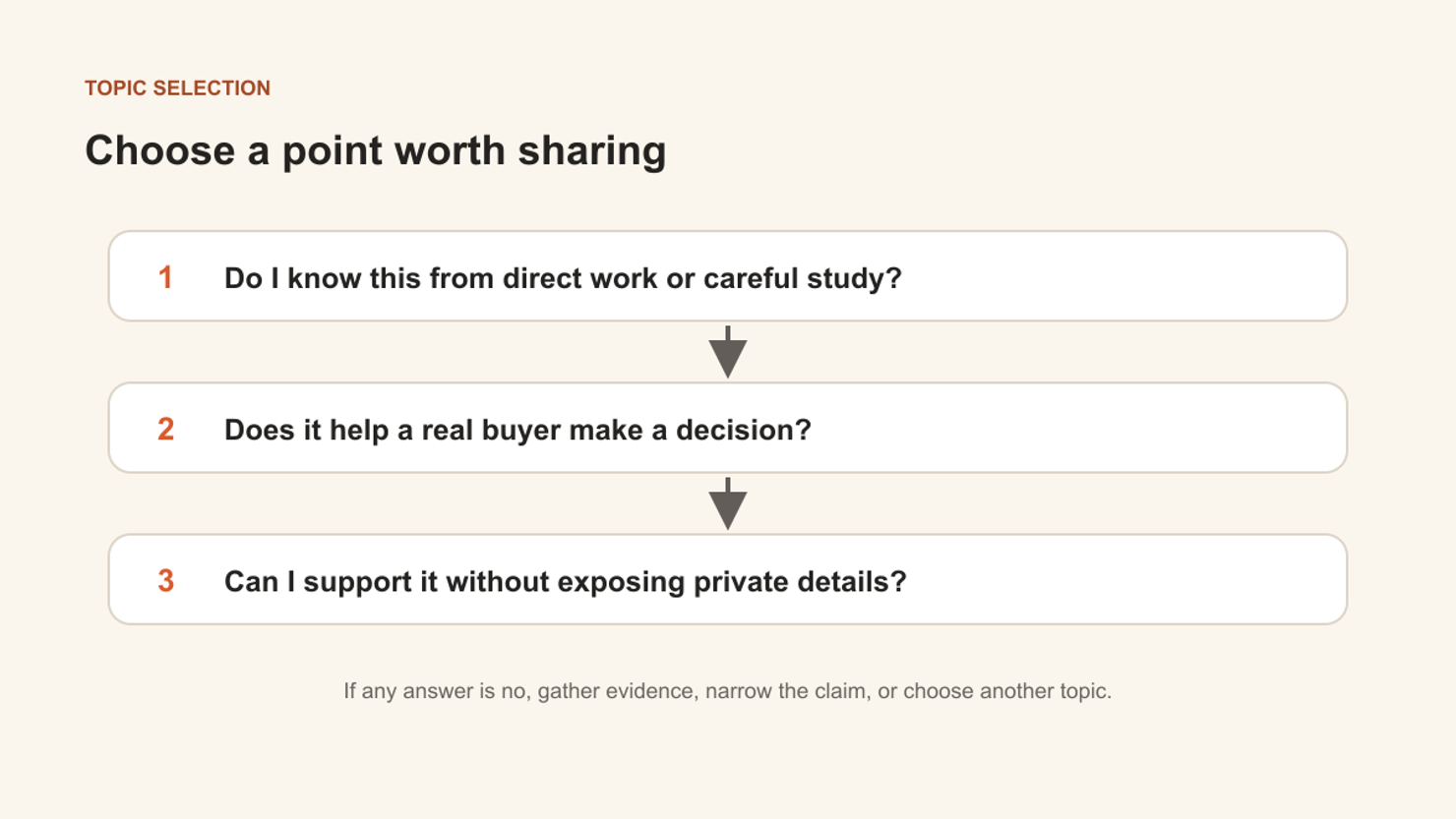
Choose subjects where the founder has direct experience, relevant research, or a considered position. Useful material may come from recurring customer questions, decisions the company had to make, trade-offs in the product or service, lessons from a failed assumption, or a change in the market that affects buyers. Protect client confidentiality and avoid presenting a single anecdote as a universal rule.
Before drafting, ask four questions: What does the intended buyer need to understand? What have we observed directly? What evidence supports the conclusion? What is safe and appropriate to share? If the point depends on internal data, client details, or an unverified prediction, collect permission or narrow the claim first.
Develop a point of view rather than a slogan
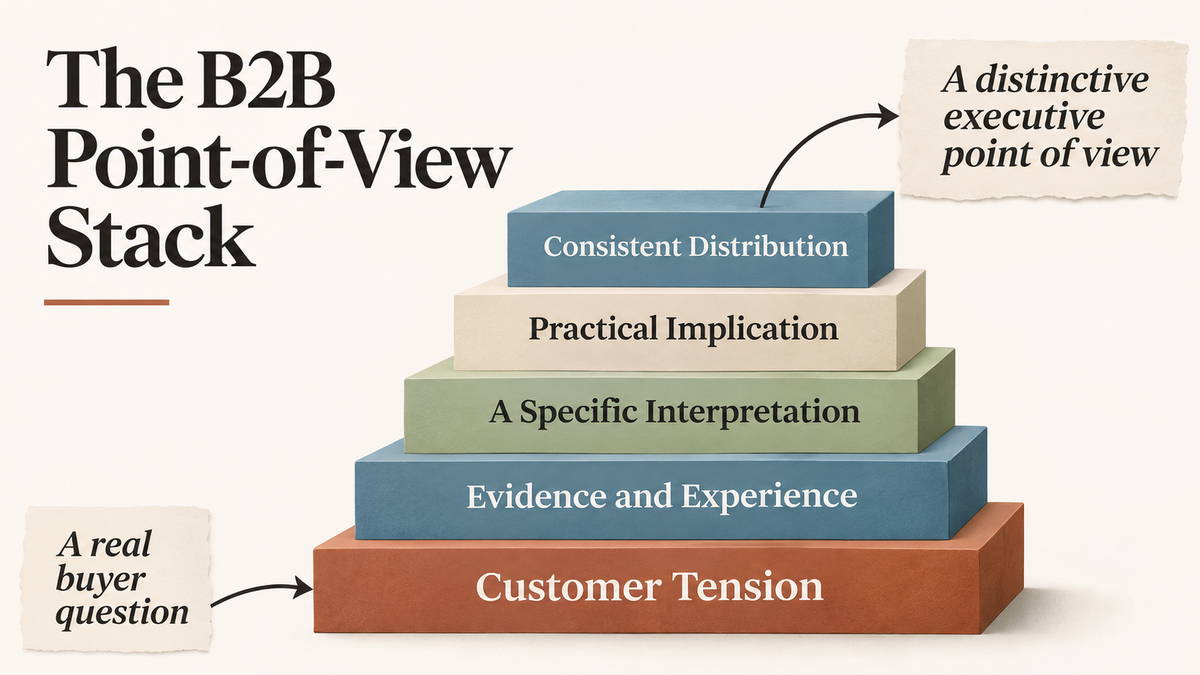
A point of view connects an observation to a reasoned interpretation and a practical implication. For example, “B2B marketing is changing” is too broad to guide a buyer. A more useful argument identifies a specific change, explains which buyers it affects, shows what evidence supports the interpretation, and states what a team could do next.
A strong piece does not need to be contrarian. It should be specific, fair to competing approaches, and clear about its limits. Separate evidence from opinion. Link to primary research when discussing a survey or standard. If the founder is describing a personal lesson, label it as experience rather than an industry-wide result. Avoid invented client stories, unattributed statistics, and claims about outcomes that cannot be substantiated.
Build a workflow that respects the founder’s time
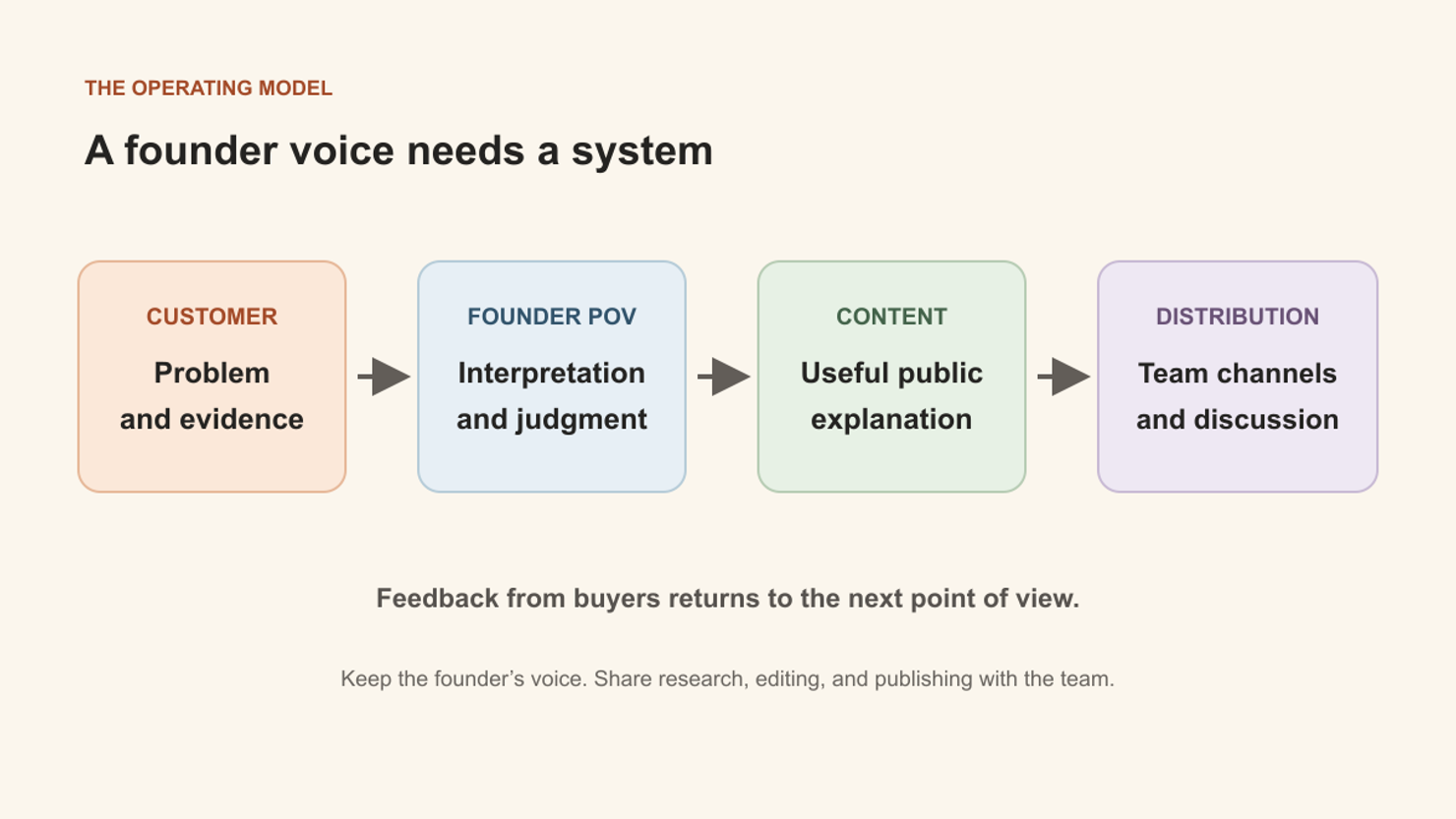
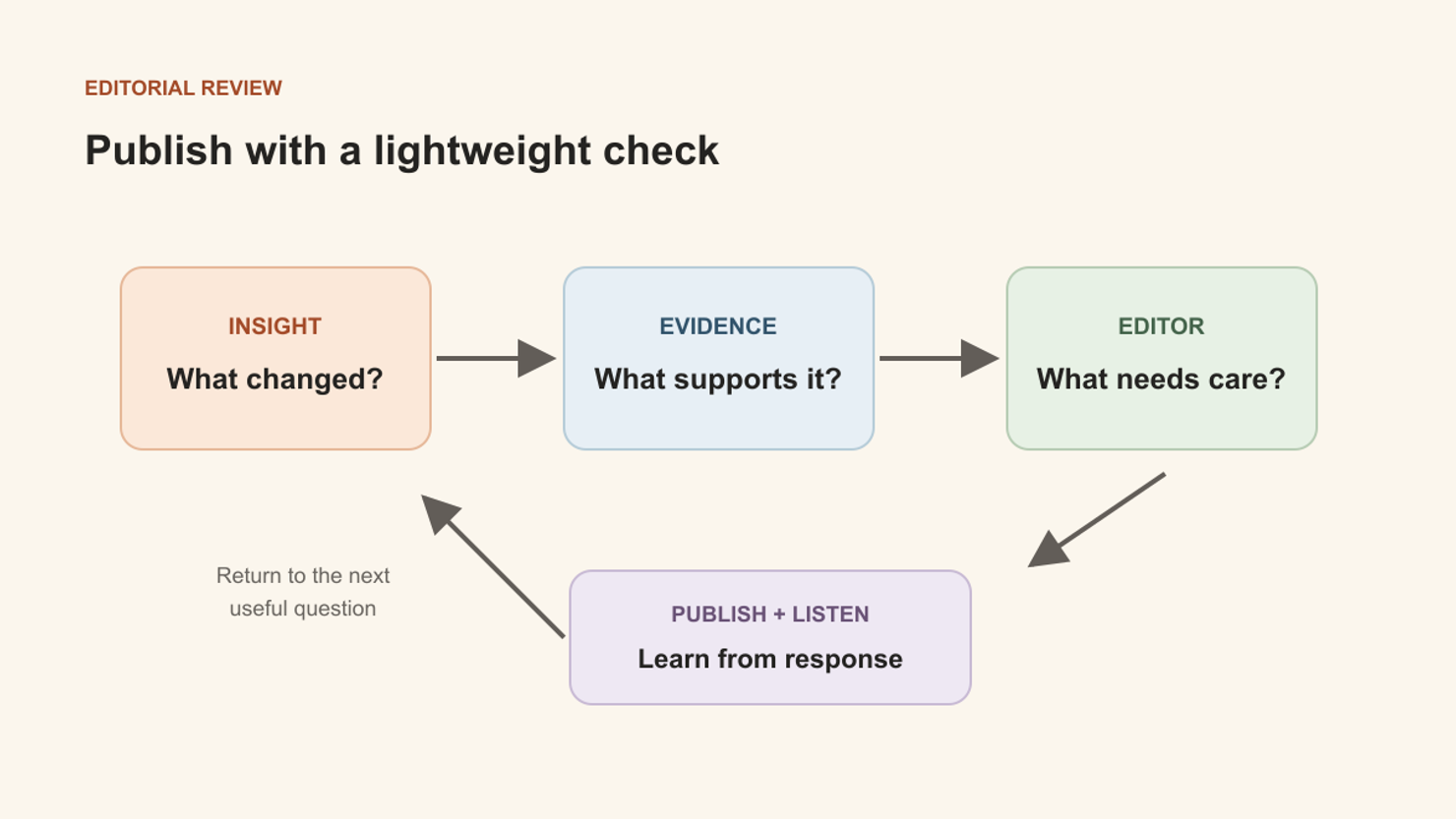
A marketing lead or editor can collect questions and evidence, prepare a short brief, and interview the founder. The founder can then review the central argument, examples, and any quotations attributed to them. Editors can shape the material for clarity and adapt it for different channels, while a subject-matter reviewer checks technical claims and a final owner checks confidentiality and approvals.
Use a cadence the team can maintain. A monthly recorded conversation may produce a thoughtful article, a short post, and answers to recurring customer questions. Repurpose only when the adapted format adds value for its audience. Copying the same text across channels can miss the context and expectations of each platform. Keep a record of source notes and approvals so updates are straightforward.
Choose channels based on buyer behavior
Start with the places the intended audience already uses. For some B2B markets that may include LinkedIn, industry events, specialist publications, podcasts, customer communities, or the company website. The choice depends on the audience and the founder’s strengths; a platform’s popularity is not enough reason to use it. Make an owned article or resource available when the material deserves a lasting home, then use relevant channels to help people find it.
Connect founder commentary to the company’s useful resources without turning every post into a pitch. A post about how buyers evaluate options can link naturally to a detailed guide or relevant service page. For broader channel choices, see the digital marketing strategy guide and the article on measuring B2B brand visibility.
Keep the founder’s public profile accurate and current. Make it easy to understand what the person knows, what the company does, and how a reader can verify important claims. Where a personal view differs from company policy, say so clearly. A founder should not imply an endorsement or expertise that they do not have.
Measure evidence at more than one stage
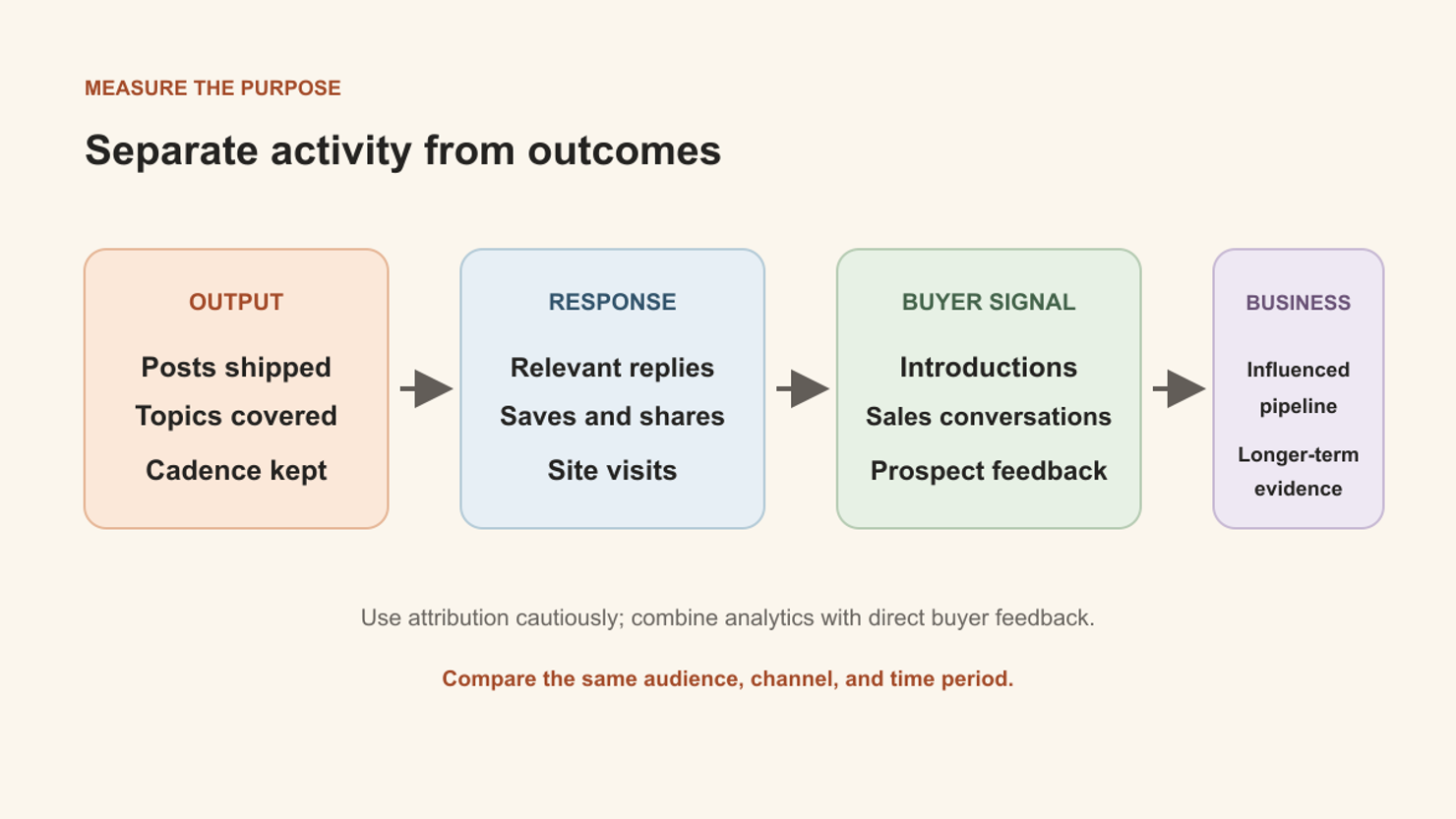
Begin with the purpose of the program. If the aim is to clarify a market problem, assess whether the intended audience reads, shares, or discusses the material. If the goal is to support trust, look for relevant buyer feedback, customer conversations, and whether prospects understand the company’s approach. If the goal is commercial, examine qualified introductions, opportunities where the material was used, and what buyers say influenced their evaluation.
Track outputs such as publishing consistency separately from audience response and business outcomes. Reach and engagement can help compare formats, but they are not proof of trust or revenue. Use analytics together with sales feedback and customer interviews. Set a baseline, define the audience and period, and document other activity that may affect results. Attribution is especially uncertain when buyers encounter ideas in private conversations or across several channels.
The trade-offs and failure modes
Founder-led marketing can become a bottleneck if every post waits for the founder to write and approve it. It can also create reputational risk when personal opinions are treated as company commitments, when private information is shared, or when a founder makes claims beyond available evidence. Define what the founder owns, what editors can adapt, and who approves sensitive topics.
Another risk is producing generic material at scale because it appears easy to generate. Google’s guidance says AI can help with research and structure, but many pages created without added value may violate its scaled content abuse policy. Its generative search guide emphasizes distinctive, helpful, expert-led material and says there is no special writing format required for AI search. Use tools to support research or editing, then verify claims and preserve the founder’s real judgment. See Google’s guidance on generative AI content and its guide to AI features in Search.
A practical launch plan
For the first month, interview the founder about customer questions and recent decisions. Select one issue that matters to a defined audience. Gather supporting sources, draft a clear argument, and ask the founder to verify the reasoning and examples. Publish the most useful version on an appropriate channel, invite a genuine response, and route questions to the people best placed to answer them.
At the end of the month, review what the audience understood, which questions appeared, whether the content was shared in relevant buyer conversations, and how much internal effort it required. Use that learning to choose the next issue. A small, repeatable program can reveal more than a burst of posts followed by silence.
Frequently asked questions
Frequently Asked Questions
What is founder-led marketing?
Is founder-led marketing the same as personal branding?
Does the founder need to write every post?
Which channels work best for founder-led marketing?
How do you measure founder-led marketing?
What are the risks of founder-led marketing?
Research and further reading
Edelman and LinkedIn: 2026 B2B Thought Leadership Impact Report examines how thought leadership relates to B2B discovery, evaluation, and customer relationships.
Google Search: Guidance on generative AI content explains the need for accuracy, quality, and added user value.
Google Search: Guide to AI features in Search describes current search guidance for people-first, expert-led content.
Frequently Asked Questions
What is founder-led marketing?
Is founder-led marketing the same as personal branding?
Does the founder need to write every post?
Which channels work best for founder-led marketing?
How do you measure founder-led marketing?
What are the risks of founder-led marketing?

Swapan Kumar Manna
Go-to-market & AI search strategist
Swapan Kumar Manna is a go-to-market and AI search strategist and Founder & CEO of Oneskai. He has spent 14+ years helping companies get found, get chosen and grow.