Part of the Revenue Systems: Connecting Marketing, Sales and CRM So Growth Doesn't Leak series
Paid media can accelerate a proven offer, capture active search demand, or reach defined professional audiences. Verify measurement, lead quality, unit costs, and follow-up capacity before scaling; platform availability in AI experiences changes over time.
Key Takeaways
- Choose a channel for a clear demand or audience job.
- Verify qualified conversion tracking before launch.
- Treat platform attribution as evidence, not incremental proof.
- Scale gradually when lead quality and economics hold.
Playbooks
Frameworks you can put to work
Growth marketing, LinkedIn presence, and more — delivered as PDFs.
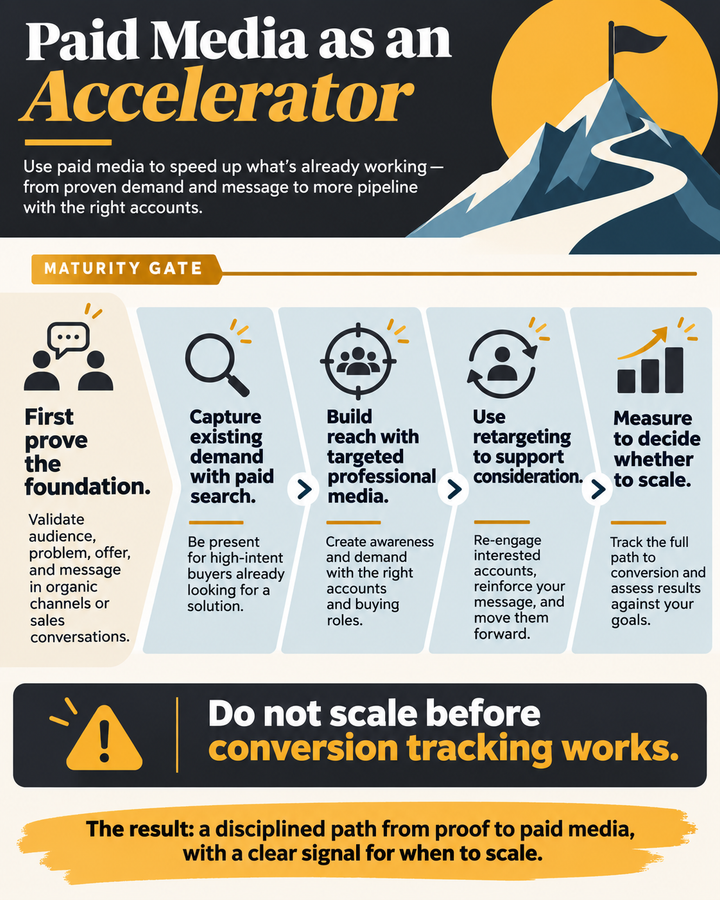
Browse the playbooksPaid media can accelerate a working growth system by helping more relevant buyers encounter a proven offer, capturing active demand, or supporting a long buying process. It cannot repair an unclear proposition, broken conversion path, or weak follow-up. Start by identifying what is already working and what constraint paid distribution is meant to address.
This guide compares paid search, LinkedIn advertising, retargeting, and newer placements in AI-powered experiences. It is part of the Revenue Systems pillar and connects to demand generation and brand authority and B2B conversion optimization.
When paid media makes sense
Paid can help when a team knows its target audience, has a relevant message and landing page, can measure meaningful outcomes, and has capacity to follow up. Search advertising can capture an existing query with commercial intent. LinkedIn can reach defined professional roles or accounts and support awareness when buyers are not actively searching. Retargeting can help interested visitors continue evaluating, if the audience rules and frequency are appropriate.
Paid is a poor first fix when the team cannot explain who the offer is for, whether leads become qualified conversations, or what the next action costs. Validate the proposition and conversion path with organic traffic, sales conversations, customer interviews, or a small controlled campaign before expanding spend.
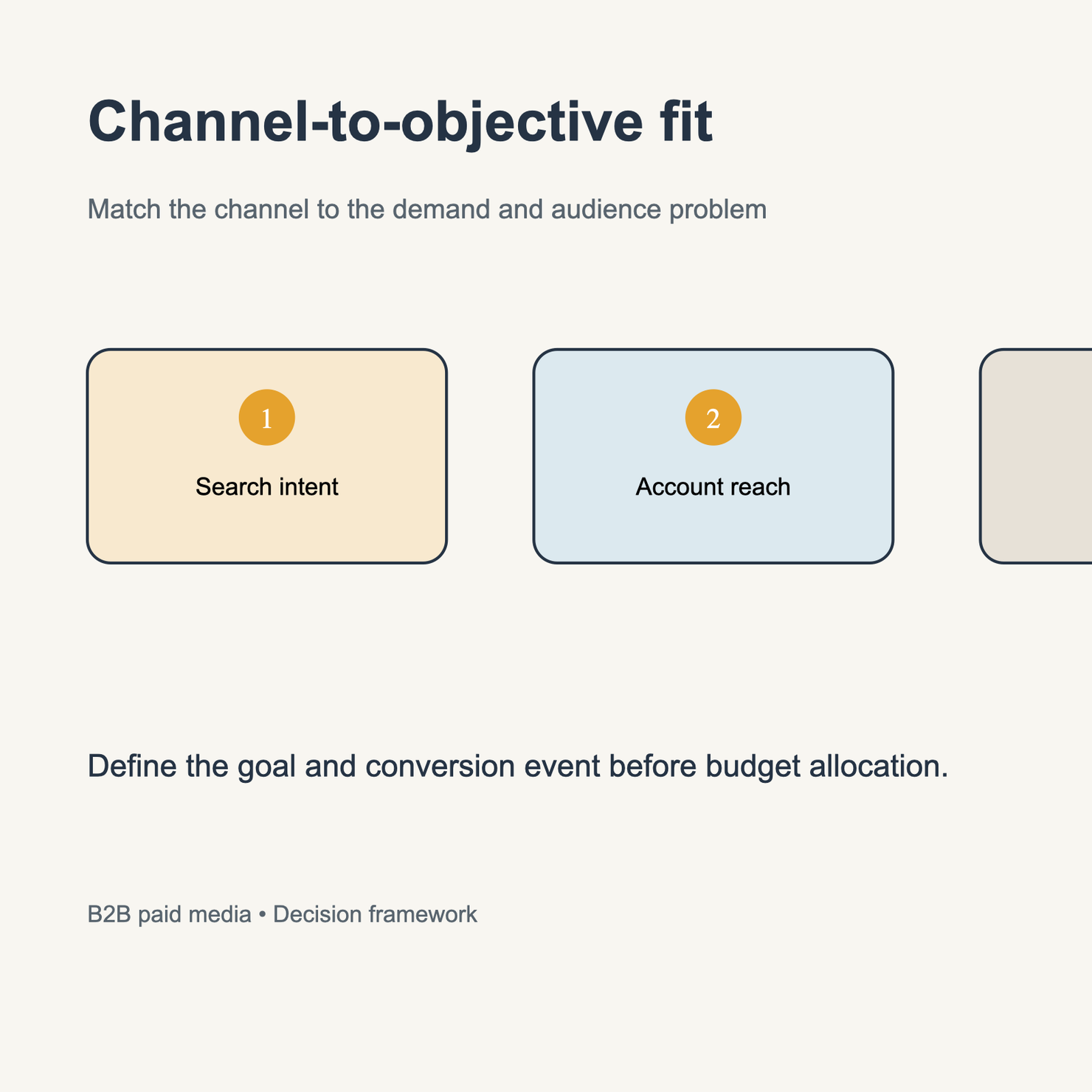
Choose the channel for the job
Use paid search when buyers express a clear need in queries and the business can answer it with a relevant page. Review actual search terms, match types, negative keywords, and conversion actions. Google Ads guidance recommends evaluating performance against campaign goals rather than clicks alone. See the Google Ads performance guidance.
Use LinkedIn when professional targeting helps reach buying roles or named accounts that matter to the sales motion. Match the creative to the audience’s awareness and context. Small audiences can create high frequency or limited delivery, so monitor reach, engagement quality, and audience size. LinkedIn documents its current targeting options and constraints in its targeting help.
Retargeting should offer useful next information, such as an implementation guide or case evidence, not follow the visitor around with the same ad indefinitely. Set audience windows and frequency limits, exclude converters where appropriate, and respect consent and platform policies.
Consider ads in AI-powered experiences cautiously
Google now documents sponsored placements in AI Overviews and AI Mode, with ads labeled and visually distinct. OpenAI has expanded ChatGPT advertising access through an Ads Manager, with availability and formats changing over time. These placements may fit a test when the buyer context and landing page are relevant, but there is limited mature cross-industry benchmark data. Check current market eligibility, policies, targeting, reporting, and minimum spend before committing. Read Google’s guidance for ads in AI-powered Search and OpenAI’s ChatGPT ads overview.
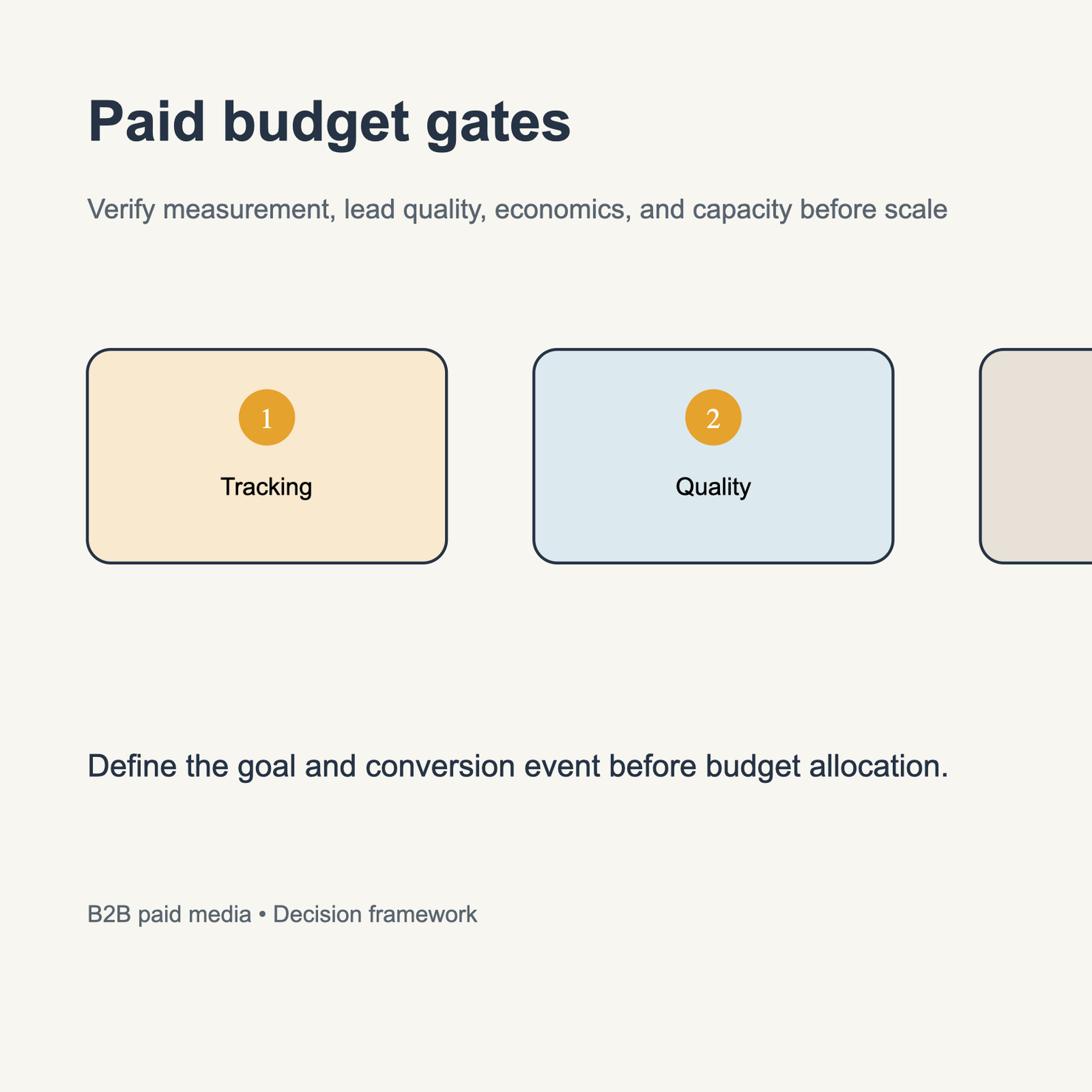
Set measurement before launch
Define the conversion action before the campaign begins. A click, page view, or form submission may be a useful diagnostic, but the commercial goal may be a qualified meeting, opportunity, or purchase. Connect CRM outcomes where feasible, use consistent campaign tags, verify consent and tracking configuration, and test events end to end. If reporting stops at a cheap lead, the bidding system may optimize toward people who do not become customers.
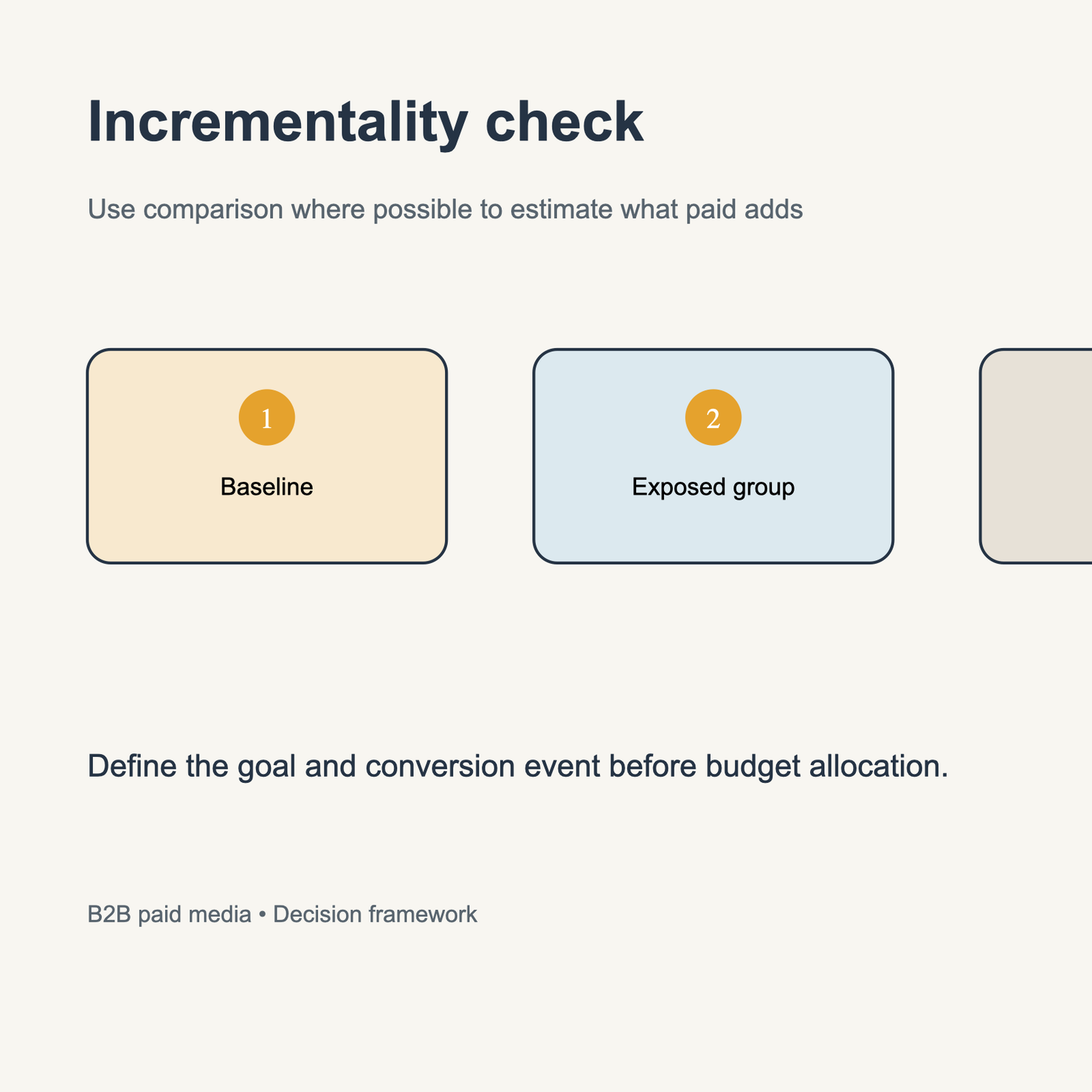
Set a budget based on a test question and an affordable learning period. Estimate the cost per qualified action, sales capacity, and expected time to outcome. Avoid treating platform-reported attribution as incremental impact. When practical, compare exposed and unexposed groups or use a staged rollout to learn what paid adds beyond existing demand.
Put this into practice
LinkedIn Personal Branding Playbook for CXOs
A strategic guide to thought leadership, founder visibility, and pipeline that follows — written for CEOs, CMOs, and founders who refuse to be invisible on the world's largest professional network.
Scale by evidence, not spend momentum
Review search terms, audience delivery, frequency, landing-page behavior, and CRM quality on a regular cadence. Stop placements that create irrelevant demand. Expand budgets gradually when lead quality and unit economics hold. If performance declines, test whether the cause is saturation, audience fit, offer relevance, tracking, or sales response before simply raising bids.
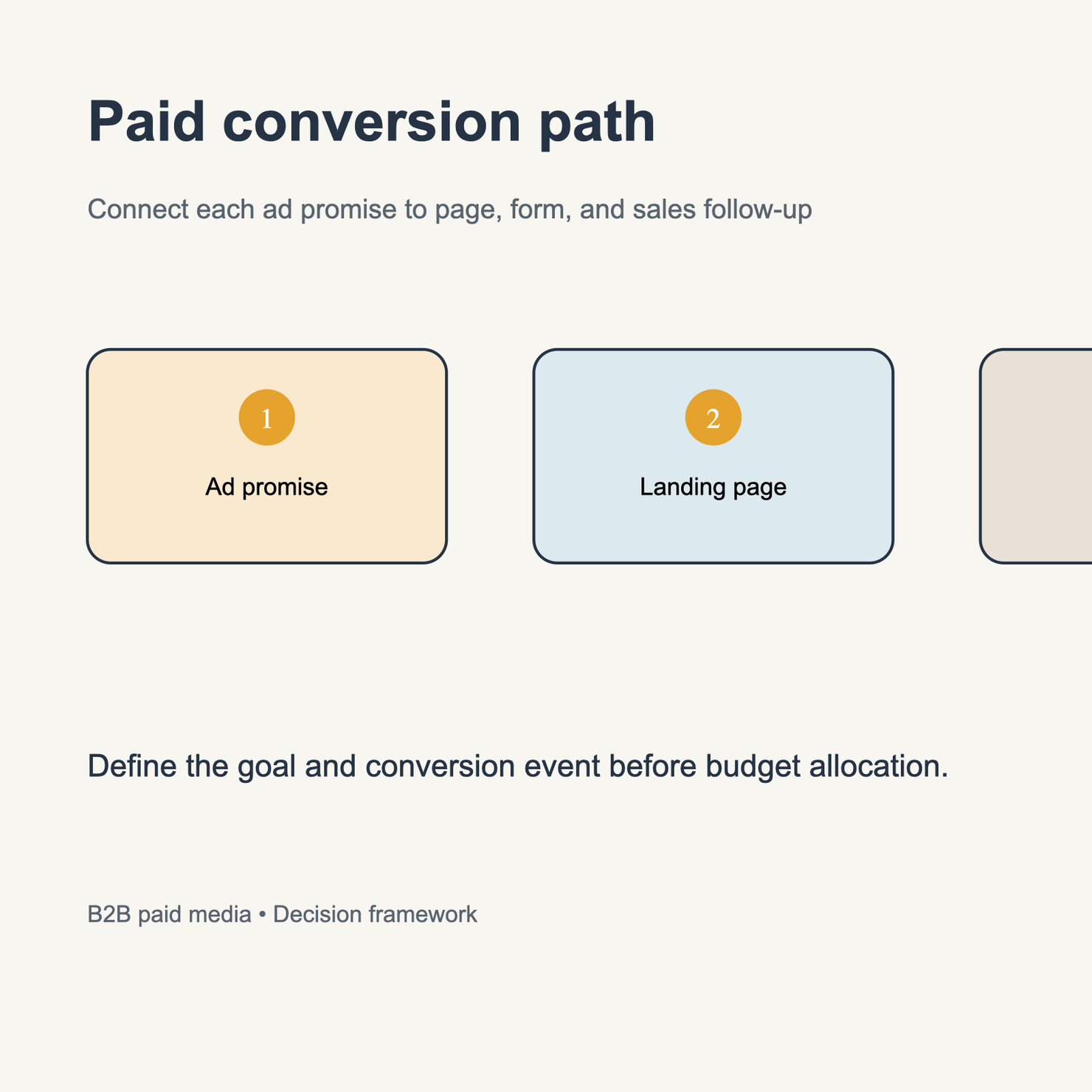
Use a practical scale gate: tracking is verified; the audience is relevant; qualified outcomes are measurable; follow-up capacity exists; and the cost fits the business model. If any condition fails, fix that constraint first. Growth from paid should complement long-term demand and brand work rather than replace it.
A 30-day paid media pilot
Pick one channel and one buyer problem. Set the target audience, message, destination page, conversion action, guardrails, and budget cap. Confirm platform policies and measurement. Run the test long enough to observe qualified outcomes, then review search terms or audience delivery, lead quality, buyer feedback, and sales capacity. Decide whether to stop, adjust, or scale based on the evidence.
Paid media is most useful when it accelerates a process the business understands. Keep the test narrow, be honest about attribution, and make sure every additional click leads to a relevant experience.
Frequently Asked Questions
Frequently Asked Questions
When should a B2B company invest in paid media?
Should B2B companies use Google Ads or LinkedIn Ads?
Can paid media create demand?
Are ads available in Google AI Mode or ChatGPT?
How do you measure paid media ROI?
How much should a company spend on a paid media test?
Research and further reading
Google Ads: Evaluating Search Network performance describes goal-based campaign measurement.
Google Ads: Ads in AI-powered Search experiences explains labeled placements in AI Overviews and AI Mode.
OpenAI: Ads in ChatGPT describes advertising and current access information.
Put this into practice
LinkedIn Personal Branding Playbook for CXOs
A strategic guide to thought leadership, founder visibility, and pipeline that follows — written for CEOs, CMOs, and founders who refuse to be invisible on the world's largest professional network.

Swapan Kumar Manna
Go-to-market & AI search strategist
Swapan Kumar Manna is a go-to-market and AI search strategist and Founder & CEO of Oneskai. He has spent 14+ years helping companies get found, get chosen and grow.